Montmartre Art And History Tour: Painters, Cabarets And The Hill
Montmartre earned its fame twice over: once as the village where painters rented cheap studios above Paris, and once as the cabaret quarter that put the hill on every poster. This guide walks through the verified history, the one museum on the hill, and the three guided art tours you can actually book.
Short answer
The Musee de Montmartre, open daily 10am to 6pm at 12 rue Cortot, is the hill's only museum, with full-price entry at 16 euros during the exhibition period. Three guided art tours cover the quarter: an art-lovers walk with cemetery entry and a sketching session, a street art tour led by an artist, and a 90-minute art, culture and food walk.
Montmartre's summit sits at an altitude of 130 metres above sea level, and for roughly half a century that height made it the cheapest address with the best light in the city. Painters came for the low rents and stayed for the views: the windmills, the stairways, the vineyard on the north slope. The quarter they painted is now the quarter every visitor walks, and the traces of their studios are still findable if you know where to look.
This guide lays out what is actually verified about the hill's art history, gives the Musee de Montmartre in full practical detail, and compares the three guided art and artists tours currently bookable, plus the private and small-group walks that suit the same itinerary. Some famous-name stories about Montmartre rest on thin evidence. Stories here stick to the documented record; unverifiable tales are left out or noted as legend.
Why Montmartre Became The Painters' Hill
Montmartre became an artists' quarter because it was a cheap village outside the walls of Paris, with windmills, stairways and light that painters could reach on foot, and its studios housed Van Gogh from 1886 to 1888, Picasso from 1904, and Renoir and Suzanne Valadon at 12 rue Cortot. Each of those names really did live and work on the hill, though not every popular story about them holds up.
The documented chain of famous residents runs long. Vincent van Gogh moved to Paris in March 1886 to live with his brother Theo, an art dealer, and in June 1886 the two of them took the fourth floor of 54 rue Lepic. Vincent stayed until he left for Arles on 20 February 1888, and during those Paris years he painted Montmartre scenes including the windmills of the Moulin de la Galette. The full story of those two years is covered in the companion piece where Van Gogh lived in Montmartre, which sticks to the same documented timeline.
At 13 rue Ravignan, a former piano factory converted into about 20 studios in 1889 became the building the poets nicknamed the Bateau-Lavoir, the laundry boat. Picasso settled there in 1904 and painted Les Demoiselles d'Avignon in the building in 1907; Modigliani, Juan Gris, Braque and Apollinaire all passed through the circle. A fire in May 1970 destroyed most of the original structure and it was rebuilt in 1978. It remains a private artists' studio residence with no public interior access, but the exterior can be viewed any time from Place Emile-Goudeau.
The third anchor site is 12 rue Cortot, one of the oldest buildings on the Butte, a 17th-century house where Pierre-Auguste Renoir kept a studio and where Suzanne Valadon, her son Maurice Utrillo and Andre Utter lived and worked in the early twentieth century. Emile Bernard and Raoul Dufy also lived there. That building is today the Musee de Montmartre, the one museum on the hill, and it is the natural first stop of any art itinerary.
For readers planning the wider walk, the self-guided versus guided comparison covers whether you need a guide at all, and the classic Montmartre walking tour guide maps the standard route between these same landmarks.
The Musee De Montmartre: The Hill's One Museum
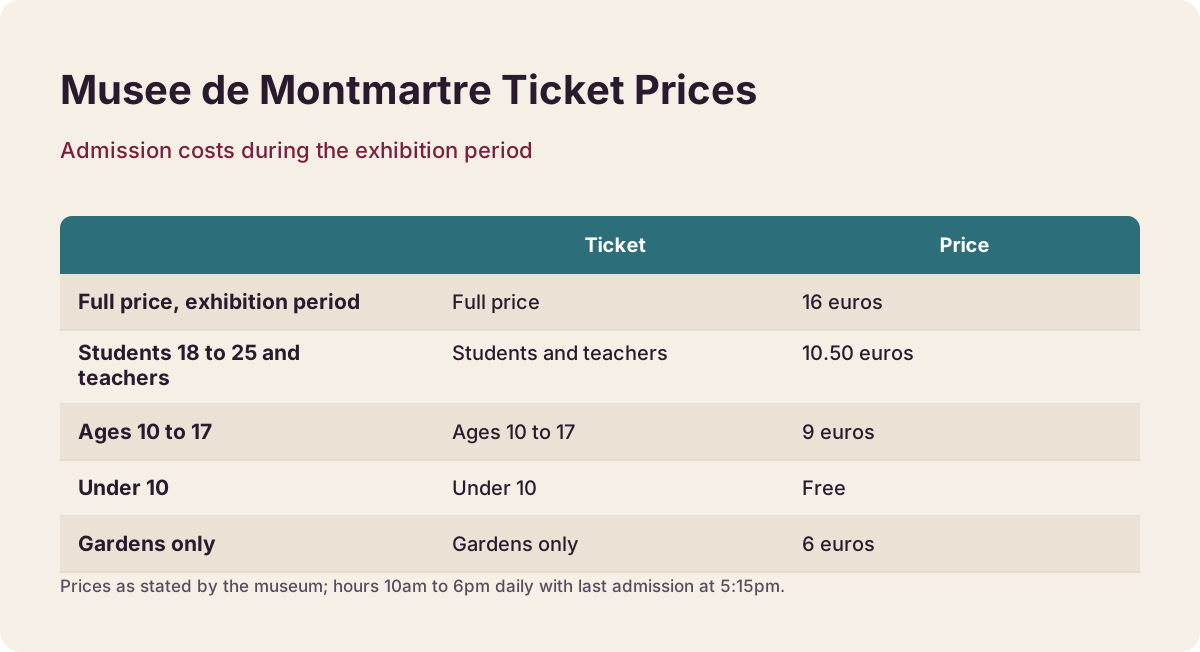
The Musee de Montmartre at 12 rue Cortot is open every day including public holidays, 10am to 6pm, with last admission at 5:15pm and exhibition rooms closing at 5:45pm. Full-price entry during the exhibition period is 16 euros, students 18 to 25 and teachers pay 10.50 euros, ages 10 to 17 pay 9 euros, under 10s are free, and a gardens-only ticket is 6 euros.
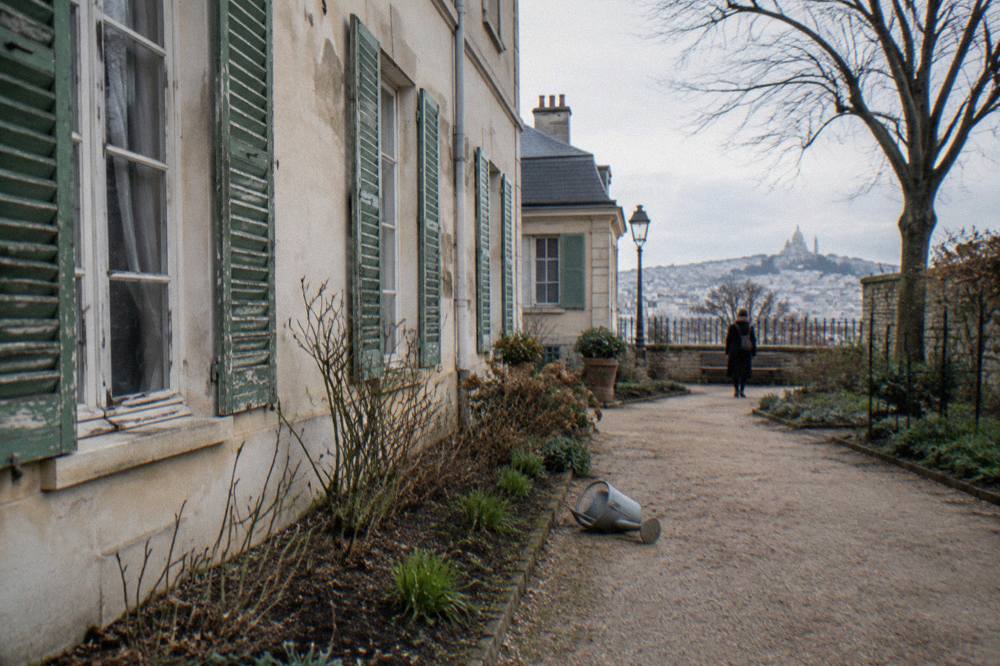
The museum occupies the 17th-century house where Renoir worked and where Valadon and Utrillo lived, and its rooms include Suzanne Valadon's recreated studio-apartment. The gardens overlook the Clos Montmartre vineyard, which is the only view of the vines most visitors will get, since the vineyard itself is open to the public on guided visits only. The museum's own hours are confirmed on its official site, museedemontmartre.fr, and there is no luggage room, so travel light.
One point of caution: a "free visit" label appears above the rates on the museum's ticketing page with no explanation, so treat any claim of free entry with care and check the current rates before you go. The prices above are the ones the official page states plainly.
| Ticket | Price |
|---|---|
| Full price, exhibition period | 16 euros |
| Students 18-25 and teachers | 10.50 euros |
| Ages 10 to 17 | 9 euros |
| Under 10 | Free |
| Gardens only | 6 euros |
The museum also hosts temporary exhibitions, and the current one is a genuine reason to time a visit: "Le Cirque. Fabrique de l'art moderne" runs from 16 October 2026 to 14 February 2027 and examines the circus as a subject in 20th-century avant-garde art. The on-site Cafe Renoir is open Wednesday to Sunday, 11am to 7pm, which pairs well with a morning museum visit before an afternoon walk.
The Three Art And Artists Tours Compared
Three guided tours cover Montmartre's art side: an art-lovers walk with entry to the cemetery and the Sacre-Coeur basilica plus a sketching session, a street art tour led by a working artist, and a 90-minute art, culture and food walk capped at 25 guests. All three are free-cancellation bookings with ratings of 4.9, but they differ sharply in what they include and how long they run.
The art-lovers walk, run by Trivial Guides, is the only listing of the three that states entry to two sites: the cemetery of Montmartre and the Sacre-Coeur basilica, along with a trivia-style guided walk and a sketching session on a small canvas. It runs 2 hours, meets in front of the Montmartre Cemetery entrance, and carries a 4.9 rating from 718 reviews. The street art tour pairs a working artist guide with the quarter's current murals and paste-ups, runs 2 hours 15 minutes in a group capped at 15, meets in front of the Starbucks facing the Moulin Rouge, and holds a 4.9 from 160 reviews, a much thinner pool. The art, culture and food walk, run by ExperienceFirst, is the fastest and the deepest-reviewed: 90 minutes, a 4.9 from 2,874 reviews, the largest review pool on this site's whole roster, capped at 25 guests, meeting in front of the Saint-Jean de Montmartre church, with an optional wine and cheese tasting upgrade at a historic restaurant.
| Tour | Duration | Group cap | Stated inclusions | Rating and reviews |
|---|---|---|---|---|
| Montmartre for Art Lovers | 2 hours | Not stated | Trivia walk, cemetery entry, sketching session, basilica entry | 4.9 from 718 reviews |
| Street Art Tour with an Artist | 2 hours 15 minutes | 15 | Artist-led walk, no meal | 4.9 from 160 reviews |
| Art, Culture and Food Walk | 1.5 hours | 25 | Guided walk, optional wine and cheese upgrade, excludes basilica entry and gratuities | 4.9 from 2,874 reviews |
Choosing between them comes down to what you want to leave with. If you want site entry and something you made yourself, the art-lovers walk is the only one that opens the cemetery gates and hands you a canvas. If the living street-art scene matters more than the 1900s one, the artist-led tour is the pick. If your time is short and you want the art story plus a food option in a single 90-minute block, the ExperienceFirst walk fits, and its optional tasting upgrade makes it the only one of the three with a food component.
The art-lovers walk is also the listing this site features for this topic, and you can read its full details on the Montmartre for Art Lovers tour page. Because it meets at the cemetery entrance, it pairs naturally with a morning museum visit: the cemetery's seasonal hours end access 15 minutes before close, so an afternoon tour start leaves comfortable room for both.
Place Du Tertre And Its Working Artists
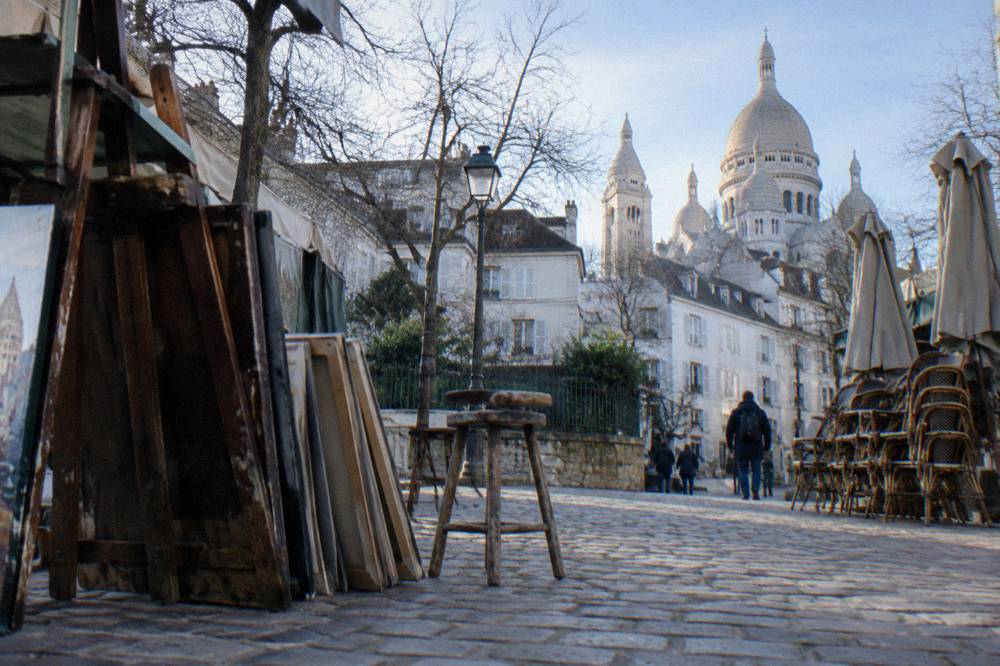
Place du Tertre is not a museum piece but a licensed workspace: 124 numbered, floor-marked pitches on the "Carre aux Artistes", each shared by two authorised artists working alternately, with rules requiring work made on site, a work in progress kept on the easel at all times, and only original, finished, signed works sold. Authorisation lasts up to 7 years per pitch.
The Ville de Paris runs the square as a regulated craft space rather than an open exhibition, and the rules are strict enough that they read like a guild charter. Each artist must keep making work while on the pitch, and the 2026 annual fee to the city is 334.28 euros per pitch. In its 2026 call the city opened 20 places across three categories: painters, portraitists and silhouette cutters, each spot one square metre and shared alternately with a partner. The full call is published on the city's official page for the Carre aux Artistes at paris.fr.
For a visitor, the practical reading is this: the people sketching and cutting silhouettes on the square are licensed practitioners of a trade the city protects, not costumed performers. Watching a portrait come together takes minutes, and the signed-original rule means what is sold is genuinely made there. There is no official price list for portraits, so agree the price with the artist before the sitting, and treat any figure you see quoted elsewhere with caution.
| Place du Tertre rule | Detail |
|---|---|
| Pitches | 124 numbered, floor-marked, each shared by two artists |
| Work rules | Work made on site, a work in progress kept on the easel at all times |
| Sales | Original, finished, signed works only |
| Authorisation | Up to 7 years per pitch |
| 2026 annual fee | 334.28 euros to the Ville de Paris |
| 2026 open categories | Painters, portraitists, silhouette cutters |
The square sits two minutes from the basilica and works well as the mid-morning stop on an art day, after the museum opens the story and before a walk finds the studios. For the streets around it, the prettiest street in Montmartre piece walks rue des Abbesses and rue Lepic in detail.
The Street Art Tour With An Artist
The street art tour is the one listing led by a working artist rather than a general guide: 2 hours 15 minutes, capped at 15 guests, meeting in front of the Starbucks facing the Moulin Rouge, with a 4.9 rating from 160 reviews and free cancellation. It includes no meal, so it slots between other stops without competing with a food booking.
Montmartre's art story did not stop in 1907, and this is the tour that proves it. The artist guide walks the group through the quarter's current murals, paste-ups and stencil work, which changes as walls get painted over, so no two departures cover exactly the same set of pieces. The small cap of 15 keeps the format conversational, and guests on the listing report the guide's practice background makes the difference: reading a wall is different from reading a plaque. Other pages covering the same trip are gathered on Montmartre Paris Tours.
The review pool is the thinnest of the three art tours at 160 reviews, so treat the 4.9 as a strong signal from a small group rather than a mass verdict. The meeting point at Place Blanche puts the start right at the Moulin Rouge, which makes it easy to combine with a look at the boulevard's cabaret frontage before the walk climbs into the residential lanes.
Moulin Rouge And The Cabaret Story
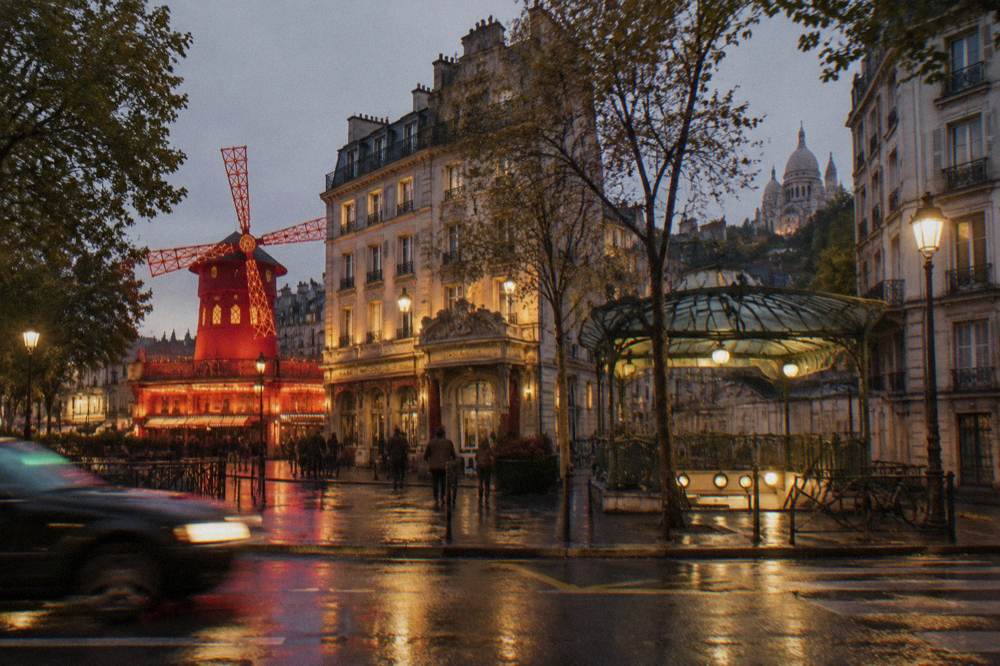
The Moulin Rouge at 82 Boulevard de Clichy was created in 1889 and remains a working dinner-and-show cabaret, with the evening starting at 7pm. None of the guided walks on this roster includes a show ticket: the tours pass the venue from the outside, and the hidden-gems listing states explicitly that the show is excluded. The nearest metro stop is Blanche on line 2.
The cabaret is the other half of Montmartre's fame, the half the painters painted and the posters sold. The venue's own history page, moulinrouge.fr, confirms the 1889 creation date and the address, and the show page confirms the Feerie revue with 80 artists and about 1,000 costumes, plus the French cancan. Show times beyond the 7pm dinner start and current ticket prices are not listed here; check the venue directly for the up-to-date schedule and rates.
For tour-goers the practical point is simpler. Several walks on this roster pass the Moulin Rouge as an exterior landmark, including the hidden-gems walk, which lists passing the Moulin Rouge among its inclusions alongside a freshly baked croissant from an award-winning bakery, hidden streets, scenic stairways and panoramic views. If the show itself is the goal, that is a separate booking from any walking tour.
The full story of how the cabaret and the hill fit together, including the venue's rules on bags in the cloakrooms, is in the site's Moulin Rouge and Montmartre tour guide.
How To Plan An Art And History Day On The Hill
A workable art day runs museum first, square second, studios and views after: the Musee de Montmartre opens at 10am, Place du Tertre is two minutes from the basilica, and the Bateau-Lavoir exterior at Place Emile-Goudeau sits on the walking route between them. The hill climbs 222 public steps to the basilica, and the funicular, which costs the same as a metro ticket, runs 6am to 12:45am every day.
The order matters because of opening hours and light. The museum's 10am opening and 5:15pm last admission frame the day, and the cemetery hours on the art-lovers walk's doorstep end access 15 minutes before close, so a late start squeezes both. The basilica itself is free and open every day from 6:30am to 10:30pm, so it needs no scheduling at all; the dome, at 8 euros for adults and 5 euros for children to 15, is a separate on-site ticket with no advance booking, and it involves about 280 steps with no elevator.
| Stop | Opens | Notes for the day |
|---|---|---|
| Musee de Montmartre, 12 rue Cortot | 10am daily | Last admission 5:15pm, gardens overlook the vineyard |
| Place du Tertre | Daylight hours | Artists work on site, agree portrait prices first |
| Bateau-Lavoir exterior, Place Emile-Goudeau | Any time | Private studios, no interior access |
| Sacre-Coeur basilica | 6:30am to 10:30pm | Free entry, dome ticket sold on site only |
| Cimetiere de Montmartre | Seasonal hours, from 8am weekdays | Access ends 15 minutes before close |
Getting up the hill is covered in full in the funicular and getting to the hill guide, but the short version: the funicular avoids the 222 steps and takes a minute and a half. If your art day ends at the Moulin Rouge end of the boulevard, Blanche metro on line 2 is the natural exit point, and it is also the meeting point for the street art tour and several classic walks.
Weather barely changes the plan. The hill's rainiest months see a handful of wet days, and every tour on this roster runs outdoors, so the free-cancellation terms on 15 of the 16 listings are worth knowing: the private food tour is the one non-refundable exception, though it is a food booking rather than an art one.
Private And Small-Group Walks For The Same Itinerary
If none of the three art tours fits your dates or group, three other listings cover the same ground in different formats: a 90-minute private walk, a hidden-gems small-group walk capped at 14 with a croissant included, and a small-group walk capped at 10, the smallest cap on the roster. All three are free-cancellation bookings.
The private option, run by ExperienceFirst, is the private version of the art, culture and food walk: 90 minutes with an experienced local private guide, meeting in front of the Saint-Jean de Montmartre church, rated 4.9 from 222 reviews. A private guide lets you weight the walk toward whatever interests you, more painters, more cabaret history, more architecture, which is the one thing no fixed group tour can offer.
The hidden-gems walk, run by Intrepid Urban Adventures, is the mid-tier group alternative: 2 hours, capped at 14, meeting outside the Blanche metro at ground level, with a stated inclusion of a freshly baked croissant from an award-winning bakery plus the hidden streets, stairways and panoramic views. It carries a 4.9 from 1,031 reviews. It is the best fit for visitors who want the art-quarter texture without a formally art-themed commentary.
For travellers who want the smallest possible group without going private, the small-group walking tour capped at 10 is the roster's tightest cap: 2 hours 15 minutes, meeting near the Blanche metro exit by the Moulin Rouge, rated 4.9 from 576 reviews, with free cancellation. The listing carries a real "likely to sell out" badge, so if a small group is the priority, book early rather than hoping on the day.
What The Tour Covers And What It Does Not
Renoir kept a studio at 12 rue Cortot, the same house where Suzanne Valadon made her home, Van Gogh at 54 rue Lepic from 1886 to 1888, Picasso at the Bateau-Lavoir from 1904 with Les Demoiselles d'Avignon painted there in 1907, and the Moulin Rouge's 1889 creation. It does not support exact painting counts, show times beyond the 7pm dinner start, or several popular anecdotes that circulate about the hill. For more on the painter's years on the hill, our guide to Van Gogh's Montmartre addresses and paintings covers exactly where he lived and what remains to see today.
This matters because Montmartre attracts more folklore per square metre than almost anywhere in Paris, and the folklore is often printed as fact. The Sacre-Coeur's own history, for example, can be stated safely only as begun in 1875 and consecrated in 1919, since sources conflict on a completion year. The Commune-era symbolism of the site is a genuine debate among historians, not a settled motive, and it is framed that way in the site's Sacre-Coeur tour guide.
The same discipline applies to the tours. The three classic walking tours and the Discover Walks tour all run with a local guide, but their exact stop lists vary, so check the live booking page for what each one covers. The art tours' inclusions, by contrast, are stated as the listings print them: cemetery and basilica entry plus the sketching session for the art-lovers walk, the croissant for the hidden-gems walk, the tasting upgrade for the art, culture and food walk.
If your interest runs deeper than a walk can go, the museum's Le Cirque exhibition and the cemetery's resident list are the two site-based follow-ups, and both are open to independent visitors. For the broader question of how the hill stacks up as a destination, the things to do in Montmartre guide places the art itinerary among everything else the quarter offers.
Common Questions About Montmartre Art And History Tours
Which Montmartre art tour includes entry to sites?
Only the Montmartre for Art Lovers walk states entry to two sites: the cemetery of Montmartre and the Sacre-Coeur basilica, along with a sketching session on a small canvas. The street art tour and the art, culture and food walk are outdoor walks without stated site entry.
Where is the Montmartre museum in Paris?
The Musee de Montmartre is at 12 rue Cortot, one of the oldest buildings on the Butte, a 17th-century house where Renoir kept a studio and where Suzanne Valadon and Maurice Utrillo lived and worked. It is open every day from 10am to 6pm, last admission 5:15pm.
How much does the Musee de Montmartre cost?
Full-price entry during the exhibition period is 16 euros, students 18 to 25 and teachers pay 10.50 euros, ages 10 to 17 pay 9 euros, under 10s enter free, and a gardens-only ticket is 6 euros. The gardens overlook the Clos Montmartre vineyard.
Did Van Gogh live in Montmartre?
Yes. He moved to Paris in March 1886 to live with his brother Theo, and in June 1886 they took the fourth floor of 54 rue Lepic. Vincent stayed until he left for Arles on 20 February 1888 and painted Montmartre scenes including the windmills of the Moulin de la Galette.
Do any Montmartre tours include the Moulin Rouge show?
No. The roster's walks pass the Moulin Rouge from the outside, and the hidden-gems listing states explicitly that the show is excluded. The venue, created in 1889, runs its dinner-and-show evening from 7pm, and a show ticket is a separate booking.
Can you visit the Bateau-Lavoir where Picasso worked?
Only from the outside. The building at 13 rue Ravignan, where Picasso settled in 1904 and painted Les Demoiselles d'Avignon in 1907, remains a private artists' studio residence with no public interior access. The exterior can be viewed any time from Place Emile-Goudeau.