Did Van Gogh Live In Montmartre?
Yes: Vincent van Gogh lived at 54 rue Lepic in Montmartre with his brother Theo from June 1886 until he left for Arles in February 1888. Here is where he lived, what he painted, and how to see his hill today.
Did Van Gogh Live In Montmartre?
Yes. Vincent van Gogh lived in Montmartre for most of his two Paris years, from June 1886 until 20 February 1888, when he left for Arles. He shared an apartment with his brother Theo at 54 rue Lepic, on the upper slope of the Butte, and painted the windmills, gardens and views of the hill while he was there. The address and dates are recorded in reference sources on his Paris period.
He arrived in Paris in March 1886 to live with Theo, an art dealer, and the brothers moved to the fourth floor of 54 rue Lepic in June of that year. Rue Lepic climbs the hill from the Moulin de la Galette toward the top of the Butte, and from those windows Vincent painted views over the city. He stayed until February 1888, when he boarded a train south, and the Montmartre scenes he made on the hill, including the windmills, belong to those two years. You can still trace his old haunts on foot today, and our guide to pairing a Moulin Rouge show with a Montmartre walking tour shows you how to fit both into one evening.
It is worth being precise about what the record supports and what it does not. The street number, the move-in month and the departure date are documented. No exact count of the paintings he made during his Paris years survives, and no letter or quotation from Van Gogh appears on this page. Any tour or book that puts an exact number of works on his Paris period is filling a gap that the primary record leaves open. Treat the two years as the fact, and the details beyond them as colour rather than certainty.
Montmartre in the years Van Gogh lived there was cheap, rural at the edges and full of artists, which is why the brothers chose it. Windmills still stood on the ridge, and rents were low enough for a dealer's brother and a painter to share a flat. Van Gogh was not alone on the Butte, far from it: the buildings around Place Emile-Goudeau and rue Ravignan held working painters within a few minutes' walk, and the cafes of the hill served as studios, exhibition spaces and argument halls. That is the context in which his Montmartre paintings were made, and it is still visible in the street plan today.
If the question brings you here because you are planning a visit, the good news is that the hill rewards an art-led walk. Three listings on this site fit that brief well: an artist-guided street art walk, an art-lovers tour that includes cemetery and basilica entry, and a 90-minute art, culture and food walk with the deepest review pool on the roster.
Where Exactly Did Van Gogh Live On The Hill?
The address is 54 rue Lepic, on the fourth floor, in the apartment he shared with Theo from June 1886. The building still stands, and rue Lepic remains one of the most walked streets in the 18th arrondissement, climbing from the lower hill near the Moulin de la Galette up toward the top of the Butte. You can stand outside it today.
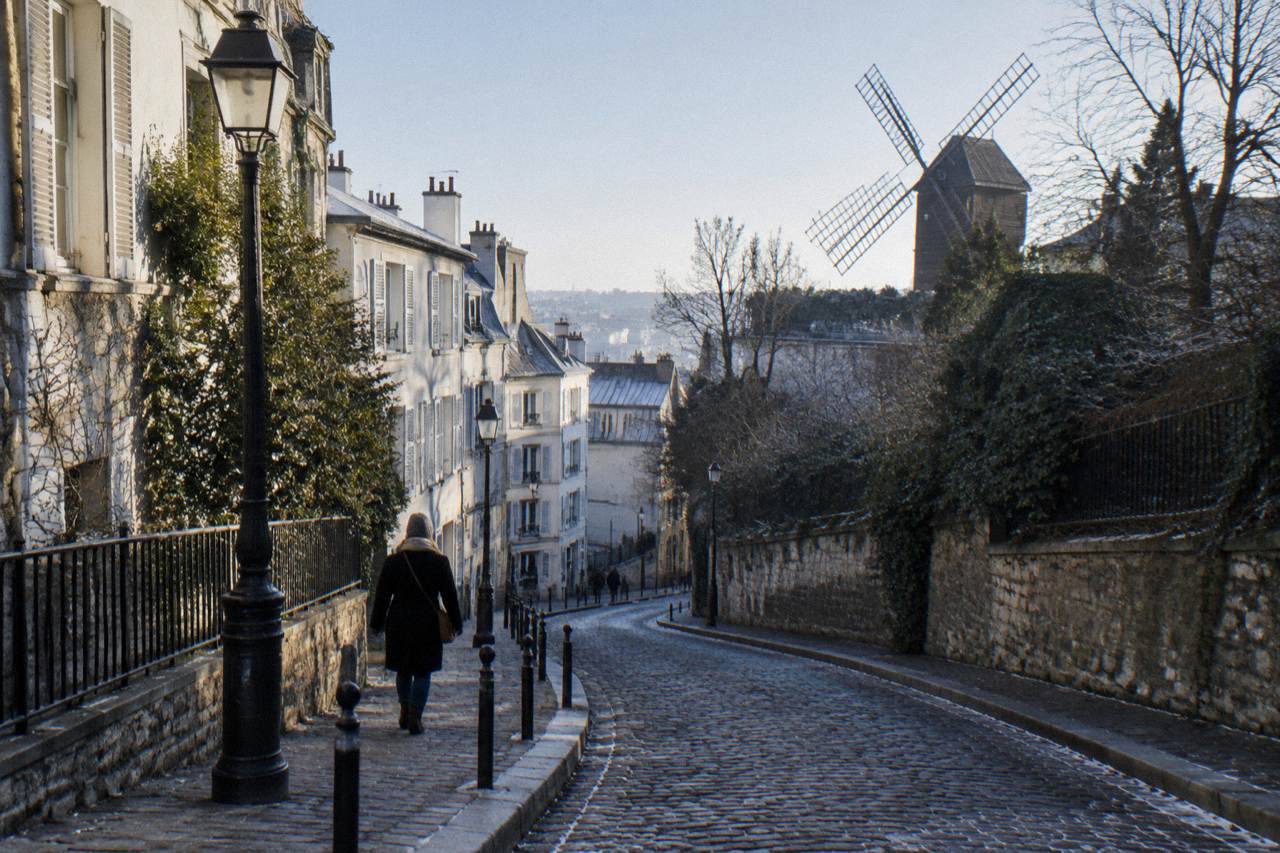
Rue Lepic is a real working street, not a museum piece. It curves up the hill in two legs, with a bend near the Moulin de la Galette, and the Van Gogh apartment sits on the upper stretch, where the road narrows and the views open over the rooftops. The building is a private residence, so the visit is an outside one: you look up at the fourth-floor windows, you imagine the view over Paris that Vincent painted, and you keep walking. That is how most visitors experience it, and it is enough, because the street itself is the artifact.
The walk up rue Lepic is also a walk through the painters' Montmartre. The road passes within a few minutes of the Musee de Montmartre at 12 rue Cortot, one of the oldest buildings on the Butte, where Renoir had a studio and where Suzanne Valadon lived and worked. The museum is open every day from 10am to 6pm, with last admission at 5:15pm, and full-price entry during the exhibition period is 16 euros, with gardens-only access at 6 euros. Its gardens overlook the Clos Montmartre vineyard, the working Paris vineyard that gives the hill its wine story. For the current exhibition programme, the museum's own site lists what is on: the Musee de Montmartre's official pages carry the calendar.
Van Gogh lived with his brother Theo at 54 rue Lepic from June 1886 until he left Paris for Arles in February 1888, and painted the view from his room there, as the Wikipedia entry on the Rue Lepic view painting records. The same sources confirm he painted the windmills of the hill, the Moulin de la Galette among them, during his Montmartre months. He was painting a landscape that was already disappearing, which is part of why those canvases matter: they catch the last rural edge of the Butte before it closed over with apartment blocks.
For a walk that treats the hill as a living studio rather than a set of plaques, the street art tour run by a working artist is the closest match on the roster. It runs 2 hours 15 minutes in a small group capped at 15, it is rated 4.9 from 160 reviews, and it meets in front of the Starbucks facing the Moulin Rouge. You can read more on the Montmartre street art tour page or go straight to the operator's live listing: Check availability.
What Did Van Gogh Paint In Montmartre?
He painted the hill itself: the windmills on the ridge, including the Moulin de la Galette, the gardens and allotments on the slopes, and views over Paris from the rue Lepic windows. These were scenes within walking distance of his front door, made between 1886 and 1888, and they sit at the start of the period when his palette brightened under the influence of the painters around him in Paris.
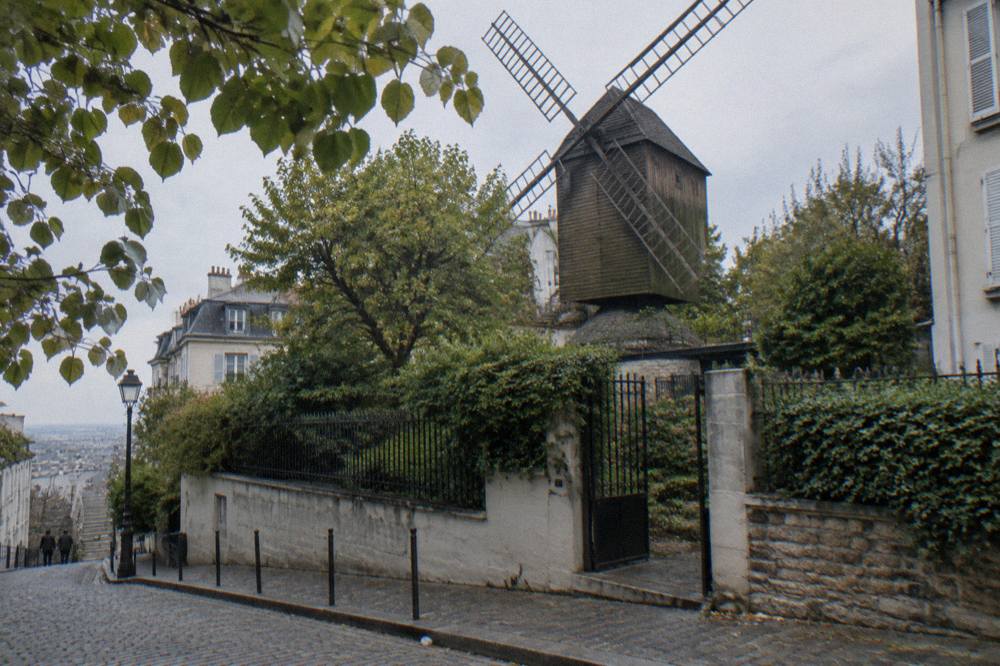
The Montmartre windmill canvases are the anchor of the group. The Moulin de la Galette still stands on rue Lepic today, a real survivor among the windmills that once dotted the ridge, and it appears in the record of Van Gogh's Montmartre subjects. The allotments and kitchen gardens that covered the slopes back then are gone, built over within a generation, but the paintings preserve them: a working hill on the edge of a growing city, painted by a man who had arrived from the darker tonality of his earlier Dutch period and was learning, in Paris, to use colour.
That transformation is why his Montmartre months matter to art historians. Paris put him next to Impressionist and post-Impressionist painting, in the galleries Theo dealt with and in the studios and cafes of the hill, and the work he made on the Butte shows the change happening. The canvases are held in collections far from Paris now, so the walk up rue Lepic is not about seeing the paintings, it is about seeing what he saw. The curve of the street near the Moulin de la Galette is the closest thing Montmartre has to standing inside one of his compositions.
If the artist-guided walk sounds like the right fit for your dates, it is worth checking what is running before you build the rest of your day around it. The listing carries free cancellation, so a slot booked now can be moved or dropped if your plans shift.
The honest caveat bears repeating, because it shapes how you should read any confident-sounding account. The address, the years and the subjects are all on record. It does not give a number of Paris works, and it does not authenticate any letter or quotation. Reference pages on his Paris period decline to count the paintings, and a page that tells you he made "over 200 works in Montmartre" is estimating. The paintings themselves are the evidence, and the hill is the frame.
What Famous Person Lived In Montmartre?
Van Gogh is the most searched, but the hill's resident roll runs deep: Picasso worked at the Bateau-Lavoir at 13 rue Ravignan from 1904 and painted Les Demoiselles d'Avignon there in 1907; Renoir kept a studio at 12 rue Cortot; Suzanne Valadon and her son Maurice Utrillo lived and worked in the same building in the 1910s and the decade that followed; Modigliani, Juan Gris, Braque and Apollinaire all passed through the studios and cafes of the Butte.
Montmartre's fame as an artists' quarter is not a single-name story. The Bateau-Lavoir, a former piano factory converted into roughly 20 studios in 1889, was the epicentre: Picasso settled there in 1904, and the circle around him included Modigliani, Juan Gris, Braque and the poet Apollinaire. A fire in May 1970 destroyed most of the original building, which was rebuilt in 1978 and remains a private artists' residence with no public interior access. The exterior can be viewed any time, from Place Emile-Goudeau.
The Musee de Montmartre holds the domestic end of that story. The building at 12 rue Cortot is one of the oldest on the Butte, Renoir had a studio there, Suzanne Valadon lived and worked there, and Emile Bernard and Raoul Dufy are also recorded as residents. The museum recreates the Valadon studio-apartment, and its garden looks down over the Clos Montmartre vineyard, a view that has changed less than almost anything else on the hill.
The table below gathers the documented residents and sites in one place, with what you can actually see today.
| Name | Montmartre link | What you can see now |
|---|---|---|
| Vincent van Gogh | Lived at 54 rue Lepic, June 1886 to February 1888 | The building exterior and the street he painted |
| Pablo Picasso | Worked at the Bateau-Lavoir, 13 rue Ravignan, from 1904; Les Demoiselles d'Avignon painted there 1907 | The rebuilt building's exterior at Place Emile-Goudeau |
| Pierre-Auguste Renoir | Studio at 12 rue Cortot | The Musee de Montmartre, open daily 10am to 6pm |
| Suzanne Valadon and Maurice Utrillo | Lived and worked at 12 rue Cortot in the 1910s and after | The recreated studio in the Musee de Montmartre |
| Emile Bernard, Raoul Dufy | Also residents of 12 rue Cortot | The museum's permanent rooms |
The wider hill adds more names than any single walk can hold. The Cimetiere de Montmartre, whose entrance is the meeting point for the art-lovers walking tour, holds artists, dancers and composers among its residents, and the art-lovers listing is the only roster tour that states entry to the cemetery in its inclusions. The cemetery operates seasonal hours from 16 March to 5 November, Monday to Friday 8am to 6pm, Saturday from 8:30am and Sundays and holidays from 9am, with access ending 15 minutes before closing; picnics, alcohol, sports and animals are not permitted, per the official Paris city pages: the Ville de Paris cemetery page sets out the rules. For a fuller walk through the hill's art history, the companion guide on art and history walks in Montmartre covers the ground in more detail.
If you want the resident-artists story with a guide but prefer a general walk over an art-specialist one, the hidden-gems small-group tour is a strong middle path. It is run by Intrepid Urban Adventures, rated 4.9 from 1,031 reviews, 2 hours long with a group capped at 14, and its stated inclusions include a freshly baked croissant from an award-winning bakery along with the hidden streets, stairways and views, passing the Moulin Rouge, Sacre-Coeur and the vineyard. The Moulin Rouge show is excluded, and the venue is a pass-by, not an entry.
Can You Walk Van Gogh's Montmartre Today?
Yes, and the walk is short. The core route is rue Lepic from the Moulin de la Galette bend up past number 54, then Place Emile-Goudeau for the Bateau-Lavoir exterior, then 12 rue Cortot for the Musee de Montmartre, all within about 15 minutes of walking between the farthest points. Add the Cimetiere de Montmartre or the basilica and you have a half day.
The hill's geography has not moved. Rue Lepic still climbs the same curve, the Moulin de la Galette still stands on it, and the Bateau-Lavoir still fronts Place Emile-Goudeau, even if the building behind the facade is the post-fire rebuild. The Musee de Montmartre is a five-minute walk from the Van Gogh address, and the museum's gardens give you the vineyard view that the painters of the hill knew. A self-guided version costs nothing but shoe leather, and the decision between going alone and going with a guide is covered in full on the self-guided versus guided tour comparison.
What a guide adds is the layer the street does not print on its walls. The art-lovers tour, run by Trivial Guides, is built exactly for this: it meets in front of the Montmartre Cemetery entrance, runs 2 hours with an expert guide, and its stated inclusions cover entry to the cemetery, a sketching session on a small canvas, and entry to the Sacre-Coeur basilica. It is rated 4.9 from 718 reviews and sits in the low price tier among the art-focused walks. The sketching session is the detail that separates it from a standard history walk: you make something on the hill, which is the closest a two-hour visit gets to what the residents of the Bateau-Lavoir were doing every day.
For visitors who want the same material at their own pace and with their own questions, the private version of the art, culture and food walk exists. It is run by ExperienceFirst, it is a 90-minute private walk with an experienced local guide, it meets in front of the Saint-Jean de Montmartre church, and it is rated 4.9 from 222 reviews. A private format lets you weight the route toward the Van Gogh years or toward the Picasso circle, which a group walk's fixed itinerary may not.
Two practical notes for the walk. First, the hill is steep: 222 public steps lead up to the basilica, and the funicular, which costs the same as a metro ticket, covers the climb in about a minute and a half. The full logistics, including the funicular case, are laid out in the guide to the funicular and getting to the hill. Second, if your walk falls in the second half of 2026, the Musee de Montmartre is showing an exhibition on the circus and modern art, running 16 October 2026 to 14 February 2027. Exhibition periods can alter the museum's usual opening hours, so check its own pages for the current schedule before you set out.
What Remains Of The Artists' Hill In 2026?
More than you might expect. The street plan, the Moulin de la Galette, the Bateau-Lavoir site, the Musee de Montmartre and the vineyard are all still in place, and the hill still hosts working artists, from the licensed painters of Place du Tertre to the street artists whose work the tours on this site follow. The artist-led visits are the way to see that living layer, not just the memorials.
Place du Tertre still operates its Carre aux Artistes under Ville de Paris rules: 124 numbered, floor-marked pitches, each shared by two authorised artists working alternately, with only original, finished, signed works sold on site. Authorisation lasts up to seven years per pitch, and the 2026 annual fee to the city is 334.28 euros. The square is not an exhibition space by rule, it is a working one, and the artists must keep a work in progress on the easel at all times. That regulation is the clearest evidence that the hill's art is a practice, not a pageant.
The street art layer is the newest chapter, and it is why the artist-guided tour exists on this roster. A working artist-guide takes a small group of at most 15 through the lanes where paste-ups, murals and stencil work appear and disappear, which is the honest way to present street art: it changes. The tour runs 2 hours 15 minutes, is rated 4.9 from 160 reviews, and includes no meal, so plan a lunch stop on rue des Abbesses or rue Lepic before or after. The Montmartre Paris Tours roster page carries the full listing detail for that walk and the other art-led options.
The Wall of Love at Square Jehan Rictus, Place des Abbesses, sits a short walk from the rue Lepic route and makes an easy add-on. The vineyard below the museum's gardens feeds the Fete des Vendanges, and none of this is Van Gogh's hill exactly, but it is the same hill doing what it has always done: making things.
For the art-led visits, these three listings are the ones to compare: the artist-guided street art walk, the cemetery-and-sketching art-lovers tour, and the 90-minute art, culture and food walk.
Common Questions About Van Gogh In Montmartre
Did Van Gogh Live In Montmartre?
Yes. He lived at 54 rue Lepic with his brother Theo from June 1886 until he left for Arles on 20 February 1888, and he painted Montmartre scenes, including the windmills, during those two years.
Can You Visit The Building Where Van Gogh Lived?
You can see it from the street. 54 rue Lepic is a private apartment building, so the visit is an exterior one, but the building and the street he painted are unchanged in outline and easy to include in any walk up the hill.
Did Van Gogh Paint The Moulin Rouge?
Not the cabaret. During his Montmartre years he painted the hill's windmills, including the Moulin de la Galette, along with other local scenes. The Moulin Rouge, created in 1889, is a cabaret venue on Boulevard de Clichy, and no claim on this page ties it to a specific Van Gogh painting.
Where Did Picasso Live In Montmartre?
Picasso worked at the Bateau-Lavoir at 13 rue Ravignan, settling there in 1904 and painting Les Demoiselles d'Avignon there in 1907. The original building mostly burned in 1970 and was rebuilt in 1978; the exterior at Place Emile-Goudeau can be viewed any time.
Is There A Van Gogh Museum In Montmartre?
No dedicated Van Gogh museum exists on the hill. The closest thing is the Musee de Montmartre at 12 rue Cortot, which covers the artists of the Butte, including Renoir's studio and the recreated Valadon and Utrillo apartment, open daily 10am to 6pm.
Which Tour Covers Van Gogh's Montmartre Best?
For the artists' hill with an expert guide, the art-lovers walking tour includes cemetery entry, a sketching session and basilica entry over 2 hours. For the hill's living art layer, the street art tour with an artist runs 2 hours 15 minutes in a group capped at 15.