Self-Guided Or Guided Montmartre Tour: Which One Fits
Montmartre is one of the few Paris districts where the free option is genuinely good: the basilica costs nothing, the hill is public, and the views are unguarded. So what does paying for a guide actually buy?
Short answer
A self-guided walk works well if you want flexibility and low cost: the basilica is free and the 222 public steps are open to all. A guided tour adds route logic, verified stories and small-group pace, with prices on the live listings. Choose a guide for context, choose solo for freedom.
Self-Guided Or Guided Montmartre Tour: Which One Fits
Montmartre is the rare Paris district where the do-it-yourself option is not a consolation prize. The Sacre-Coeur basilica is free and open every day from 6:30am to 10:30pm, the 222 steps up the hill are public property, and the views over the city cost nothing at all. And yet the guided walks on this site's roster carry ratings from 4.8 to 5.0 across thousands of reviews, which suggests plenty of visitors still prefer a guide. This guide compares the two routes honestly: what a self-guided montmartre walking tour covers, what a small-group guided walk adds, and who should save their money. Where you sleep shapes the whole visit, so if you're weighing the two neighbourhoods, this comparison of staying in Le Marais versus Montmartre sorts out which one suits your trip.
What Does A Self-Guided Walk Actually Cover?
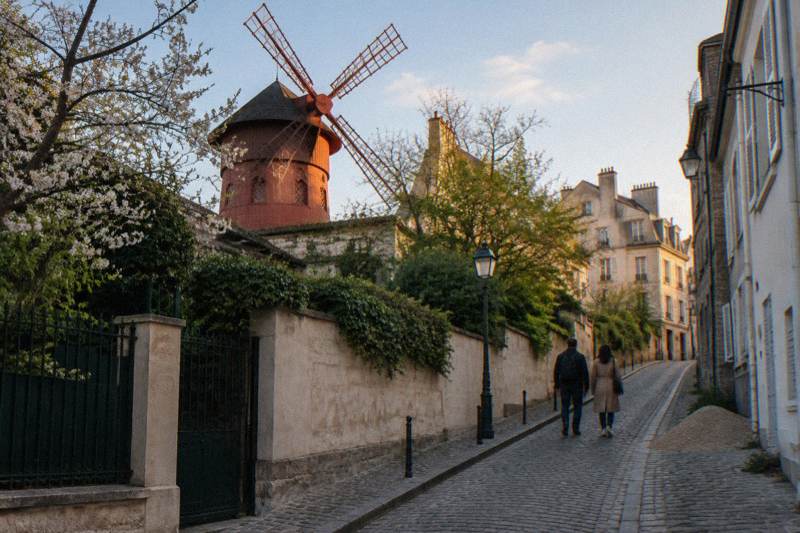
A self-guided walk covers everything visible and public in Montmartre at zero ticket cost: the basilica interior, the 222 steps, Place du Tertre, the Moulin Rouge facade at 82 Boulevard de Clichy, and the lanes around rue Lepic. What it cannot cover is the vineyard interior, which the city restricts to guided visits, or any story a guide would tell you.
The core loop is compact. Most independent walkers start at the Blanche metro exit on line 2, where the Moulin Rouge stands across the boulevard, then climb either the steps or the funicular, which costs the same as a metro ticket and saves the 222-step ascent. The basilica sits at the top. From there, Place du Tertre is two minutes away, the Musee de Montmartre is a short walk down rue des Saules, and the Wall of Love sits at Place des Abbesses on the way back down.
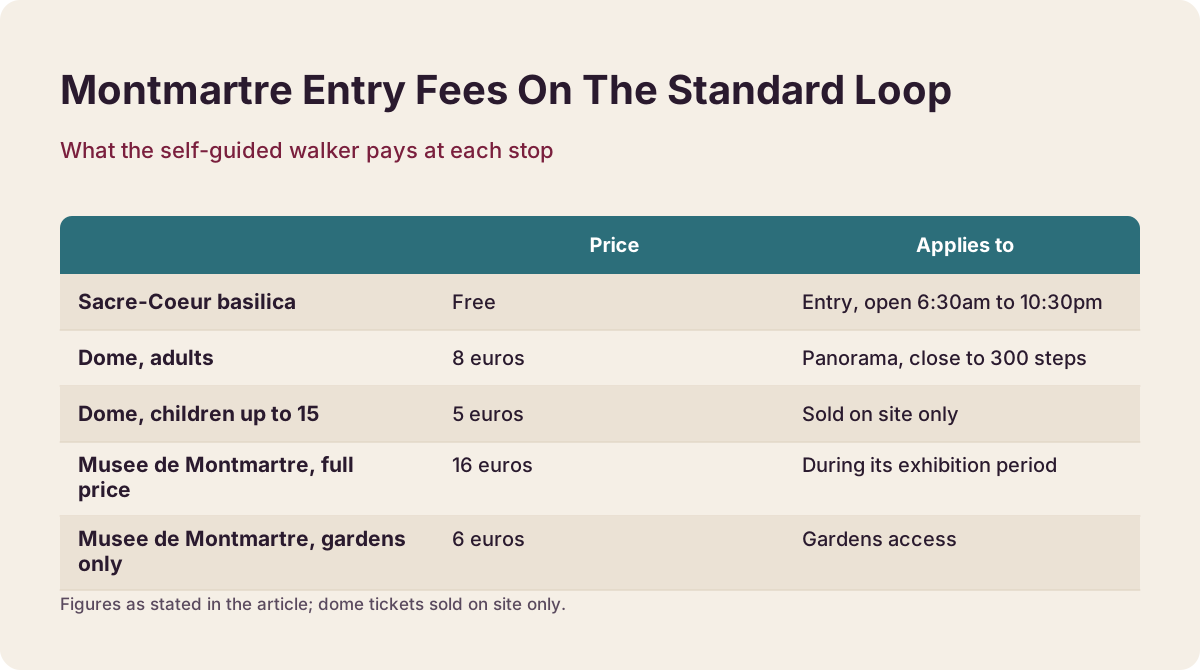
Entry fees on this route are close to zero. The basilica is free. The dome, if you want the panorama from the top, is 8 euros for adults and 5 euros for children up to 15, sold on site only. The Musee de Montmartre charges 16 euros full price during its exhibition period, 6 euros for gardens only. Everything else on the standard loop is street-level and free.
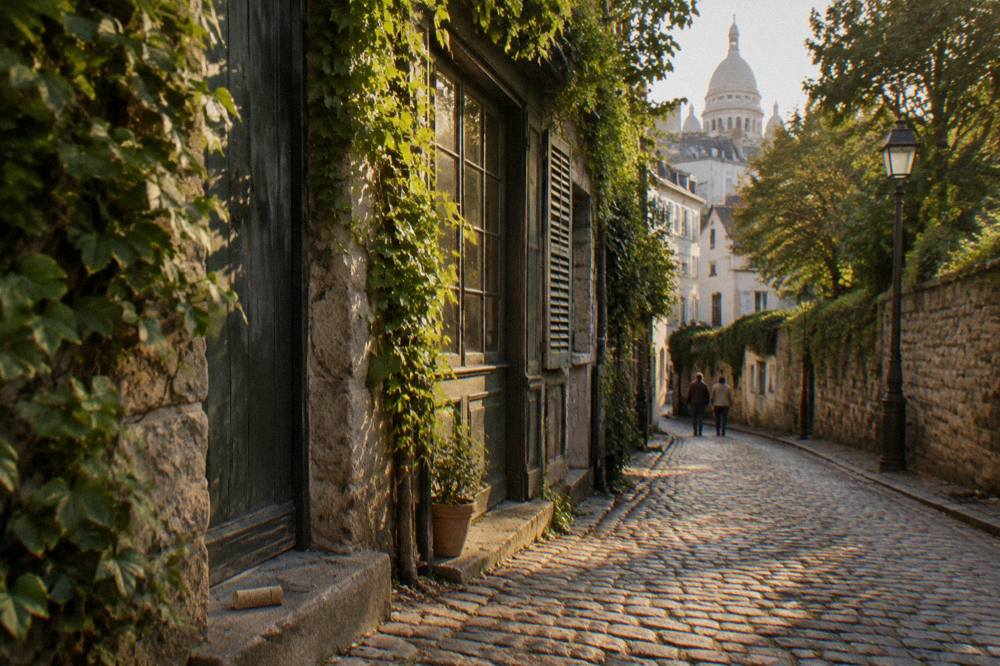
The honest weakness of the self-guided route is interpretation. The hill's story involves artists, vineyards, windmills and a basilica whose meaning historians still debate, and none of that is written on the walls. If you want the background, the guide on why Montmartre is so famous fills in the history, and our free things to do in Montmartre guide maps the no-cost route in detail.
What Does A Guided Tour Add That A Map Cannot?
A guided tour adds three things a map cannot: a route that skips the hill's dead ends, stories verified by a professional guide, and pacing set by someone who knows the crowds. On this roster that means groups capped at 10 to 25 people, durations from 90 minutes to 3.5 hours, and ratings from 4.8 to 5.0 across review pools as deep as 2,874.
The route logic matters more here than in flatter districts. Montmartre is a web of steep lanes and staircases where a wrong turn costs you a climb. Guides from this roster run tight loops: the classic walks start at Place Saint-Pierre or the Blanche metro, the art walk starts at the Montmartre Cemetery entrance, and the food tours thread the shops around rue Lepic and rue des Abbesses.
The stories are the other half of the purchase. A guide can point at an unremarkable building and explain who painted what inside it, which is the entire point of a district that housed Picasso, Van Gogh and Renoir within a few streets of each other. The art, culture and food walk run by ExperienceFirst, rated 4.9 from 2,874 reviews, packs that context into a 90-minute route, with an optional wine and cheese tasting upgrade at a historic restaurant.
Pacing is the quiet benefit. The small-group walk capped at 10, rated 4.9 from 576 reviews, moves at the group's speed rather than a fixed timetable, and the Discover Walks tour, 4.8 from 1,028 reviews, covers the essentials in just 1.5 hours, the shortest guided option on the roster. Whether that pace is worth it is the question our is the Montmartre walking tour worth it article answers in detail.
Self-Guided, Small Group Or Private: How Do The Formats Compare?
Self-guided is the cheapest and most flexible format but explains nothing. Small-group tours sit in the low to mid price tiers, cap at 10 to 25 people and carry a guide's commentary. Private tours cost the most, price per group rather than per person on some listings, and let you set the route, with the same guide quality as the group walks.
The comparison below uses only what the listings state. Cost is given as a tier, not a figure, because from-prices change and the live listing is the authority.
| Format | Cost tier | Pace | Flexibility | What gets explained |
|---|---|---|---|---|
| Self-guided | Free sights, plus dome at 8 euros | Entirely yours | Total; change route mid-walk | Nothing, unless you carry a guidebook |
| Small-group walk | Low to mid tier | Fixed start, group rhythm | Choose start time only | History, art, route context from a local guide |
| Private walk | Private tier, some priced per group | Yours, within the booked window | Route requests usually possible | Same depth, aimed at your interests |
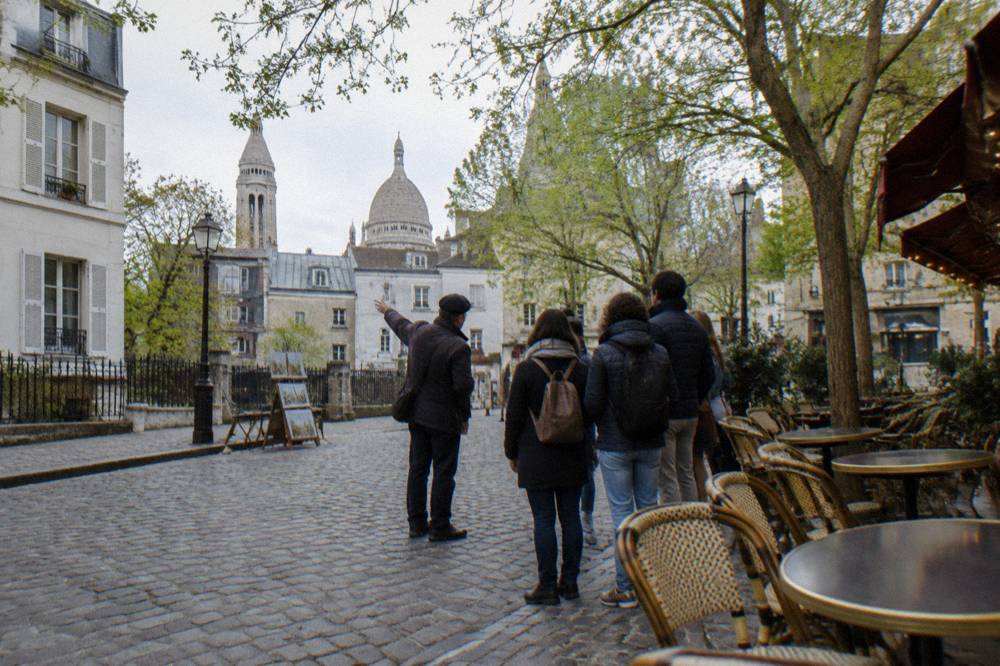
The group caps deserve a closer look, because they vary widely on this roster. The classic small-group walk caps at 10, the smallest cap on the site. The hidden-gems walk run by Intrepid Urban Adventures caps at 14, the street art tour caps at 15, and the art, culture and food walk runs up to 25. If the crowd size matters to you more than the commentary topic, the cap number on the listing is the first thing to check.
The private format deserves its own note. The private walk run by ExperienceFirst, rated 4.9 from 222 reviews, covers the same art, culture and food ground in 90 minutes with a dedicated guide, and the private Sacre-Coeur tour prices per group of up to 2 rather than per person. Our Montmartre private tour guide compares all of them, including the one non-refundable listing on the roster.
Can You Walk From Montmartre To Sacre-Coeur?
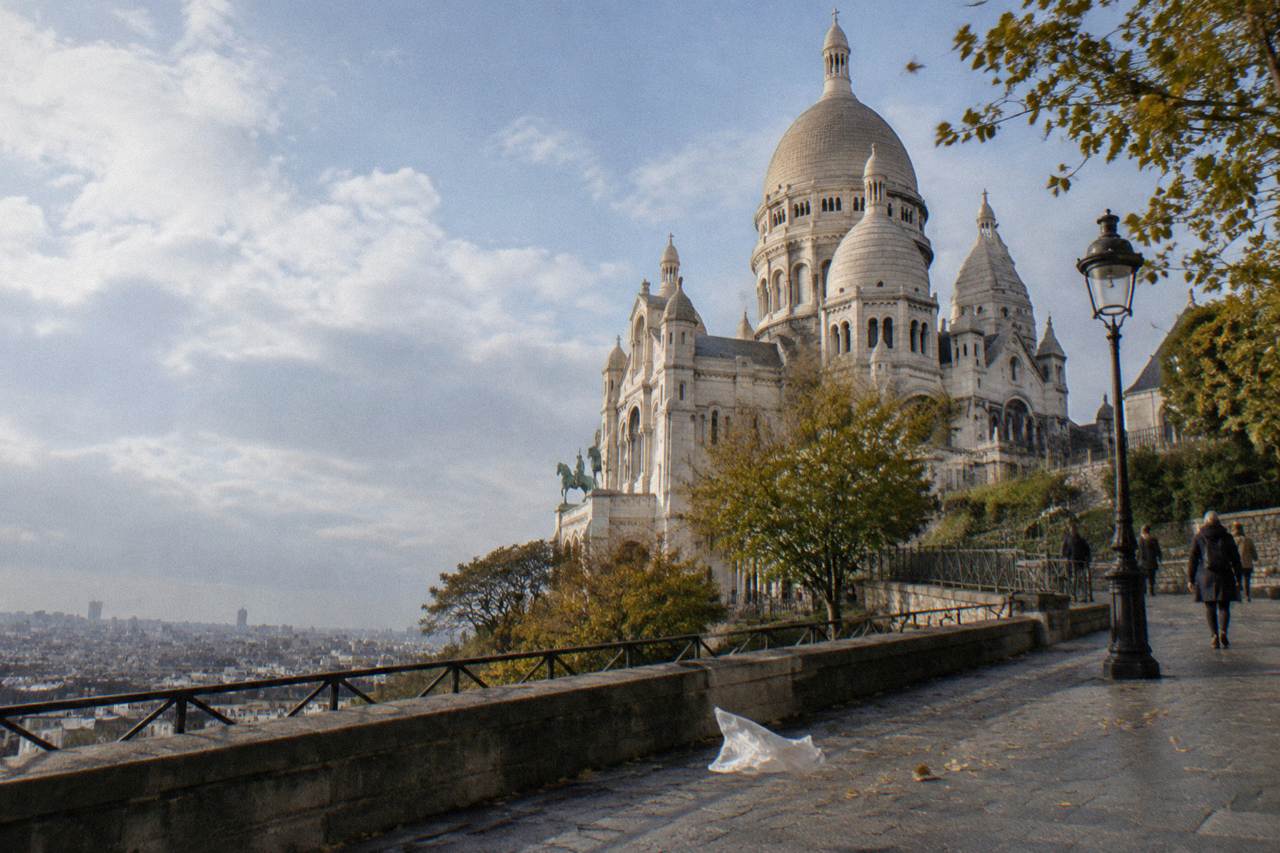
Yes, easily: Sacre-Coeur sits at the top of the Montmartre hill, so every walk through the district ends at or passes the basilica. The 222 public steps lead up from Place Saint-Pierre, and the funicular, costing the same as a metro ticket, runs the same climb in about 90 seconds.
The steps are the classic approach and the free option. They rise from the square below the basilica, and the climb is short but real, which is why several guided walks on this roster use the funicular side or the gentler back lanes instead. Our getting to the hill guide covers every approach, including which metro stations serve the area: Blanche and Anvers on line 2, Abbesses on line 12.
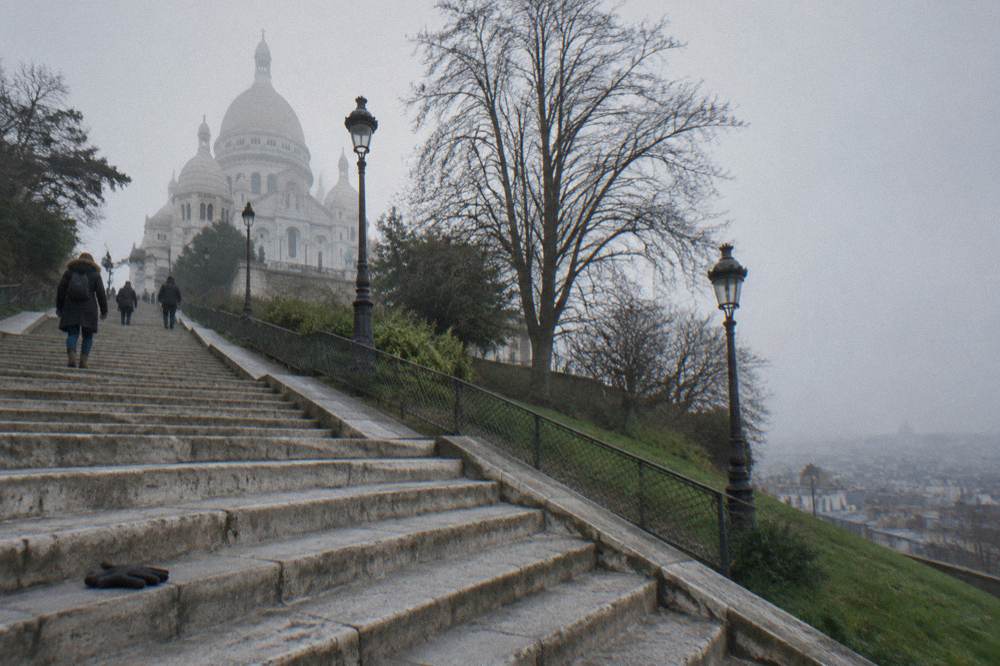
For the self-guided walker, the basilica is the natural finish line. Entry is free, the interior is open from 6:30am to 10:30pm every day, and photography is not permitted in the nave, only in the side aisles. A 10 to 15 minute wait is possible between 10:30am and 5pm when crowds build. The dome is the paid add-on at 8 euros for adults, with about 280 steps and no elevator, and tickets are sold on site only.
Guided walks handle the basilica differently. The art-lovers tour run by Trivial Guides states entry to the Sacre-Coeur basilica among its inclusions, alongside cemetery entry and a sketching session. The art, culture and food walk explicitly excludes entry inside the basilica, so it passes by rather than entering. Check the inclusion list on whichever listing you are weighing, because the site's own Sacre-Coeur tour guide covers the differences.
What Are The Famous Steps In Montmartre?
The famous steps are the 222 stone stairs from Place Saint-Pierre up to the Sacre-Coeur forecourt, the longest public staircase on the hill. Montmartre also has dozens of smaller staircases between its lanes, and the guided hidden-gems walk makes a feature of the scenic ones, while the funicular bypasses the main flight entirely.
The 222 steps are verified against the Paris tourism office's own page on the funicular, which notes the ride exists precisely to avoid that staircase. For most visitors the steps are a feature rather than an obstacle: the view opens up on the way up, and street performers work the landings. More of these guides are collected on Montmartre Paris Tours.
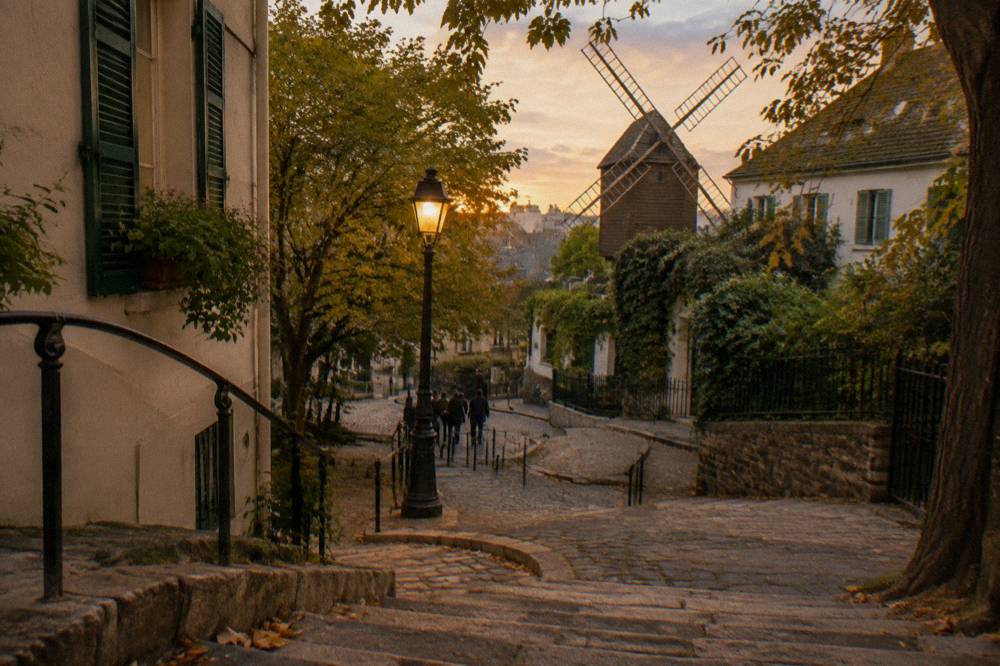
Beyond the main flight, the hill's smaller staircases are where the self-guided walker most often gets lost, and where a guide earns their fee. The hidden-gems walk run by Intrepid Urban Adventures, rated 4.9 from 1,031 reviews, lists hidden streets and scenic stairways among its stated inclusions, along with a freshly baked croissant from an award-winning bakery and panoramic views. It passes the Moulin Rouge, Sacre-Coeur and the vineyard from the outside.
If steep stairs are a problem rather than an attraction, read is Montmartre difficult to walk before deciding. The hill's gradients are the one factor that should push a visitor toward the funicular, the back-lane approaches or a shorter guided route regardless of budget.
Which Sights Cost Money Either Way?
The paid sights are the dome at 8 euros for adults, the Musee de Montmartre at 16 euros full price, and any food you buy. The basilica, the steps, Place du Tertre, the Moulin Rouge exterior and the lanes are all free. No walking tour on this roster includes a dome ticket, a funicular ticket or a museum ticket unless its listing says so.
This is where the self-guided route wins on arithmetic. A solo visitor who skips the dome and the museum spends nothing on sightseeing at all. A guided tour adds its own price on top of any dome or museum entry you want, though the food tours fold their tastings into the ticket.
| Sight or item | Cost | Notes |
|---|---|---|
| Sacre-Coeur basilica entry | Free | Open daily 6:30am to 10:30pm |
| Dome access | 8 euros adults, 5 euros children to 15 | On site only, about 280 steps |
| Musee de Montmartre | 16 euros full price, 6 euros gardens only | Open daily 10am to 6pm |
| Funicular ride | Same as a metro ticket | Runs 6am to 12:45am, about 90 seconds |
| Place du Tertre portraits | Prices set by each artist | No official price list exists |
| Moulin Rouge show | Separate ticket, not part of any walk | Dinner and show evening starts at 7pm |
The official basilica site states the dome prices and hours directly, and the Ville de Paris page for the Clos Montmartre vineyard confirms that its interior is accessible on guided visits only, so no walking tour, guided or not, gets you inside the vines outside that framework. The Musee de Montmartre's own site lists its rates and its daily hours.
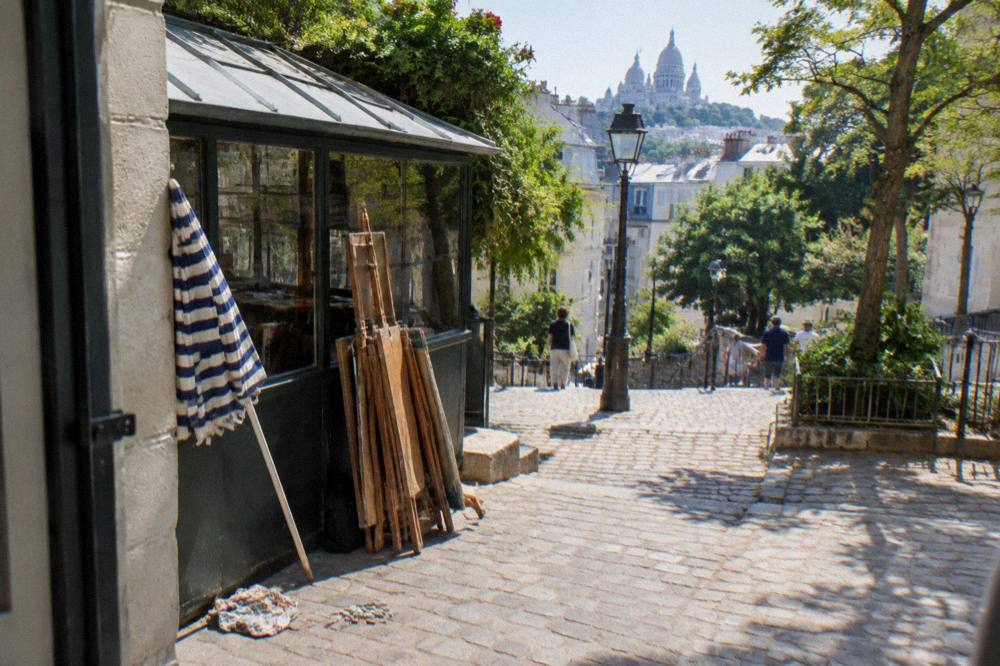
Place du Tertre is worth a specific note for self-guided walkers. The square's artist pitches are a regulated city institution, 124 numbered spots shared by two authorized artists each, with a 334.28 euro annual fee to the Ville de Paris and a rule that only original, signed works made on site may be sold. Portrait prices are set by each artist and no official list exists, so agree the price before you sit down.
Who Should Skip A Guided Tour Altogether?
Skip the guide if you are confident reading a map on a hill, travelling on a tight budget, visiting early or late in the day when crowds are thin, or already know the district's history. The free route genuinely covers the sights, and the money saved covers the dome, the museum and lunch on rue Lepic with change left over.
The self-guided route is strongest outside peak hours. The basilica opens at 6:30am, and a walker arriving before 10am gets the steps and the forecourt nearly empty, something a fixed-departure tour cannot offer. The same logic applies at the end of the day, though the roster holds no dedicated evening tours: the listed walks run daytime slots, so check departure times on the listing for your date rather than assuming a sunset option exists.
Budget travellers should also know that the deepest review pools on the roster belong to guided walks, not because guides are required but because most visitors book them. The highlights walk alone carries 4.9 from 2,825 reviews, and the must-see walk 4.9 from 896. Those numbers describe satisfaction with a paid product, not the impossibility of the free alternative.
One practical middle path: walk the free loop yourself in the morning, then judge whether you want context before booking anything. Free cancellation applies to 15 of the 16 listings on this roster, the private food tour being the non-refundable exception, so a booking made a day or two ahead can still be adjusted. Our how many hours do you need in Montmartre article helps you size the loop first.
When Is A Guide The Better Call?
A guide is the better call when the stories matter more than the savings, when you have limited time and cannot afford wrong turns, when you want food stops chosen for you, or when you are travelling with people who will not read a guidebook. First-time visitors with a single morning fit this profile best.
Time-poor visitors get the clearest benefit. The Discover Walks tour covers the district in 1.5 hours flat, and the ExperienceFirst art, culture and food walk does it in 90 minutes, both with a local guide steering the route. A self-guided walker attempting the same loop in the same window, without knowing which lanes matter, will usually run over.
Food is the other clear case for a guide. The cheese, wine and pastry tour, rated 4.9 from 2,395 reviews, builds its 3-hour route around tastings of pastries, chocolates, cheese and charcuterie, and the Eating Paris tour fits 8 food stops and 10 tastings into the same span. A self-guided walker can buy the same food, but choosing the shops is the skill being paid for.
Families and mixed groups tilt the math too. A private guide can absorb a slow walker, a distracted teenager and a keen photographer in one booking, adjusting pace on the fly, which no fixed-departure group walk and no guidebook can do. The tradeoff is the private price tier, and the per-group pricing on some listings softens it for pairs.
Which Format Should You Actually Book?
Book a guided walk if this is your first visit, your time is short, or the district's history is the reason you came. Walk solo if you know the hill, you are on a strict budget, or you want dawn or late-evening light that fixed tour departures do not serve. Most visitors who choose a guide pick a small-group classic walk in the low price tier.
The roster's shape makes the decision easier than it looks. Five classic walks cover the standard route at low to mid tiers, three art tours add cemetery entry or a sketching session, four food tours fold tastings into the ticket, and two private options sell the guide alone. Every one of them departs from the Montmartre area, and all are in English.
| If you want... | Best fit on this roster | Why |
|---|---|---|
| The cheapest guided intro | Discover Walks guided walk | Lowest price tier, 1.5 hours, 4.8 from 1,028 reviews |
| The smallest group | Small-group walking tour | Capped at 10, 4.9 from 576 reviews |
| The deepest review pool | Art, culture and food walk | 4.9 from 2,874 reviews, 90 minutes |
| Food as the focus | Cheese, wine and pastry tour | 3 hours of tastings, 4.9 from 2,395 reviews |
| Full route control | Private walking tour | Dedicated guide, free cancellation |
| Zero spend | Self-guided loop | Free basilica, free steps, free views |
Whatever you choose, book through the operator's live listing rather than secondhand pages, since meeting points and departure times live there. The small-group walk meets near the Blanche metro exit by the Moulin Rouge, the highlights walk meets near the carousel at Place Saint-Pierre, and the food tours split their meeting points between Anvers and Abbesses depending on schedule, so the listing is the only reliable source for your date.
And if the answer is still not obvious, the deciding question is simple: do you want to see Montmartre, or do you want to understand what you are seeing? The sights are free. The understanding is what the guide sells.
Common Questions About Self-Guided Or Guided Visits To Montmartre
Self-Guided Or Guided Montmartre Tour: Which One Fits?
Guided fits first-time visitors, tight schedules and anyone who wants the history explained. Self-guided fits confident walkers, tight budgets and anyone who wants dawn or late light. The basilica and the steps are free either way, so the guide is a purchase of context, not access.
Can You Walk From Montmartre To Sacre-Coeur?
Yes. Sacre-Coeur sits at the top of the Montmartre hill, and the 222 public steps rise from Place Saint-Pierre directly to the forecourt. The funicular, costing the same as a metro ticket, covers the same climb in about 90 seconds.
What Are The Famous Steps In Montmartre?
The best known are the 222 stone stairs from Place Saint-Pierre up to the Sacre-Coeur forecourt. The hill also has dozens of smaller staircases between its lanes, several of which the hidden-gems guided walk makes a feature of.
Is The Basilica Free On A Guided Tour?
The basilica is free for everyone, guided or not, and open daily 6:30am to 10:30pm. Some listings state basilica entry as an inclusion, others pass by without entering, and none includes the dome ticket, which costs 8 euros for adults on site only.
Do Any Montmartre Tours Include Food?
Four food and wine tours on the roster build their routes around tastings, including the cheese, wine and pastry tour with its 3-hour tasting route and the Eating Paris tour with 8 food stops and 10 tastings. The classic walking tours do not include food unless the listing says so.
Can You Do Montmartre Without A Tour?
Yes, and well. The basilica, the steps, Place du Tertre, the Moulin Rouge exterior and the lanes are all free and public. The only interior you cannot simply walk into is the Clos Montmartre vineyard, which the city restricts to guided visits.