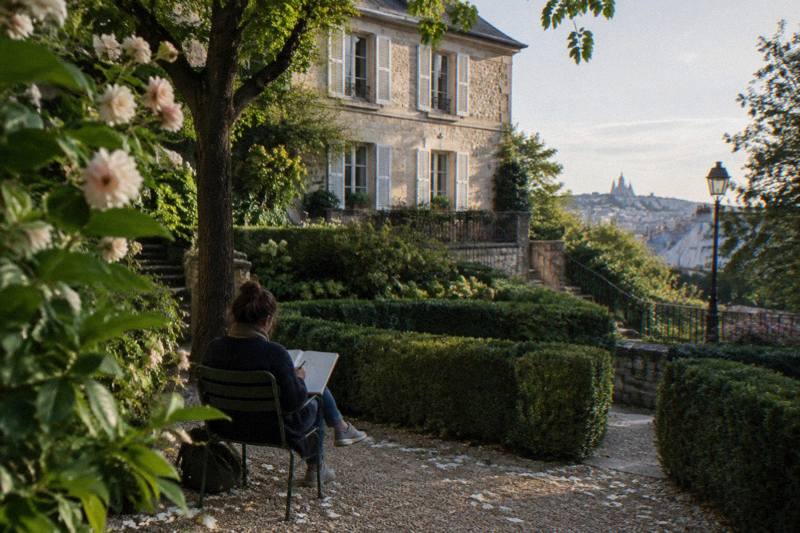
What Is The Prettiest Street In Montmartre?
A street-by-street answer to the prettiest street in Montmartre, from the vineyard on Rue des Saules to the painters of Place du Tertre, with tour options for seeing them with a guide.
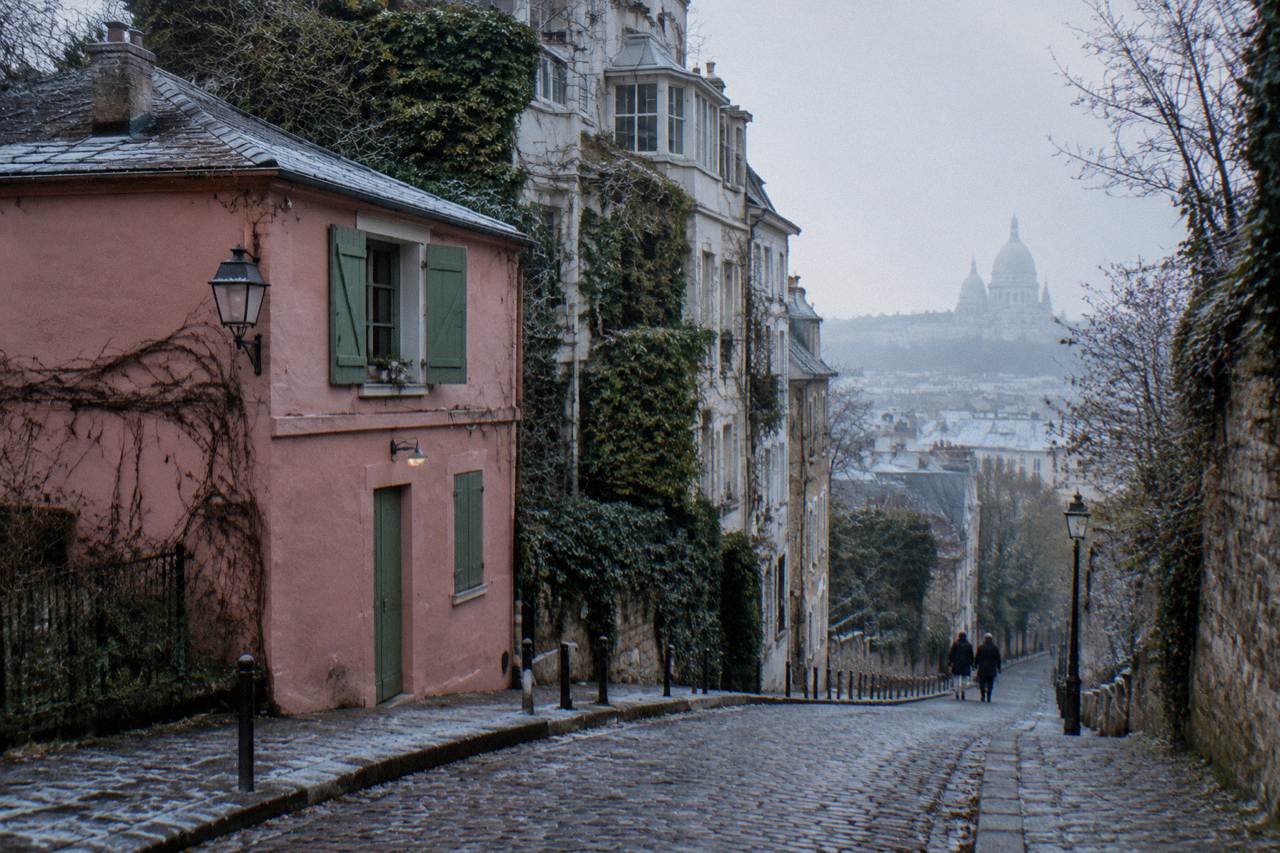
Montmartre is a hill of maybe two dozen streets that photograph well, and every one of its walking tours passes a different subset of them. The question of which single street is the prettiest has no official answer, but the candidates are few enough to compare honestly. The vineyard lane Rue des Saules, the painters' square Place du Tertre, the windmill-and-views street Rue Lepic and the café-lined Rue des Abbesses each argue their case, and each rewards a different kind of walker.
This article takes the streets one by one, sticking to the solid facts about each address, and points to the guided walks that reach them. The hidden-gems walk run by Intrepid Urban Adventures states its route includes a charming cobbled street, scenic stairways, panoramic views, the Moulin Rouge, Sacre-Coeur and the vineyard, which covers nearly every street named here in a single two-hour loop.
What Is The Prettiest Street In Montmartre?
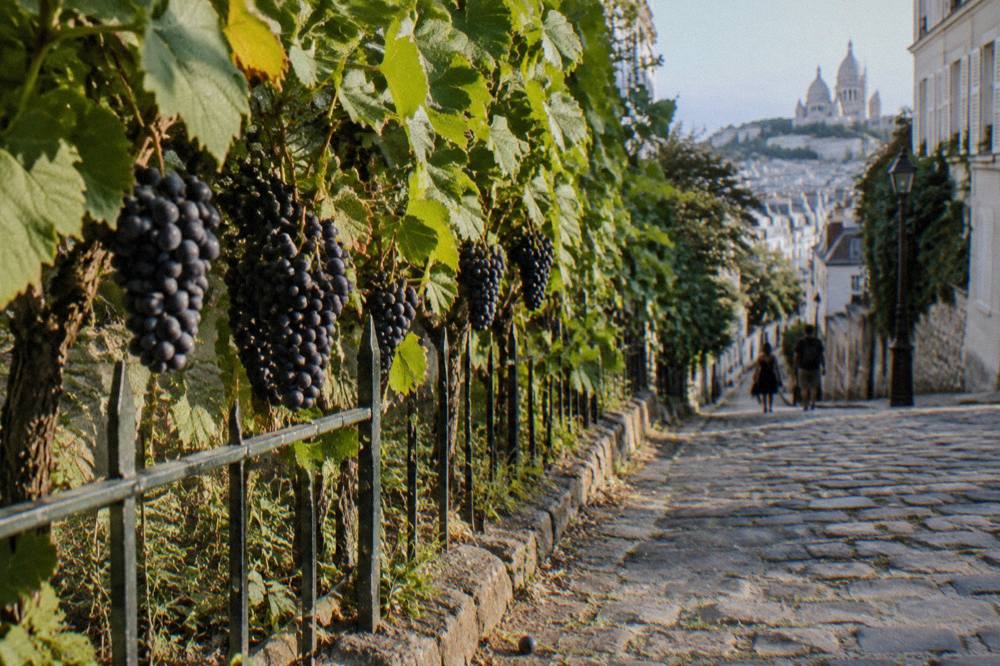
If the question means the most photogenic lane, the honest answer is Rue des Saules, the short cobbled street that runs past the Clos Montmartre vineyard at number 14. Here you walk beside working grapevines inside the city limits, and the vineyard's 1,762 vines on 1,556 square metres give the street a look that is hard to find elsewhere in Paris. Place du Tertre runs it a close second, and Rue Lepic wins on views.
Rue des Saules is short. It dips downhill through the lower village, and the vineyard fence runs along one side of it, planted mostly with gamay, which makes up 75 percent of the vines, and pinot at 20 percent. The Ville de Paris planted 2,000 vines here in 1932, and the clos still produces about one tonne of grapes a year, vinified in the 18th arrondissement town hall cellars into close to 2,000 half-litre bottles. You cannot walk inside the vineyard, since the Ville de Paris states it is accessible only on guided visits, but the street itself is public and the view across the vines is the whole point.
Place du Tertre argues back. It is not a lane but a medieval village square, and it is the one street in Montmartre where the scenery is human: the "Carre aux Artistes" holds 124 numbered, floor-marked pitches, each shared by two authorised artists working alternately. The rules are strict enough to keep it real: each artist must make work on site, keep a work in progress on the easel at all times, and sell only original, finished, signed works. Authorisation lasts up to seven years per pitch, and the 2026 fee to the Ville de Paris is 334.28 euros a year, a detail from the official call that most visitors never hear about.
Rue Lepic, curving uphill from the bottom of the hill, wins on history and panorama. Vincent van Gogh lived on its fourth floor at number 54 with his brother Theo during his Paris years, 1886 to 1888, and painted Montmartre scenes including the windmills from there. The street still climbs in curves specifically because it follows the old farm tracks of the pre-haussmann village, which is why it photographs better than the grid below.
If you would rather have a guide connect these streets than untangle them yourself, these three walks cover the prettiest ground between them:
Rue Des Saules: The Street With A Vineyard In It
Rue des Saules is the prettiest street in Montmartre for the simple reason that it is the only street in Paris with a working vineyard on it. The Clos Montmartre sits at 14 rue des Saules, 75018, and the fence line runs directly beside the pavement, so the vines, the cobbles and the slope combine into a single view. Nothing else on the hill matches it.
The vineyard is small but genuine: 27 grape varieties across 1,556 square metres, gamay dominant, producing roughly a tonne of grapes a year. The grapes are pressed at the 18th arrondissement town hall, and each yearly cuvee is named after a Montmartre figure. The Ville de Paris is explicit that the clos itself is open only on guided visits, so the street is where everyone sees it, leaning on the fence or pausing on the slope. The official Paris city page for the clos states the guided-visits-only rule plainly.
The street's standing rises every October. The Fete des Vendanges de Montmartre, the 93rd edition of which runs 7 to 11 October 2026 with a music theme, "Le 18e donne le rythme", takes over the whole lower village, and the harvest itself came early in 2026: 1,329 kilograms of grapes were picked on 17 September 2026, ahead of the usual date after the summer heatwave. Guided visits of the vines during the festival require booking, so anyone hoping to step inside the fence should plan ahead.
The hidden-gems walk run by Intrepid Urban Adventures lists the vineyard among its stated stops, alongside a freshly baked croissant from an award-winning bakery, hidden streets and scenic stairways, in a small group capped at 14. Check availability if the vineyard lane is the one that decided the question for you; the walk holds a 4.9 rating from 1,031 reviews and can be cancelled free of charge.
Place Du Tertre: The Square Where The Painters Still Work
Place du Tertre is the prettiest street in Montmartre if your idea of beauty is people rather than pavement. It is the old village main square, a few steps down from Sacre-Coeur, where 124 authorised artist pitches put painters, portraitists and silhouette cutters to work in front of you every day. It is a working space under city rules, not a photo prop, and that is exactly what makes it hold attention.
The square's artist system is one of the least understood things on the hill. The pitches are numbered and marked on the ground, each shared by two artists working alternating shifts, and the space, in the city's own words, is not an exhibition area. Artists must produce work on site, keep something in progress on the easel at all times, and sell only original, finished, signed pieces. The 2026 call for applications filled 20 vacant places, 17 painters, one portraitist and two silhouette cutters, at the 334.28 euro annual fee, with seven-year authorisations. The Ville de Paris call page carries the full rules.
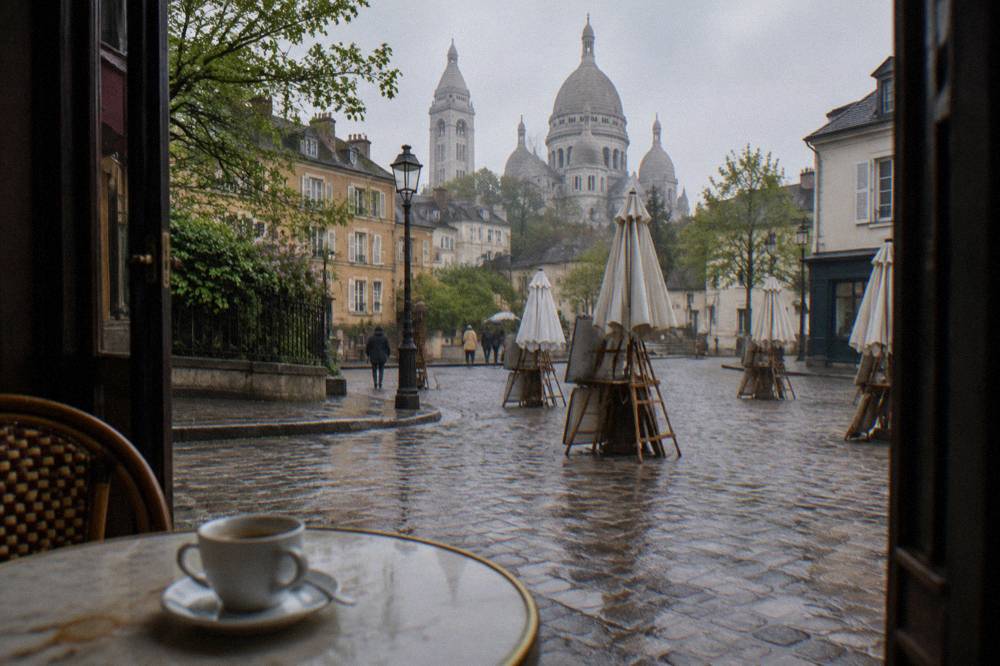
The square sits within a two-minute walk of the basilica forecourt, which means most walking tours pass through it. The classic highlights walk, rated 4.9 from 2,825 reviews across its 2 hours 20 minutes in a group capped at 16, meets near the carousel at Place Saint-Pierre and climbs through the village to the square, one of the reasons its review pool is the deepest among the classic walks.
A practical note for anyone visiting independently: the square is at its quietest in the first hour after the artists set up, and it is at its most crowded when the basilica queues spill downhill in the middle of the day. There is no fee to walk the square itself, and portrait prices are set by each artist, so agree the price before the sitting begins.
Rue Lepic: The Curve That Climbs From Windmills To Views
Rue Lepic is the prettiest street in Montmartre for a walk rather than a photograph. It curves uphill from below the hill in long bends, following the old farm tracks of the pre-Paris village, and it stacks up more verified history per metre than any other street here: Van Gogh's apartment, the windmill sites and the museum gardens all touch it.
Number 54 rue Lepic, fourth floor, is where Vincent van Gogh lived with his brother Theo from June 1886 until he left for Arles on 20 February 1888. He painted Montmartre scenes from and around the street, including the windmills of the Moulin de la Galette. The street's curves are the visible trace of what Montmartre was before annexation: a farming village whose tracks wound around plots too steep for a grid. The question of Van Gogh's Montmartre years is covered in more depth in our piece on where Van Gogh lived in Montmartre.
The Musee de Montmartre at 12 rue Cortot sits just off the Lepic slope, in one of the oldest buildings on the Butte, a 17th-century house where Renoir had a studio and Suzanne Valadon lived and worked. Its gardens overlook the Clos Montmartre vineyard, which makes the museum the one indoor stop that ties the two prettiest streets together. Full-price admission during the exhibition period is 16 euros, gardens-only is 6 euros, and it opens every day from 10am to 6pm.
The Eating Paris food tour meets outside Le Pain Quotidien on Rue Lepic, which tells you something about the street's café density: its 3-hour route runs 8 food stops with 10 food and 2 drink tastings in a group capped at 10. For walkers rather than eaters, the shortest guided option on the roster, the Discover Walks tour at 1.5 hours, starts at the Blanche metro and works uphill through this territory.
What Is The Famous Street In Montmartre?
The famous street in Montmartre, the one that appears in nearly every film clip and postcard, is the stretch around Place du Tertre and the stairs up to Sacre-Coeur, with Rue des Abbesses as the famous lower anchor. Fame and prettiness overlap but do not coincide: the famous views pull the crowds, while the prettiest lanes, like Rue des Saules, stay quieter precisely because they sit a few minutes off the main drag.
Rue des Abbesses is the busiest of the famous names, the café and boutique street that runs through the lower village around the Abbesses metro, which sits 36 metres below the surface, the deepest station on its line. The Wall of Love, the Mur des je t'aime, stands in Square Jehan-Rictus on Place des Abbesses: 311 "je t'aime" in 250 languages on 612 enamelled-lava tiles across about 40 square metres, created by Frederic Baron and Claire Kito and inaugurated in 2000. The installation marked its 25th anniversary, a milestone the city marked with a digital projection in Seoul running to spring 2026.
The fame question has a second answer that visitors often miss: Boulevard de Clichy at the bottom of the hill, where the Moulin Rouge has stood since 1889 at number 82. The walks on this roster pass it from the outside only, and the hidden-gems listing states plainly that the show is excluded, so treat it as a landmark on the way up, not a stop with entry. The venue's own dinner-and-show evening starts at 7pm, and bags are not allowed in the cloakrooms.
How To Walk The Pretty Streets Without Missing The Hidden Ones
The honest way to see the prettiest streets is either a slow self-guided loop of two to three hours or a small-group guided walk of about two hours. The guided option wins on the hidden lanes: the streets that decide the prettiest-street question are mostly unmarked side lanes and stairways, and a guide who knows which staircase leads where saves you the hill's dead ends.
The self-guided logic is simple. Start low, at the Blanche metro, and climb: Boulevard de Clichy for the Moulin Rouge, then up through Rue Lepic's curves, across to the Musee de Montmartre and the vineyard on Rue des Saules, and finish at Place du Tertre and the basilica. Going downhill instead wastes the elevation, since the funicular, which costs the same as a metro ticket, only covers the final 222-step rise to the basilica. Our guide to where to start your walk in Montmartre breaks down the starting points in more detail.
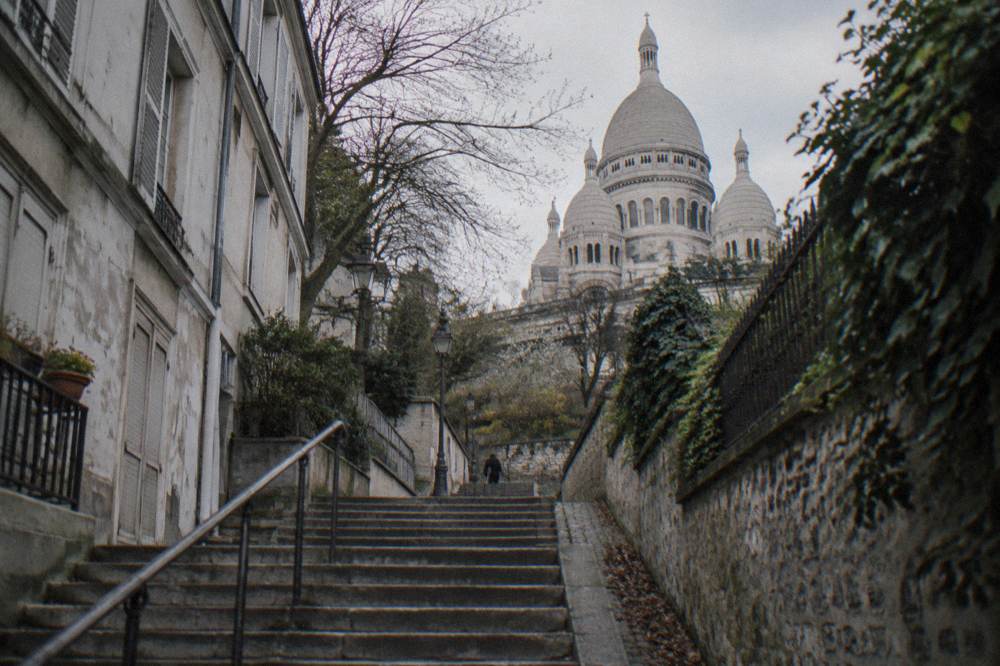
The guided options divide by what they add. The hidden-gems walk adds a croissant and the stairways. The street art tour, run by an artist guide in a group capped at 15, adds the painted walls and ateliers that most visitors walk past, over 2 hours 15 minutes. The must-see walk, rated 4.9 from 896 reviews over 2 hours 30 minutes, covers the core names with a local guide and carries a "likely to sell out" badge on its listing. All three can be cancelled free of charge.
For a fuller comparison of what a guide adds over going alone, the self-guided versus guided tour guide sets out the trade-offs, and the deeper art history behind these streets is in our Montmartre art and history tour guide. Whatever you choose, Montmartre Paris Tours keeps the current listings for every walk named here.
A Quick Comparison Of The Candidate Streets
Rue des Saules stands out for uniqueness with its pavement-side vines, Place du Tertre for atmosphere, since its artists work under city rules rather than for tourists, Rue Lepic for history through Van Gogh's address and museum gardens, and Rue des Abbesses for café life near the deepest metro station in the area, with the tables below laying out the full picture plus guided walk comparisons.
If you are ranking them yourself, here is how the four main candidates stack up on what history actually tells us:
| Street | What makes it pretty | Best time | Watch out for |
|---|---|---|---|
| Rue des Saules | Working vineyard along the pavement, cobbles, quiet slope | Morning light, or during the October harvest festival | Vineyard interior is guided-visits only |
| Place du Tertre | 124 authorised artist pitches, village square layout | Early morning before the crowds | Busiest square on the hill midday |
| Rue Lepic | Curving climb, Van Gogh's address, museum gardens nearby | Late afternoon for the light on the slope | Steady uphill grade, wear good shoes |
| Rue des Abbesses | Cafés, the Wall of Love, deepest metro station in the area | Evening for the café life | Thinnest on historic views of its own |
And here is how the guided walks that reach these streets compare on the basics:
| Walk | Duration | Group cap | Rating | Free cancellation |
|---|---|---|---|---|
| Hidden Gems, Views and Croissant | 2 hours | 14 | 4.9 from 1,031 reviews | Yes |
| Small Group Walking Tour | 2 hours 15 minutes | 10 | 4.9 from 576 reviews | Yes |
| Street Art Tour with an Artist | 2 hours 15 minutes | 15 | 4.9 from 160 reviews | Yes |
| Highlights Walking Tour | 2 hours 20 minutes | 16 | 4.9 from 2,825 reviews | Yes |
Ratings are never a guarantee, but the pattern across these four is consistent, and every one of them departs from the Montmartre area in the 18th arrondissement.
If the ranking above has you ready to pick a walk, these three cover the prettiest ground between them:
Common Questions About The Prettiest Street In Montmartre
What Is The Prettiest Street In Montmartre?
Rue des Saules, the cobbled lane that runs beside the Clos Montmartre vineyard at 14 rue des Saules, is the strongest single answer, because no other street in Paris has working grapevines along its pavement. Place du Tertre and Rue Lepic are the closest rivals, for the working artists and the curving climb respectively.
What Is The Famous Street In Montmartre?
The famous stretch is the area around Place du Tertre and the steps up to Sacre-Coeur, with Rue des Abbesses as the busy lower anchor around the metro and the Wall of Love. The Moulin Rouge on Boulevard de Clichy, at the bottom of the hill, is the other famous landmark, though the walking tours pass it from the outside only.
Can You Walk Inside The Vineyard On Rue des Saules?
No. The Ville de Paris states the Clos Montmartre is accessible only on guided visits, and during the annual harvest festival those visits require booking and fill early. The street outside the fence is public and gives the classic view across the vines.
Is Place du Tertre Worth Visiting?
Yes, if you go expecting a working artists' square rather than a quiet view. Its 124 pitches are run under city rules that require artists to work on site and sell only original signed pieces, and the square sits two minutes from the basilica, so it pairs naturally with a Sacre-Coeur visit.
Which Tour Covers The Prettiest Streets?
The hidden-gems walk run by Intrepid Urban Adventures states its route includes a charming cobbled street, scenic stairways, panoramic views, the Moulin Rouge, Sacre-Coeur and the vineyard, which reaches nearly every street in the prettiest-street debate in one two-hour loop, with a croissant from an award-winning bakery included.
How Many Hours Do You Need For The Pretty Streets?
Two to three hours covers Rue des Saules, Place du Tertre, Rue Lepic and the basilica forecourt at a walking pace. A guided walk of around two hours reaches the same ground faster because the guide skips the dead ends; our piece on how many hours you need in Montmartre breaks down the timing options.