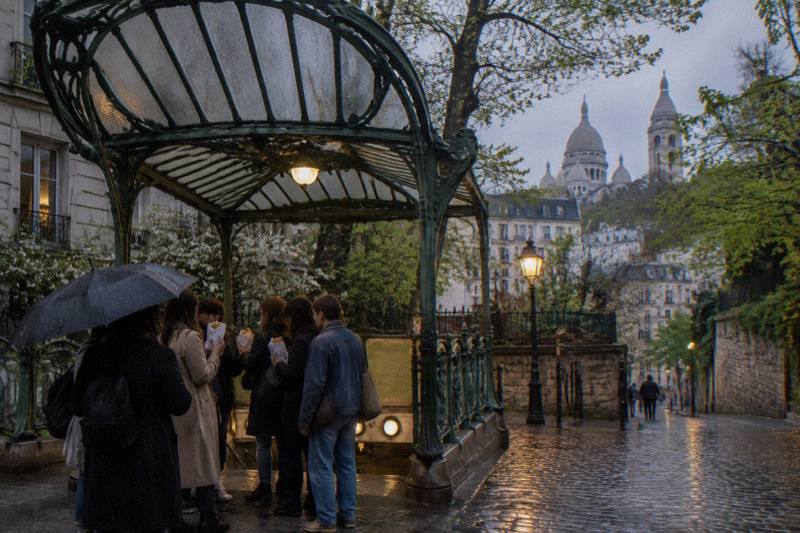
Is A Food Tour In Paris Worth The Money?
An honest look at whether a Montmartre food tour justifies its price: what the tastings cover, how the roster's reviewed walks compare, and who should skip the format entirely.
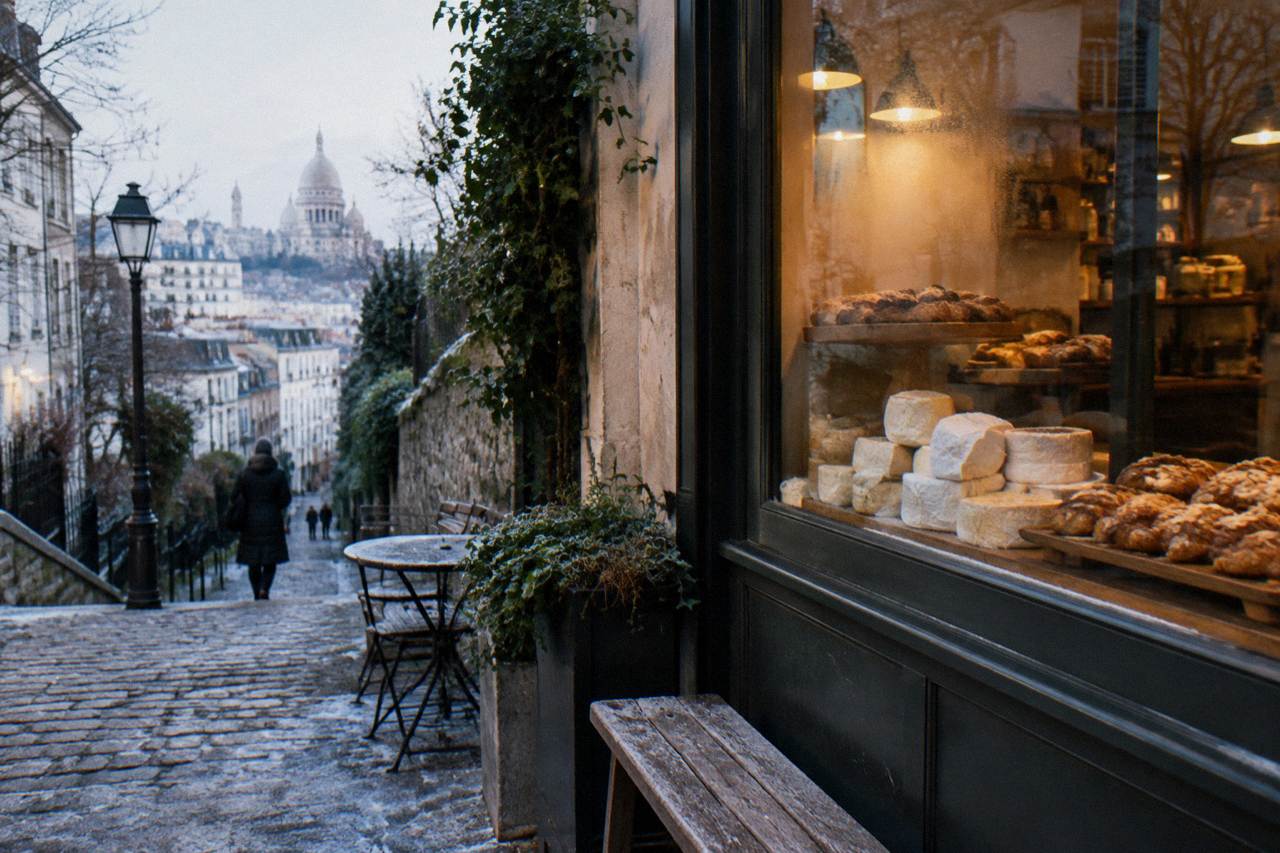
Is A Food Tour In Paris Worth The Money?
A food tour in Paris is worth the money for travelers who want a guided route through shops they would never find alone, with tastings, history and a local guide folded into one booking. If you only want dinner, skip it: a restaurant meal costs less and sits you down longer. The value is in the walk, not the plate count.
That is the short version. The longer version depends on which tour you book, because the gap between the lightest and heaviest food experiences on this hill is wide. Some walks include a single croissant and call themselves food-adjacent; others run 3.5 hours and pour red and white wine alongside a "secret dish". Treating them as one product is the fastest way to pay for the wrong thing.
Guided walks around Montmartre differ in pace, group size and what's included, from quick 90-minute routes to longer food-focused outings. The picture that emerges is consistent: the dedicated food tours here are heavily reviewed and consistently rated, the lighter walks are honest about being walks first, and the private options trade price for flexibility. The cheese, wine and pastry route alone carries a 4.9 rating from 2,395 reviews, the deepest food-tour review pool on this roster. If those private options catch your eye, our guide to when a private Montmartre tour is worth it weighs the price against the flexibility you actually get.
If you already know you want a guide-led tasting route, these three cover the range: the small-group Eating Paris walk, the cheese, wine and pastry classic, and the private version for travelers who want the itinerary to themselves.
What Do You Actually Get For The Price?
You get a guided walk with a set number of tastings, typically 3 to 3.5 hours long, in a small group, with a local guide who narrates the neighborhood between stops. The dedicated food tours on this roster include roughly 10 to 12 food and drink items; the lighter walks include one bakery item or an optional upgrade. Nothing on the roster includes a sit-down restaurant meal.
The heaviest option is the ten-tastings route run by Secret Food Tours, which lists pastries, macarons, a crepe, chocolates, cheeses, cured meats, bread, a "secret dish", red and white wine, water and soft drinks across 3.5 hours. It holds a 4.8 rating from 276 reviews and carries a "likely to sell out" badge on its listing. Its meeting point shifts by schedule: outside Anvers metro on line 2 Monday to Friday, at Abbesses metro on line 12 on weekends and for 6pm starts, so check departure times on the listing for your date rather than assuming a morning slot.
The Eating Paris walk, run by Eating Europe Food Tours Paris, is structured differently: 8 food stops featuring 10 food and 2 drink tastings, including oysters, sausage and aligot, through artisan shops along a 3-hour route capped at 10 guests per departure. It meets outside Le Pain Quotidien on Rue Lepic and holds a 4.9 rating from 868 reviews. The cheese, wine and pastry route covers similar ground with tastings of pastries, local savory specialties, homemade chocolates, cheese and charcuterie in groups capped at 12, and it meets outside the Starbucks and pharmacy near Blanche metro.
One honest note on the lighter end. The hidden-gems walk run by Intrepid Urban Adventures includes a freshly baked croissant from an award-winning bakery, and that is the whole food component; it is a 2-hour walking tour with a pastry, not a tasting route. The art, culture and food walk run by ExperienceFirst offers an optional wine and cheese tasting at a historic restaurant if you upgrade, otherwise it is a 90-minute guided walk. Both are good products, but booking either expecting a food tour is how the format gets called overpriced.
The private food tour deserves a plain warning: it is non-refundable, with no free cancellation, unlike every other listing discussed here. It runs 3 to 4 hours with wine, cheese and pastries, meets at Anvers metro on line 2 Monday to Friday and Abbesses on other schedules, and carries a 4.9 rating from 1,141 reviews. The lack of cancellation is the trade for a private itinerary, and it should factor into any booking made far in advance.
So is the price defensible for what the small-group tours deliver? If the question is whether the Eating Paris route earns its cost, the answer sits in what you are comparing it against.
How Does A Food Tour Compare To A Restaurant Meal?
A food tour costs roughly the same as a mid-range dinner for one in Paris, but it delivers a walk, a guide, six to eight shops and a dozen tastings spread over three hours instead of one table and one menu. You eat standing and moving, not seated. Travelers who want a relaxed seated evening will feel shortchanged; grazers will not.
The comparison matters because "worth it" is always a comparison. A restaurant meal buys you a chair, a menu choice and as long a sit as you like. A food tour buys you variety and access: the cheese affineur's counter, the chocolate maker, the wine pour, the guide who can tell you which street the vineyard sits on and why the harvest came early this year. Neither is a substitute for the other, and travelers who book a food tour as a dinner replacement are the ones who write disappointed reviews.
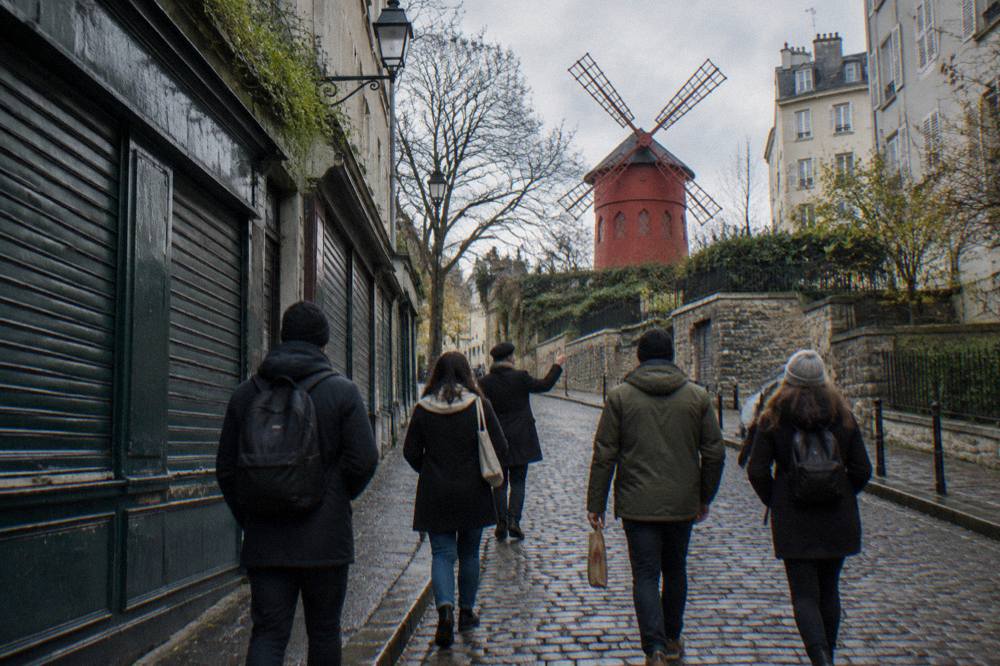
The structure also changes what you taste. Ten small items across eight stops is a broader sample of the neighborhood than any single restaurant can offer, and on Montmartre the neighborhood itself is part of the product. The route climbs the hill, passes the Moulin Rouge from the outside, and threads streets that a first-time visitor would not find. The full picture of what the hill offers, food and otherwise, is covered in the Montmartre walking tour guide.
| Experience | Duration | Group size | Food and drink included | Rating and reviews |
|---|---|---|---|---|
| Eating Paris Montmartre food tour | 3 hours | Cap 10 | 10 food and 2 drink tastings across 8 stops | 4.9 from 868 reviews |
| Cheese, wine and pastry tour | 3 hours | Cap 12 | Pastries, savory specialties, chocolates, cheese, charcuterie | 4.9 from 2,395 reviews |
| Ten-tastings food tour | 3.5 hours | Small group | 10 tastings plus wine, water and soft drinks | 4.8 from 276 reviews |
| Private Montmartre food tour | 3 to 4 hours | Private | Wine, cheese and pastries | 4.9 from 1,141 reviews |
| Hidden-gems walk | 2 hours | Cap 14 | One freshly baked croissant | 4.9 from 1,031 reviews |
Read the table honestly. The first three rows are food tours; the last row is a walking tour with a croissant, listed here precisely because it gets booked as a food tour and should not be. The private tour is the only one without free cancellation, which is a real cost if your plans might move.
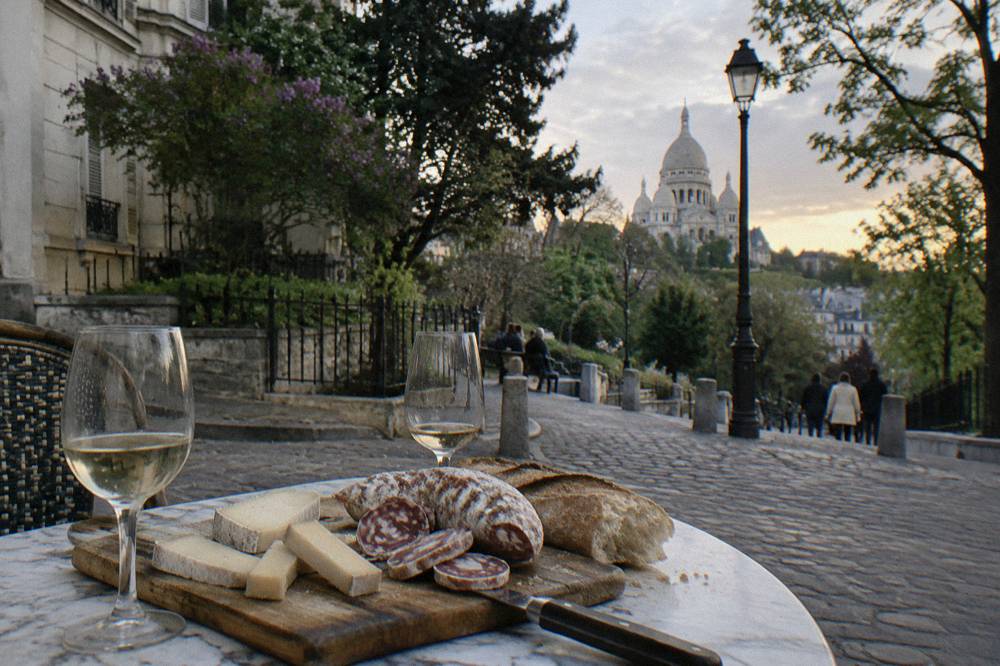
Which Tour Suits Your Budget And Appetite?
The food-tour tier on this roster is occupied by the three small-group tasting routes, all around 3 to 3.5 hours with roughly ten tastings each. The private tour sits in the private tier, priced per person rather than per group. Below it, the hidden-gems walk and the art walk offer a taste of the neighborhood at walking-tour prices.
Tier words are the honest way to compare cost here, because the live prices move and the listings show them. The three small-group food tours sit in the food-tour tier, meaning they cost more than any classic walking tour but deliver the tastings that justify it. The private food tour sits in the private tier, and its listing prices the experience per person, not for the group as a whole, which changes the arithmetic for couples and families. The wider set of guides lives on Montmartre Paris Tours.
The budget-conscious question is covered in more depth in how much a food tour should cost, which breaks the tiers down without leaning on any single operator's number. What the tier comparison cannot capture is pace: the ten-tastings route is 30 minutes longer than the other small-group options, which matters if you are fitting the tour around a fixed dinner reservation or a museum slot.
Appetite matters too. The cheese, wine and pastry route is the most reviewed food walk on the hill, with a 4.9 rating from 2,395 reviews, and its tasting list runs from sweet to savory in a way that suits travelers who want a little of everything. The Eating Paris route leans more explicitly into full servings, with oysters and aligot among the stops, and suits bigger appetites. The ten-tastings route is the longest and the only one of the three at 4.8 rather than 4.9, though from a smaller pool of 276 reviews.
If the food component is secondary and the walk is the point, the art, culture and food walk run by ExperienceFirst is the interesting middle case: a 90-minute group walk capped at 25, with an optional wine and cheese tasting at a historic restaurant if you upgrade. It holds a 4.9 from 2,874 reviews, the deepest review pool on the entire roster, and it meets in front of Saint-Jean de Montmartre church. Booking it without the upgrade gives you the walk; booking with the upgrade gives you a light tasting stop. Either way, know which one you chose.
Who Should Skip A Food Tour In Paris?
Skip a food tour if you want a long seated meal, if you have strict dietary limits the tasting format cannot absorb, if you are traveling with very young children who cannot manage three hours of walking, or if the price of the food-tour tier buys you two dinners you would enjoy more. The format rewards grazers and punishes sitters.
Dietary limits deserve the bluntest paragraph. Tasting routes are built around bread, cheese, charcuterie and pastry, and while operators generally try to accommodate, a route with ten fixed stops cannot reshape itself around multiple exclusions. Travelers with severe allergies or strict restrictions get more value, and more safety, from choosing their own restaurant where the kitchen can answer questions directly.
The format also assumes mobility. Montmartre is a hill with stairs, and a three-hour route climbs them; the walking difficulty question is covered fully in is Montmartre difficult to walk. If stairs are a problem, a seated dinner at the foot of the hill is the better spend, or a shorter walk like the 90-minute art route with its optional upgrade.
Finally, skip the format if your goal is a single memorable meal. A food tour is an efficient sampler of a neighborhood, and samplers are not the same as a destination dinner. Travelers who book the ten-tastings route expecting the best meal of their trip have misunderstood the product; travelers who book it expecting the best three-hour introduction to the hill's food culture have understood it exactly.
When Is The Best Time To Book A Montmartre Food Tour?
Book the small-group food tours in the food-tour tier a few weeks ahead for high season, and treat the October grape harvest festival week as both the best and the most crowded time to eat on this hill. The ten-tastings route carries a "likely to sell out" badge on its listing, and the private tour is non-refundable, so timing and booking discipline matter more here than on the classic walks.
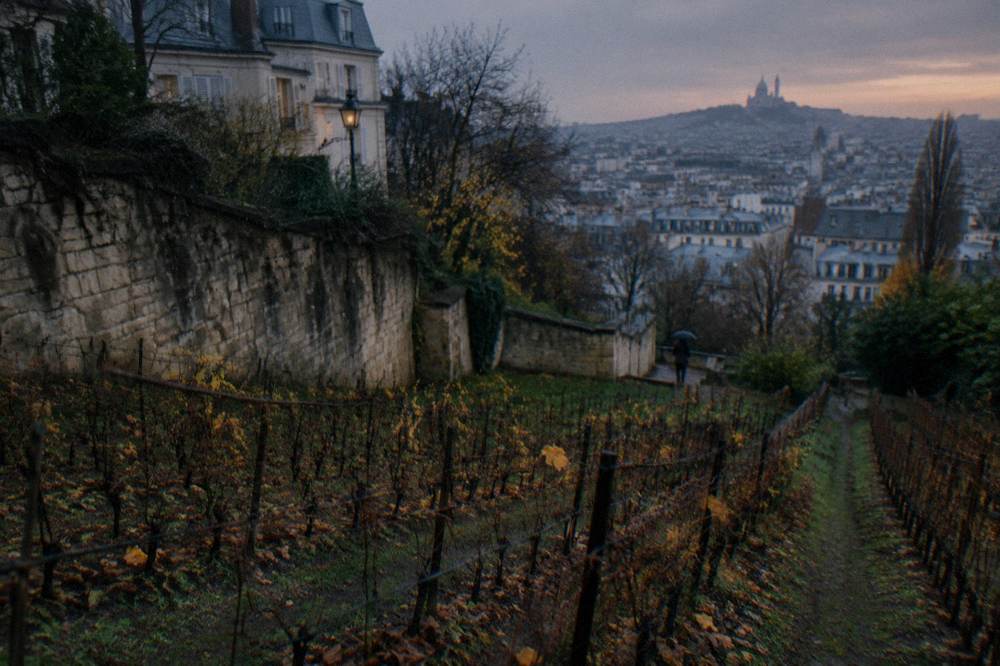
The calendar argument for October is real. The Fete des Vendanges de Montmartre runs 7 to 11 October 2026, its 93rd edition, with the Parcours du Goût turning the hill into a tasting route of its own; the official program is published by the festival and the Ville de Paris. The Clos Montmartre vineyard, 1,762 vines on 1,556 square metres according to the Ville de Paris vineyard page, is accessible only on guided visits, and this year's harvest brought in 1,329 kg of grapes on 17 September, earlier than usual after the summer heatwave, pressed at the 18th arrondissement town hall.
A food tour during festival week pairs well with the neighborhood's own tasting route, but it also means crowds on the same streets. Travelers who want the hill quiet should book outside the festival window and outside the summer peak; travelers who want the hill at its most alive should book inside it. Either way, the wine context of the hill is worth a read in the Montmartre vineyard and wine tour guide.
For the tours themselves, the booking discipline differs by listing. The ten-tastings route shows a "likely to sell out" badge, so last-minute booking is a gamble in season. The private food tour is non-refundable, so it should be booked only when your dates are locked. The small-group routes with free cancellation, like the Eating Paris walk, reward early booking with the option to rebook if plans shift, which for most travelers is the balance worth having.
The Honest Verdict On Montmartre Food Tours
For most first-time visitors with a free evening or afternoon, a Montmartre food tour is worth the money: the small-group routes deliver ten or more tastings, a guide and a route through the hill's food shops for the cost of a decent dinner, with free cancellation on every small-group option. It is not worth it for travelers who want one long seated meal.
The review pools support the format, without proving anything about your plate. The cheese, wine and pastry route holds 4.9 from 2,395 reviews, the Eating Paris walk 4.9 from 868, the ten-tastings route 4.8 from 276, and the private route 4.9 from 1,141. Those are deep pools by the standards of this hill's reviewed listings, and they describe consistent experiences, not guarantees.
The verdict also depends on honesty from the buyer. If you want the hidden-gems walk's croissant and views, book it as a walk and enjoy it as one. If you want the full tasting route, book one of the three dedicated food tours and treat the price as a dinner replacement. The travelers who regret a food tour are almost always the ones who bought a different product than the one they wanted, and the listing inclusions, read carefully, make the difference plain before you pay. For the wider picture of what to eat and see on the hill, the Montmartre food tour guide lays out the routes stop by stop.
If the format still fits, these three span the range from small-group to private, and every one of them departs from the hill itself.
Common Questions About Paris Food Tours
Is A Food Tour In Paris Worth The Money?
For most travelers, yes: the Montmartre small-group routes deliver roughly ten tastings, a local guide and a three-hour route through the hill's shops for about the cost of a mid-range dinner. It is not worth it if you want a long seated meal, have strict dietary limits, or dislike eating on the move.
How Many Tastings Do Montmartre Food Tours Include?
The dedicated routes list around ten to twelve items: the Eating Paris walk features 10 food and 2 drink tastings across 8 stops, the ten-tastings route lists pastries, macarons, a crepe, chocolates, cheeses, cured meats, bread, a secret dish and wine, and the cheese, wine and pastry route lists pastries, savory specialties, chocolates, cheese and charcuterie.
Are The Lighter Walking Tours A Cheaper Food Tour Alternative?
Only partially. The hidden-gems walk includes one freshly baked croissant from an award-winning bakery, and the art, culture and food walk offers an optional wine and cheese tasting upgrade at a historic restaurant. Both are walking tours first; booking either as a full food tour will disappoint.
Can You Cancel A Montmartre Food Tour?
Every small-group food tour on this roster offers free cancellation, including the Eating Paris walk, the cheese, wine and pastry route and the ten-tastings route. The private food tour is the exception: it is non-refundable, with no free cancellation, so book it only when your dates are fixed.
When Should You Book A Montmartre Food Tour?
Book a few weeks ahead in high season and during the October grape harvest festival week, when the hill is at its busiest. The ten-tastings route carries a "likely to sell out" badge on its listing, and its meeting point shifts between Anvers and Abbesses metro depending on the schedule, so confirm departure details when you book.