Montmartre Vineyard And Wine Tasting Tours
Paris has a working vineyard, and it sits on the northern slope of Montmartre behind locked gates. Here is what the Clos Montmartre actually is, how guided visits work, and how wine tasting fits into the tours on this site's roster.
Short answer
The Clos Montmartre vineyard holds 1,762 vines on 1,556 square metres and is open to the public only on guided visits. No tour on this roster is verified to include a vineyard visit; the walks pass it from outside. Wine tasting on the food tours is separate from the vineyard itself.
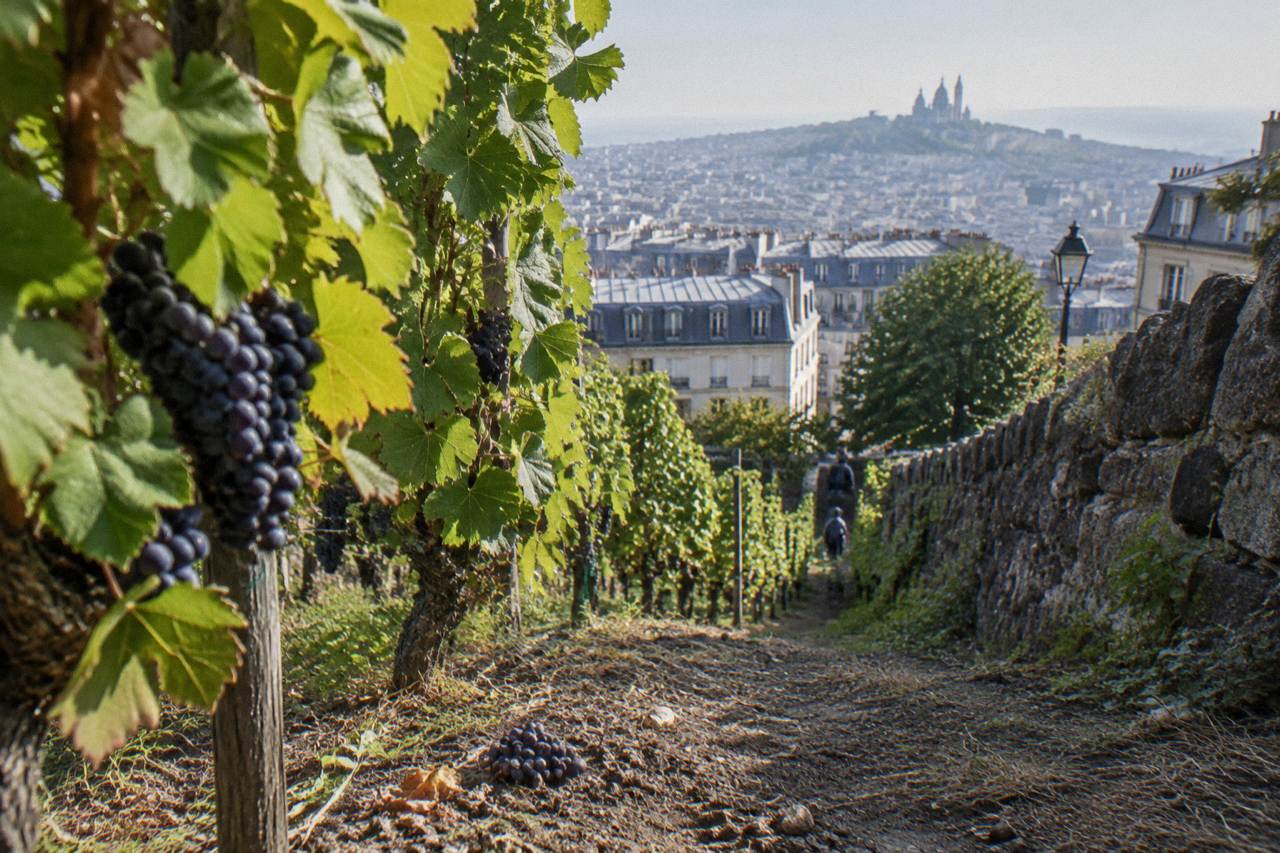
Most visitors walk straight past it. Tucked behind rue des Saules, on the slope below the Musee de Montmartre, sits the last working vineyard in central Paris: the Clos Montmartre, 1,762 vines pressed into 1,556 square metres of hillside. The gates stay shut to casual visitors, the grapes are pressed in the cellars of the 18th arrondissement town hall, and once a year in October the whole neighbourhood throws a five-day festival around the harvest.
The vineyard confuses a lot of travellers, and the confusion is understandable. People read that Montmartre has a vineyard, assume their walking tour will walk them through it, and end up looking at vines through a fence. This guide separates the two things that get tangled together: seeing the Clos Montmartre, which requires a guided visit booked in advance, and tasting French wine in Montmartre, which the food tours on this roster do as a matter of course. The two experiences are neighbours, not the same thing.
What Is The Montmartre Vineyard?
The Clos Montmartre is a small, city-owned vineyard of 1,762 vines on 1,556 square metres at 14 rue des Saules, planted largely with gamay and pinot, producing roughly one tonne of grapes a year that become close to 2,000 bottles of red and rose. It is a real working vineyard, not a decorative planting, and its public access is by guided visits only.
The vineyard's modern history starts in 1932, when the Ville de Paris planted 2,000 vines on the clos. The plot had been vine land centuries earlier, before phylloxera and urbanisation wiped out the Montmartre slopes that once fed the neighbourhood's guinguettes. Today's planting is deliberately heritage: 27 grape varieties grow on the site, with gamay making up 75 percent of the vines and pinot another 20 percent, a mix chosen for its historic character rather than for commercial yield.
The wine itself is made in the cellars of the 18th arrondissement town hall, and each year's cuvee is named after a figure from Montmartre's past. The bottles are small, 50 centilitres, and the production is close to 2,000 bottles from the roughly one tonne of grapes the clos yields in a typical year. This is not wine you will find on a supermarket shelf. It circulates through festival auctions, local events and the neighbourhood's institutions, and the vineyard's value to Montmartre is as much symbolic as agricultural.
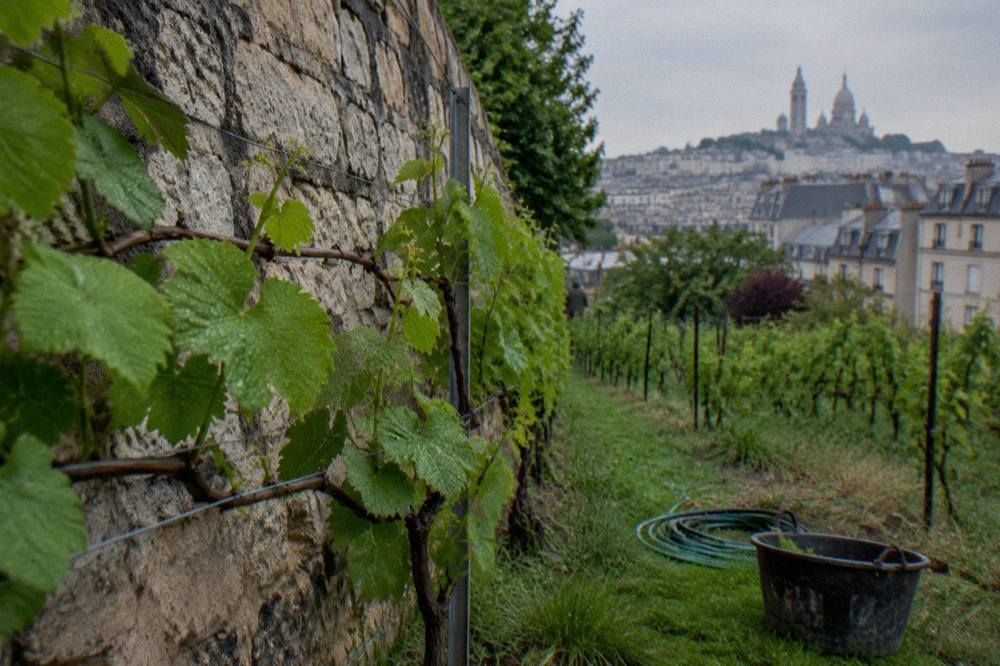
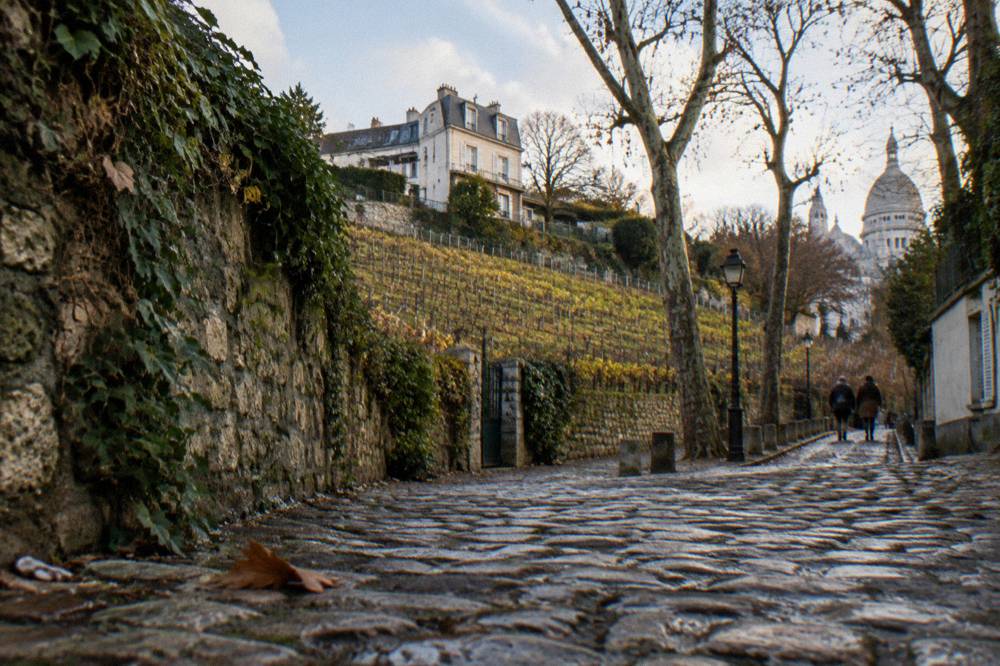
The site is managed by the Ville de Paris, whose vineyard page states the access rule plainly: the clos is accessible uniquement sur visites guidees, guided visits only. There is no ticket counter, no open gate, no self-guided stroll between the rows. What most visitors see is the view from rue des Saules, which runs along the vineyard's edge and gives a genuine look at the slopes, and the view from the Musee de Montmartre gardens, which overlook the clos from above.
Can You Visit The Clos Montmartre Vineyard?
Yes, but only on a guided visit, booked in advance. The Ville de Paris states the vineyard is accessible solely through guided visits, and no tour listed on this site is verified to include one. The reliable windows are the guided visits programmed during the Fete des Vendanges in October, which require booking and fill early.
The access rule deserves emphasis because it is the single most misunderstood fact about the vineyard. The official Ville de Paris page for the clos is unambiguous: guided visits only. During the harvest festival the programme schedules a handful of guided vineyard visits with a historian, and the festival's own programme notes that booking is required for these guided slots. Outside the festival, guided access is occasional and organised through local institutions rather than a standing daily ticket.
That leaves two honest ways to see the clos without a booking. The first is from rue des Saules, the street that borders the plot at number 14, where the full slope of the vineyard is visible from the pavement. The second is from the gardens of the Musee de Montmartre, which overlook the vineyard from the hill above. The museum is open every day from 10am to 6pm, last admission 5:15pm, and a gardens-only ticket exists for visitors who want the view without the full museum. Neither vantage point puts you among the vines, but both give a real sense of how a working vineyard folds into a dense city block.
| Way to see the vineyard | What it involves | Booking |
|---|---|---|
| Guided visit during the Fete des Vendanges | Entering the clos with a guide, festival programme slots | Required, fills early |
| View from rue des Saules | Street-level sight of the full slope from the pavement | None |
| Musee de Montmartre gardens | Overlooking the clos from the museum's garden terrace | Museum ticket, on site or online |
| Walking tours that pass the clos | Seeing the vineyard from outside as part of a guided walk | Tour booking, no vineyard entry |
One point needs to be stated plainly because it affects tour expectations: no listing on this site's roster is verified to include a vineyard visit. The walks that mention the vineyard, such as the hidden-gems walk, list it among the landmarks they pass, which means from the outside. If entering the clos is the priority, the guided visit during the festival is the route, and it should be planned around rather than hoped for on a walking tour.
If wine tasting rather than vineyard entry is the goal, the food tours deliver that directly, and the trio below covers the range from a group walk to a private route.
Which Tours In Montmartre Pass The Vineyard?
Several walking tours on the roster pass the Clos Montmartre from the outside, typically alongside rue des Saules or on the stair routes between the basilica and the lower streets. None enters the clos. The hidden-gems walk lists the vineyard among its passed landmarks, alongside the Moulin Rouge, Sacre-Coeur and panoramic viewpoints.
The geography explains the pattern. The vineyard sits between the Musee de Montmartre and the Lapin Agile corner of the hill, on the route most walking tours naturally take between Place du Tertre and the quieter northern slope. A walk that covers the classic Montmartre circuit, the basilica, the artists' square, the museum quarter, will brush the vineyard's edge whether or not the guide dwells there.
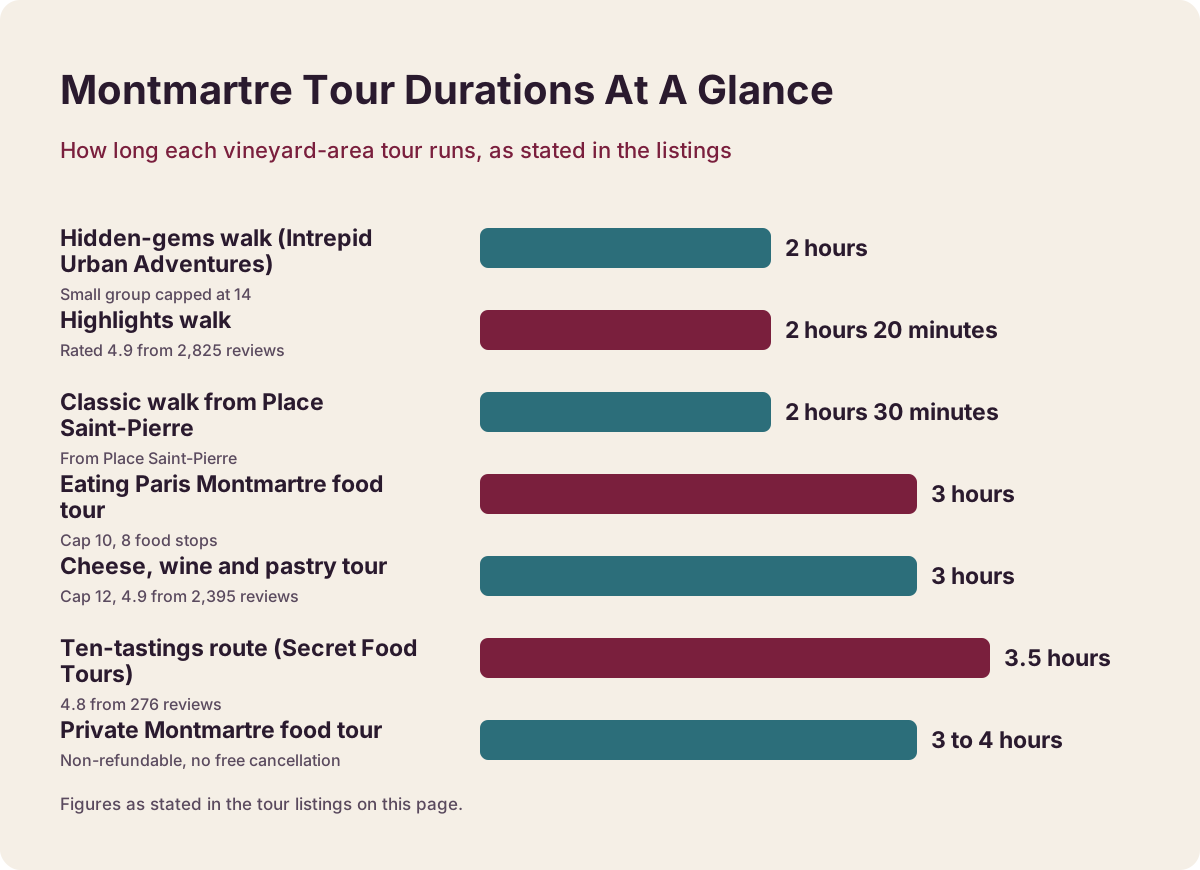
The hidden-gems walk run by Intrepid Urban Adventures is the clearest example on the roster. Its stated inclusions name the vineyard among the sights it passes, alongside hidden streets, scenic stairways, panoramic views, the Moulin Rouge and Sacre-Coeur, with a freshly baked croissant from an award-winning bakery built into the route. It runs 2 hours in a small group capped at 14, meeting outside the Blanche metro at line 2, and it holds a 4.9 rating from 1,031 reviews. The vineyard appears as a passing sight, a two-minute pause on rue des Saules rather than an entry.
The classic walks treat the vineyard similarly, as a waypoint on the hill rather than a destination. The 2 hour 20 minute highlights walk, rated 4.9 from 2,825 reviews, the deepest review pool among the classic walks, covers the Montmartre circuit from its meeting point near the carousel at Place Saint-Pierre. The must-see walk, 2 hours 30 minutes from Place Saint-Pierre, and the small-group walk capped at 10, meeting by the Moulin Rouge, follow comparable circuits. All of them are low price tier walks with free cancellation, and all of them show the vineyard from outside at most.
For readers weighing a guided walk against exploring alone, the comparison of self-guided and guided options on the self-guided versus guided tour guide breaks down what a guide adds on exactly these streets, and the walking tour guide lists the full set of classic walks with their meeting points and durations.
A reasonable question at this point is whether any of these tours can be bent toward wine. The honest answer is that the walking routes include wine only as a passing topic, and the tastings happen on the food tours, which are built around stops rather than sights. That distinction is worth the next section on its own.
Where Does Wine Tasting Happen On The Tours?
Wine tasting on this roster happens on the food and wine tours, not at the vineyard. The cheese, wine and pastry tour pours as part of its tastings, the Eating Paris route includes two drink tastings among its eight stops, and the ten-tastings route serves red and white wine alongside its food stops. None of these visits the Clos Montmartre.
The food tours are the only listings on the roster where wine reaches the glass. The Eating Paris Montmartre food tour, run by Eating Europe Food Tours Paris, is the one this site features alongside this guide: a 3 hour small-group walk capped at 10, with 8 food stops featuring 10 food and 2 drink tastings, oysters, sausage and aligot, and artisan shops along rue Lepic. It meets outside Le Pain Quotidien on Rue Lepic, holds a 4.9 rating from 868 reviews, and sits in the food-tour price tier with free cancellation. The wine experience in its title is a tasting element of the route, not a vineyard visit.
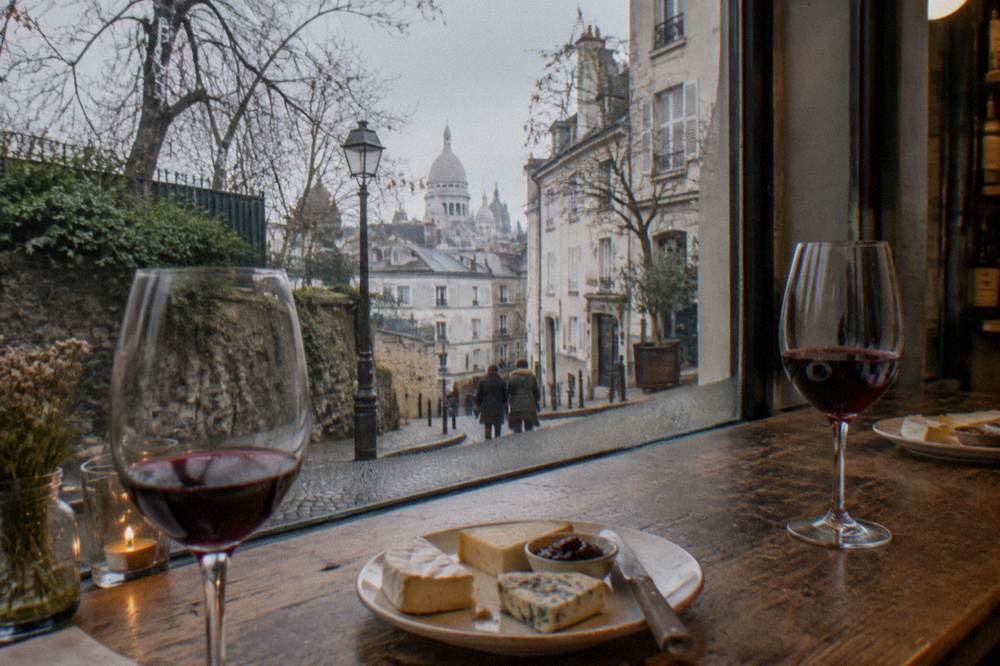
The cheese, wine and pastry tour is the deepest-reviewed food route on the roster, 4.9 from 2,395 reviews, running 3 hours in a group capped at 12 with tastings of pastries, local savoury specialties, homemade chocolates, cheese and charcuterie. It meets outside the Starbucks and pharmacy near Blanche metro. The ten-tastings route run by Secret Food Tours, 4.8 from 276 reviews over 3.5 hours, lists red and white wine, water and soft drinks alongside pastries, macarons, crepes, chocolates, cheeses, cured meats, bread and a "secret dish". Its meeting point shifts between Anvers metro on weekdays and Abbesses metro at weekends and for 6pm starts, so departure times should be checked on the listing for your date rather than assumed.
Before booking anything on this page, one practical note on flexibility. Every food and wine route listed here except the private option cancels for free, which means the Eating Paris route, the cheese, wine and pastry walk and the ten-tastings tour can all be booked ahead of a trip and adjusted later if plans shift. Checking availability early costs nothing and secures a slot on the small-group routes, which cap at 10 or 12 guests.
One caveat belongs here in plain language. The private Montmartre food tour, 4.9 from 1,141 reviews over 3 to 4 hours with wine, cheese and pastries, is the one listing on the roster that is non-refundable, with no free cancellation. Every other food and wine route on this page cancels for free. If plans might shift, that difference matters more than any other single detail in this comparison.
| Tour | Wine element | Duration | Group | Cancellation |
|---|---|---|---|---|
| Eating Paris Montmartre food tour | 2 drink tastings among 8 stops | 3 hours | Cap 10 | Free |
| Cheese, wine and pastry tour | Wine with cheese and charcuterie tastings | 3 hours | Cap 12 | Free |
| Ten-tastings food tour | Red and white wine listed | 3.5 hours | Small group | Free |
| Private Montmartre food tour | Wine, cheese and pastries | 3 to 4 hours | Private | Non-refundable |
For readers comparing the cost logic of these routes against eating out independently, the food tour cost guide works through what a food-tour tier price buys on the hill, and the blog piece on whether a Paris food tour is worth the money takes the same question from the value side.
What Happens At The Fete Des Vendanges?
The Fete des Vendanges de Montmartre is the vineyard's harvest festival, five days from 7 to 11 October 2026, in its 93rd edition under the theme "Le 18e donne le rythme". The programme includes concerts, parades and a food trail across the 18th arrondissement, plus the guided vineyard visits that are the festival's main route inside the clos.
The festival is the one moment in the year when the vineyard sits at the centre of Montmartre life rather than at its edge. The official programme, published on the festival's own site, spans the Ban des Vendanges, the Grand Defile and the Parcours du Gout, a food trail through the arrondissement, with concerts, choirs, fanfares and bals across the five days. The majority of events are free, and some require booking.
The 2026 harvest itself came early. The Clos Montmartre grapes were picked on 17 September 2026, yielding 1,329 kg, an earlier harvest than usual after the 2026 heatwave, and pressed at the 18th arrondissement town hall. The mairie's festival page records the quantity and date. For anyone visiting in October, the practical consequence is that the hill is busier, livelier and more musical than at any other time of year, and that the guided vineyard visits, the festival slots with a historian, are the year's best chance of standing among the vines.
Visitors planning a trip around the festival should book two things early: a place to stay, since the hill fills up, and the guided vineyard visit itself. Paris tourist tax rates were updated on 1 January 2026, with a 3-star hotel at 5.53 euros per adult per night and a 2-star at 3.25, so accommodation costs reflect that small increase on top of the room rate. The festival dates shift slightly each year, always in October, and the official programme is the only reliable source for the vineyard visit slots.
How Should You Plan A Vineyard And Wine Day?
Pair one walking or food tour with a vineyard viewpoint and, if the timing works, a festival visit. The museum gardens give the best overhead view of the clos, rue des Saules gives the street view, and the food tours deliver the wine tasting. Allow half a day for the tour plus the viewpoints, and a full day if the festival is on.
A workable sequence starts low and climbs. Begin at the Blanche metro exit, where several tours meet, walk up through the quieter streets to rue des Saules for the vineyard view, then continue to the Musee de Montmartre for the garden terrace overlooking the clos. From there the route to Place du Tertre and the basilica is short and steep. Doing it in this order puts the vineyard in context: you see the plot, then the neighbourhood it anchors, then the hill it sits beneath.
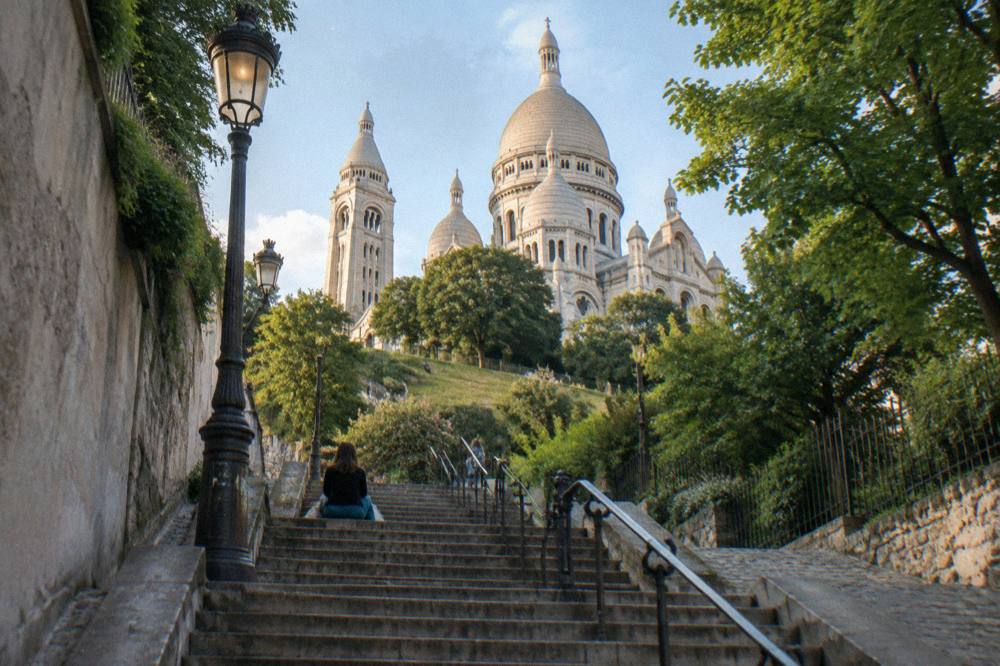
The climb deserves respect. There are 222 public steps up to the basilica, and the funicular, which costs the same as a metro ticket, skips them in a ride of about 1 minute 30 seconds. Readers deciding whether that matters can weigh it in the guide to the funicular and getting to the hill, and the guide to walking difficulty on the hill covers the slopes in detail. In short: comfortable shoes, and the funicular if the steps are a problem.
For the wine half of the day, the art, culture and food walk offers a middle path worth knowing about. Run by ExperienceFirst, it is a 90-minute group walk capped at 25, meeting in front of the Saint-Jean de Montmartre church, rated 4.9 from 2,874 reviews, the deepest review pool on the whole roster. Its base is a walking tour, but an optional wine and cheese tasting at a historic restaurant can be added as an upgrade, which splits the difference between a sightseeing walk and a food route for visitors who want both in one booking.
| Time of year | Vineyard experience | Wine tasting |
|---|---|---|
| Early October (festival week) | Guided visits inside the clos, book ahead | Festival food trail, the Parcours du Gout |
| Rest of the year | Views from rue des Saules and the museum gardens | Food tours and the art walk's tasting upgrade |
| Weekends | Same viewpoints, busier streets | Food tours run daily, check start times |
Timing matters less than visitors fear. The vineyard looks its best from late summer through the October harvest, but the views from rue des Saules and the museum gardens exist year-round, and the food tours pour wine in every season. The one genuinely time-bound experience is the guided visit inside the clos, which clusters around the festival, so anyone set on standing among the vines should aim for October and book early.
For readers who want the fuller picture of what the hill offers beyond wine, the things to do guide maps the whole neighbourhood, and Montmartre Paris Tours keeps the full roster of walks, food routes and private options in one place.
If a wine-focused visit is the goal, these three routes cover the range from a small-group food walk to a private tasting experience.
Common Questions About The Montmartre Vineyard
Can You Visit The Montmartre Vineyard?
Only on a guided visit. The Ville de Paris states the Clos Montmartre is accessible solely through guided visits, and the main opportunities are the festival slots in October, which require booking and fill early. Outside those visits, the vineyard is viewed from rue des Saules or the Musee de Montmartre gardens.
Do Any Montmartre Tours Include The Vineyard?
No listing on this site's roster is verified to include a vineyard visit. Several walks pass the clos from outside, including the hidden-gems walk, which lists the vineyard among the landmarks it passes, but none enters the clos.
Where Can You Taste Wine In Montmartre?
On the food and wine tours. The Eating Paris route includes two drink tastings among its eight stops, the cheese, wine and pastry tour pours alongside its tastings, and the ten-tastings route lists red and white wine. These tastings happen in shops and restaurants along the route, not at the vineyard.
When Is The Montmartre Grape Harvest Festival?
The Fete des Vendanges de Montmartre runs 7 to 11 October 2026, its 93rd edition, under the theme "Le 18e donne le rythme". The 2026 harvest itself came early, with 1,329 kg of grapes picked on 17 September 2026 after the summer heatwave.
How Much Wine Does The Vineyard Produce?
Roughly one tonne of grapes a year, vinified in the 18th arrondissement town hall cellars into close to 2,000 bottles of 50 centilitre red and rose. Each year's cuvee is named after a Montmartre figure.