What Not To Wear In Paris As A Tourist?
A practical dress guide for Paris and Montmartre: shoes for the cobbles and the 222 steps, what Sacre-Coeur asks visitors to wear, and how to dress for a city with about 109 rain days a year.
What Not To Wear In Paris As A Tourist?
Paris is a city you walk, and nowhere is that truer than Montmartre, where the streets are cobbled, the staircases are steep and the basilica sits at the top of 222 public steps. What you wear matters less for style than for physics: the wrong shoes hurt by mid-morning, the wrong jacket leaves you soaked, and a visit to Sacre-Coeur comes with a stated dress expectation that catches plenty of visitors unprepared.
This article works through the question the way a packing list should, from the ground up. Shoes first, because the hill decides them. Then the basilica's own dress guidance, then the climate data, then what a guided walking tour actually demands of an outfit.
What Not To Wear In Paris As A Tourist?
Skip three things above all: brand-new smooth-soled shoes, a single heavy layer with nothing underneath, and an outfit you cannot walk or stand in for hours. Paris is a walking city, Montmartre is a hill of cobbles and staircases, and the basilica at the top asks visitors for decent clothing and a quiet attitude. Nothing about that requires expensive clothes, only sensible ones. Once your shoes and outfit are sorted, the story of the hill, its artists, and its cabarets explains why that climb is worth every step.
The honest answer is that nobody in Paris is keeping score the way the internet fears. Locals do notice the tourist uniform of white sneakers, a brand-new backpack and a lanyard, but the noticing is mild and mostly harmless. The practical failures are the ones that cost you. A slick sole on wet cobblestone is a genuine hazard, not a faux pas. A thin jacket in October, when rain can arrive without much warning, turns a pleasant afternoon into a damp one. Shoes that have never been walked in for three hours will fail somewhere on the 222 steps to the basilica.
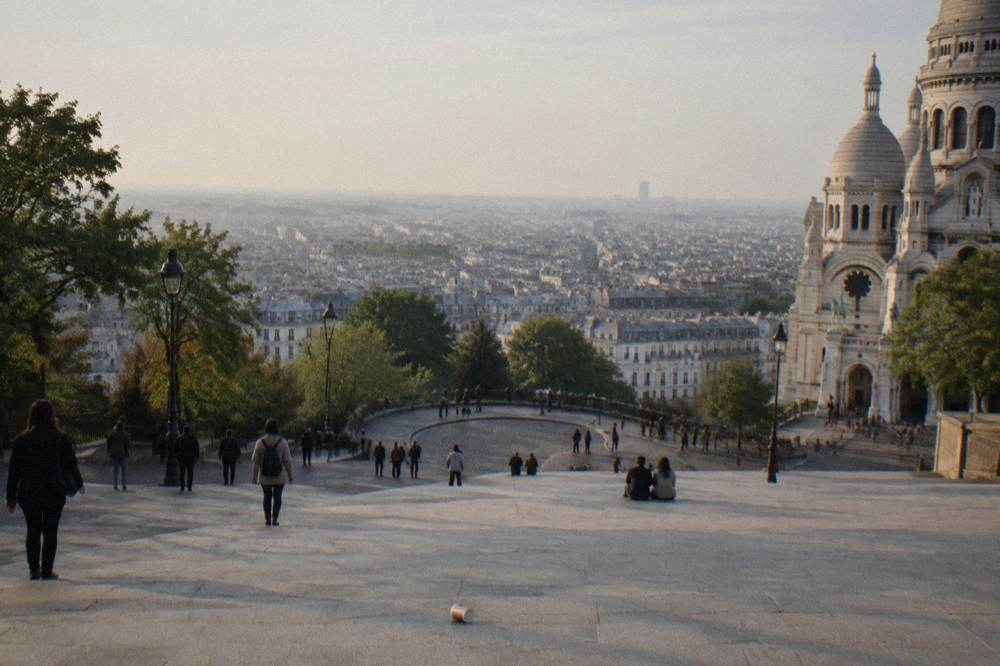
Montmartre concentrates all of this. The butte is the highest point in Paris at about 130 metres, and the streets climb to it through old paving, stepped alleys and worn stone. The Paris tourism office notes that the funicular exists precisely to avoid the 222-step climb to the basilica, which tells you how the terrain reads even to the people who built the neighborhood. If your day includes a guided walk, and the roster's tours range from 90 minutes to three and a half hours on their feet, your outfit has a job to do.
If a guided walk is part of your plan, three formats fit a dress-for-walking day well:
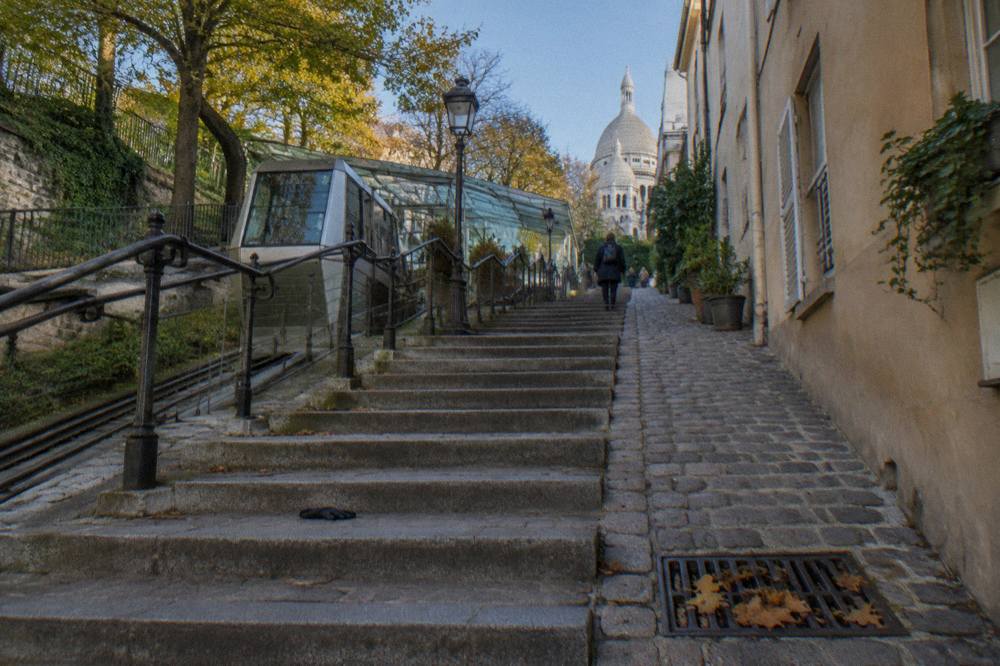
The hidden-gems walk run by Intrepid Urban Adventures is a good example of why shoes matter more than shirts: its stated inclusions are hidden streets, scenic stairways and panoramic views, with a croissant from an award-winning bakery along the way. Scenic stairways are scenic precisely because they go up. The small-group walk capped at 10 covers similar ground from near the Moulin Rouge, and the cheese, wine and pastry route spends three hours on its feet between tastings. All three allow free cancellation if the forecast turns against you.
What Shoes Work On Montmartre's Cobbles And 222 Steps?
Wear shoes with grip, a broken-in fit and a sole you trust on wet stone. Flat sneakers, walking shoes or light boots all work; smooth leather soles, new shoes and anything with a heel do not. The 222 steps to the basilica and the cobbled lanes around rue Lepic punish poor footwear faster than any other single wardrobe mistake a Paris visitor makes.
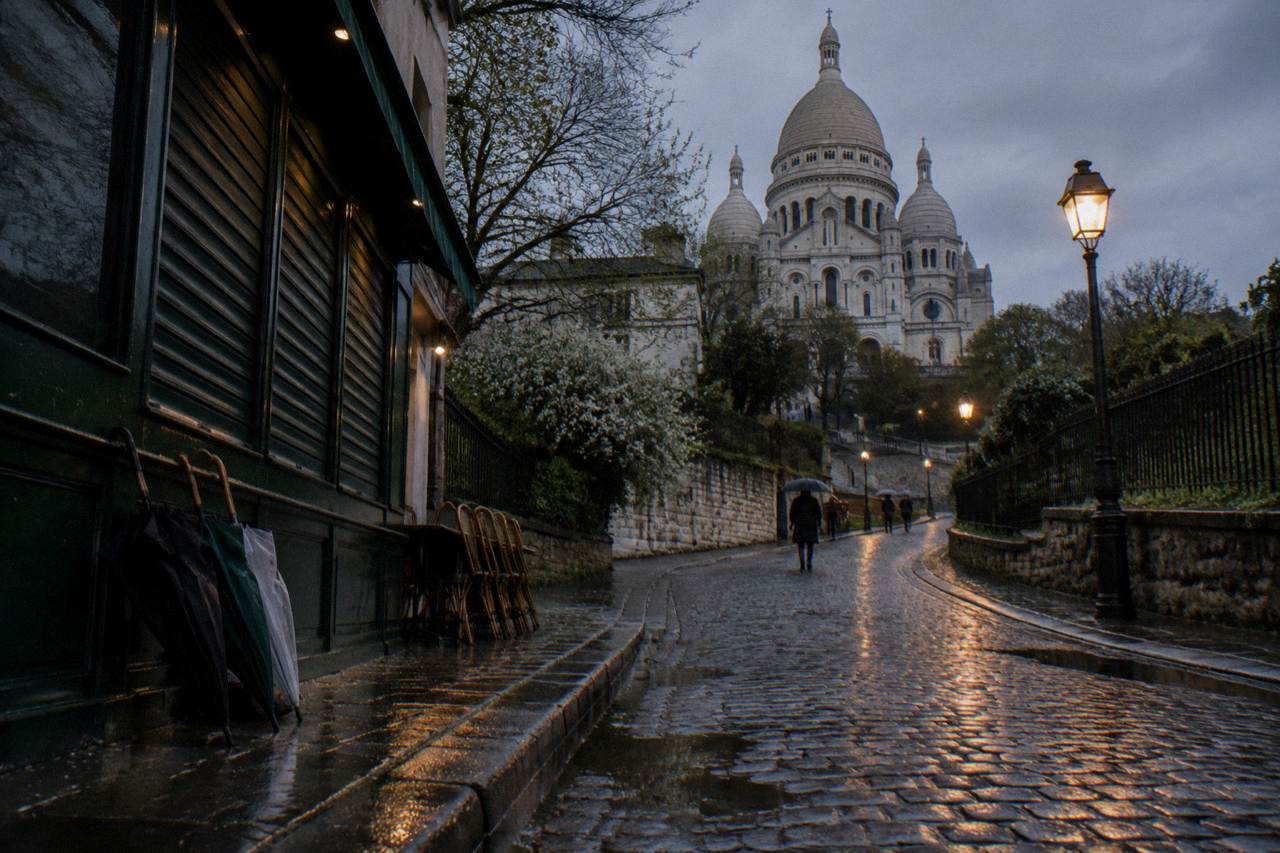
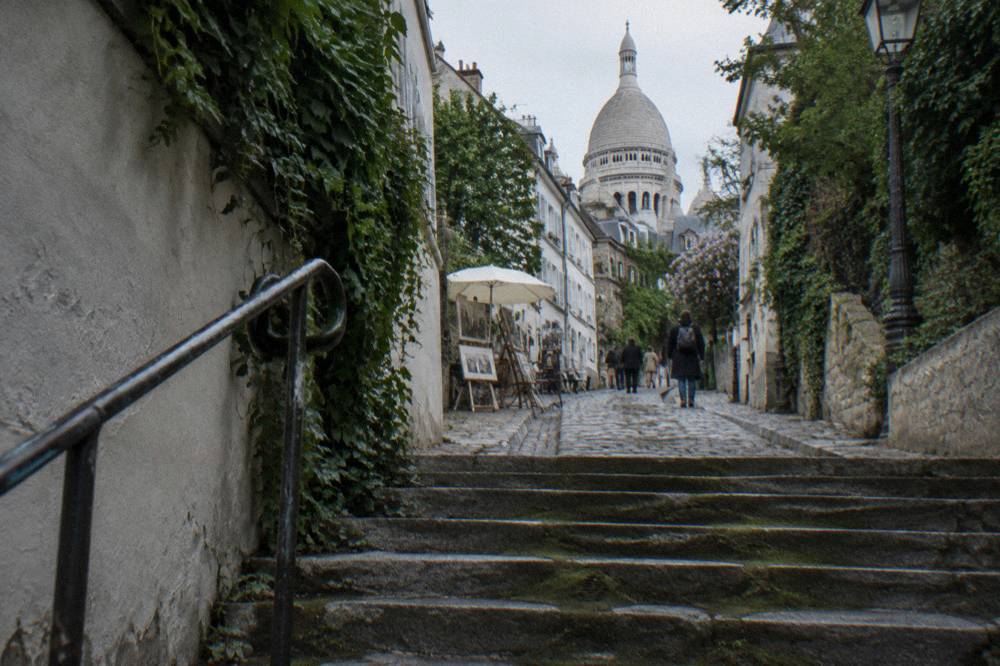
Cobblestone is the defining surface of the older arrondissements, and it behaves differently from pavement. The stones are rounded, often polished by a century of feet, and they hold a film of water after rain that makes them slick. Montmartre adds staircases: the public stairs up to Sacre-Coeur count 222 steps, and the side lanes off rue des Abbesses and rue Lepic add more, shorter flights between streets. A rubber sole with real tread handles all of it. A leather sole, or the hard foam of a brand-new fashion sneaker, does not.
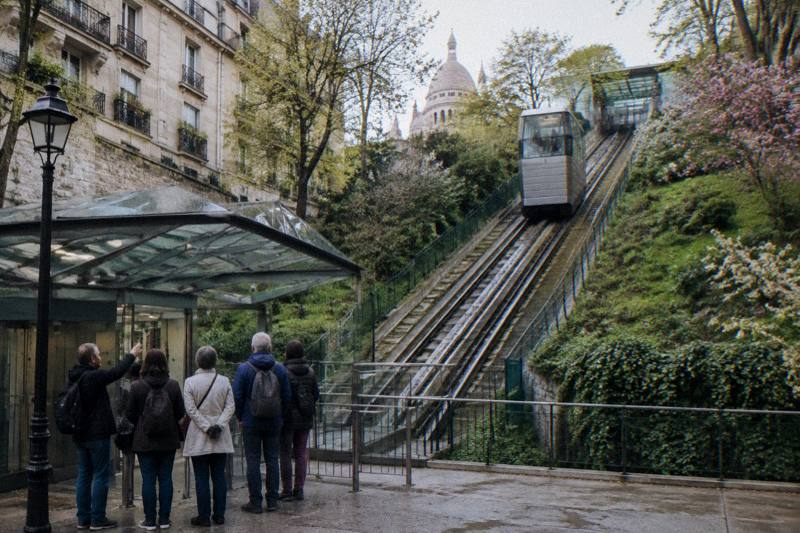
The funicular offers a partial escape, and it costs the same as a metro ticket, but it only covers the main climb from the lower gardens to the basilica forecourt. Everything else on the hill is on foot. If you want to understand just how much walking the neighborhood involves, the guide on how difficult Montmartre is to walk breaks the terrain down street by street, and the short answer there is the same one here: shoes first, everything else second.
Here is how common shoe choices actually perform on this terrain:
| Shoe type | On dry cobbles | On wet cobbles | On the 222 steps | Verdict for Montmartre |
|---|---|---|---|---|
| Walking shoe or trail sneaker | Solid grip | Solid grip | Comfortable, stable | Best choice |
| Worn-in canvas sneaker | Fine | Adequate, careful footing | Fine for a few hours | Good choice |
| New smooth-soled sneaker | Adequate | Slick | Blisters likely | Break them in first |
| Leather dress shoe | Adequate | Slick | Hard on the feet | Leave at home |
| Heels or platform soles | Risky | Risky | Hazardous | No |
The pattern to notice: nothing on this list is a fashion judgment. Every verdict comes from the same three surfaces, dry stone, wet stone and stairs, and the same physics. A visitor in old canvas sneakers will have a better day than a visitor in expensive new leather, and no one on the hill will know the difference.
What Does Sacre-Coeur Ask Visitors To Wear?
The basilica asks for decent clothing and a quiet attitude, and states both on its official practical-information pages. The basilica keeps long hours and there is no ticket barrier enforcing a code, but the request is explicit: visitors are asked to wear decent clothing and to keep a quiet attitude inside. Photography is not permitted in the nave.
The basilica's own FAQ and practical pages spell out the expectation: visitors are asked to wear decent, appropriate clothing and to maintain a silent attitude inside, out of respect for the prayer life of the place, which holds several masses daily. In practice this is the same standard most active churches in Europe apply. Shoulders covered, no very short shorts or skirts, no beachwear. A light scarf tucked in your bag solves the shoulder question for anyone in summer clothing, and costs nothing to carry.
Two more rules from the official pages matter for planning. Photography is not permitted in the nave itself, though it is allowed in the side aisles and ambulatory, so a camera is fine to bring but should stay holstered in the center of the church. And the dome, which charges 8 euros for adults and 5 euros for children up to 15 with tickets sold on site only, is reached by about 280 steps up a narrow staircase with no elevator, which the official page says is not recommended for anyone with mobility issues or a fear of confined spaces. If you plan to climb the dome, the shoe advice from the last section doubles in importance.
The basilica's official site, sacre-coeur-montmartre.com, carries the full dress, hours and dome guidance, and it is worth a two-minute read before your visit. One more detail from the same pages: a 10 to 15 minute wait is possible at busy times between 10:30am and 5pm, so whatever you wear should also be comfortable for standing in line, not just for walking.
How Much Rain Should You Dress For In Paris?
Plan for about 109 rain days a year, roughly a third of your trip's days, spread across every month rather than packed into a season. The Meteo-France climate normals for the Paris station put annual rainfall at 634.3 mm and sunshine at 1,717 hours, so the practical wardrobe answer is a light waterproof layer, not an umbrella you fight with all day.
The climate normals from the Meteo-France station sheet give the honest picture: rain in Paris is frequent but usually light, with well over a hundred rain days spread across a typical year. That means a waterproof shell or a compact umbrella is a daily-carry item from autumn through spring, and a reasonable one even in summer. The shell wins over the umbrella on Montmartre specifically, because the hilltop around the basilica is open and windy, and the lanes channel gusts that turn umbrellas inside out.
Layers are the second half of the rain answer. A rain shell over a sweater over a shirt lets you shed and add as the day moves between the shaded lanes at the bottom of the hill and the exposed forecourt at the top, which sits at about 130 metres of altitude and feels every degree of wind. A single heavy coat gives you exactly one setting, and the wrong one for half the day.
The practical packing math looks like this:
| Item | Why it earns its place | Paris-specific reason |
|---|---|---|
| Waterproof shell | Packs to nothing, covers 109 rain days | Hilltop wind defeats umbrellas |
| Light scarf | Basilica shoulder cover, neck warmth | Doubles as a church-accessory |
| Broken-in walking shoes | Grip on wet cobbles and stairs | 222 steps plus cobbled lanes |
| Thin sweater or fleece | Adjustable warmth | Lanes are shaded, forecourt is exposed |
| Compact umbrella | Backup to the shell | Frequent light rain, rarely torrential |
| Small day bag | Layers shed and stored | Long walking days, no luggage storage |
What Should You Skip Wearing On A Guided Walk?
Skip anything that cannot survive two to three hours on your feet: heels, brand-new shoes, tight jeans with no stretch, and bags that hang heavy on one shoulder. The roster's Montmartre walks run from 90 minutes to three and a half hours, all standing and strolling, so dress for a long urban hike with a café stop, not for a photo shoot.
Durations vary more than you might expect. The shortest walk on the roster is the 90-minute guided walk run by Discover Walks, which meets outside the Blanche metro exit and covers the hill in a compact loop. The classic walks run two hours or a little more, the small-group walk capped at 10 runs 2 hours 15 minutes, and the food tours run three to three and a half hours with tastings spread between stops. The private food tour runs three to four hours. None of these is a museum stroll with benches; they are continuous urban walking with pauses for the guide to talk.
That Discover Walks tour is the lowest-priced tier on the roster and the shortest at 1.5 hours, which makes it a sensible first walk for anyone who wants to test their shoes against the hill before committing to a longer route. It is English-only and meets at the Blanche metro exit on line 2, and like almost everything on the roster it carries free cancellation.
For the longer formats, the same rules scale up. The three-hour Eating Paris food tour, run by Eating Europe Food Tours in groups capped at 10, moves through eight food stops featuring 10 food and 2 drink tastings, from oysters to sausage and aligot, meeting outside Le Pain Quotidien on Rue Lepic. That is a lot of standing, walking between stops and standing again while tastings are served, and it rewards clothes with stretch and shoes with cushioning.
One clothing note specific to food tours: you will be eating, sometimes standing, sometimes perched on a stool in an artisan shop, so avoid anything tight-waisted and anything you would mourn if a drop of red wine landed on it. The tours include wine by design. The private food tour, the one non-refundable listing on the roster, makes the same point from the other direction: check the cancellation terms before you book anything you might need to reschedule.
What Should You Pack For A Day In Montmartre?
Pack as if for a long walk with a church visit in the middle: broken-in shoes, a waterproof layer, a light scarf or cover-up, a small day bag and nothing heavy. Montmartre's terrain, the basilica's dress request and roughly 109 rain days a year together define the list, and none of it requires buying anything new beyond the shoes.
The day-bag point deserves a sentence of its own. The Musee de Montmartre, one of the hill's main indoor stops, states on its official site that it has no luggage room, and the basilica's dome staircase is narrow enough that a bulky backpack becomes an obstacle. A small crossbody or day pack that holds your shell, scarf and water is the right size; anything you would check into a cloakroom is the wrong size. The museum, at 12 rue Cortot, is open every day from 10am to 6pm with last admission at 5:15pm, and its full exhibition-period price is 16 euros with gardens-only access at 6 euros, per its official prepare-your-visit page.
For routing the day itself, the guide on where to start a walk in Montmartre covers the meeting-point geography, and the site's own Montmartre walking tour guide maps the classic route. Both start from the same practical observation this article keeps returning to: the hill is walked, in shoes, in whatever weather the day serves up.
If a full guided day appeals, the must-see walk, rated 4.9 from 896 reviews, runs 2 hours 30 minutes from Place Saint-Pierre at the foot of Square Louise Michel, and carries a real "likely to sell out" flag on its listing, so booking ahead matters more than any wardrobe decision.
And if the question behind the question is whether the neighborhood rewards the effort at all, the answer on Montmartre Paris Tours runs consistently yes: the prettiest street question, covered in what is the prettiest street in Montmartre, has real contenders precisely because the terrain that demands good shoes is the same terrain that produces those views.
Common Questions About What Not To Wear In Paris As A Tourist
What Not To Wear In Paris As A Tourist?
Skip brand-new smooth-soled shoes, single heavy layers and anything you cannot walk or stand in for hours. Wear broken-in walking shoes, layered clothing and a light rain shell, and carry a scarf for church visits. Paris averages about 109 rain days a year and Montmartre adds cobbles and staircases to every route.
What Does Sacre-Coeur Ask Visitors To Wear?
The basilica asks for decent, appropriate clothing and a quiet attitude, per its official practical-information pages. Shoulders should be covered and beachwear avoided. Entry is free and the basilica is open every day from 6:30am to 10:30pm, and photography is not permitted in the nave.
Can You Wear Sneakers In Paris?
Yes. Flat, well-worn sneakers with real tread are among the best choices for Paris and especially for Montmartre, where cobbled lanes and the 222 steps to the basilica reward grip and comfort. The failure case is a brand-new smooth-soled sneaker, which is slick on wet stone and blister-prone on long walks.
How Rainy Is Paris, Really?
The Meteo-France climate normals for the Paris station record about 109 rain days a year, 634.3 mm of annual rainfall and 1,717 sunshine hours. Rain is frequent but usually light. A packable waterproof layer covers most of it, and on the exposed hilltop around Sacre-Coeur a shell works better than an umbrella in the wind.
What Should You Wear On A Food Tour In Montmartre?
Dress for three hours of walking and standing between tasting stops: comfortable shoes, clothes with stretch, and nothing you would mind a drop of wine landing on. The longest food tours on the roster run three and a half hours and include red and white wine by design, so plan the outfit around both movement and a meal.
Do You Need To Dress Up For Dinner In Paris?
The verified sources for this article cover dress for walking, weather and the basilica rather than restaurant codes, so treat any restaurant-dress claim beyond those with caution. Comfortable, decent clothing works everywhere on the Montmartre routes described here. One timing detail matters if cabaret is on your list: the Moulin Rouge's dinner-and-show evening starts at 7pm, so plan an earlier outfit change if you are coming from a day of walking.