Things To Do In Montmartre, And Which Ones A Guide Improves
Montmartre packs a basilica, a working vineyard, an artists' square and the Moulin Rouge into one hill, and most of the headline sights are free to see. This guide lists what to do on the butte, what each stop costs, and which parts a guided walk changes.
Short answer
The headline things to do in Montmartre are the Sacre-Coeur basilica (free, open 6:30am to 10:30pm), the dome (8 euros for adults), Place du Tertre, the Musee de Montmartre (16 euros full price), the Wall of Love, the vineyard from the street and the Moulin Rouge exterior. A guided walk covers the streets, stories and viewpoints; entry sites you visit yourself.
Things To Do In Montmartre, And Which Ones A Guide Improves
Montmartre is a hill in the 18th arrondissement that stacks a free basilica, a paid dome climb, a working city vineyard, an artists' square with 124 licensed pitches and the most famous cabaret facade in Paris into a walkable area roughly 15 minutes from the city center by metro. The basilica alone is open every day from 6:30am to 10:30pm and costs nothing to enter. Around it sits a neighborhood of steep streets, stairways and viewpoints that most first-time visitors try to cover in a single afternoon, which is exactly where the planning gets tricky. Since so much of the hill costs nothing to enjoy, our guide to free things to do in Montmartre and budget tips covers how to spend a full day here without paying for anything beyond lunch.
The site's roster of 16 guided walks, food tours and private tours covers the streets and stories of the hill well, but no walk includes a show ticket, a dome ticket or a museum ticket. So the honest way to plan Montmartre is to split it: the entry sites you visit yourself, and the streets, stairways and history that a guide genuinely improves. This guide walks through every headline stop on the butte, what each one costs, and which of the listed tours covers it, starting with the must-see list.
What Is A Must See In Montmartre?
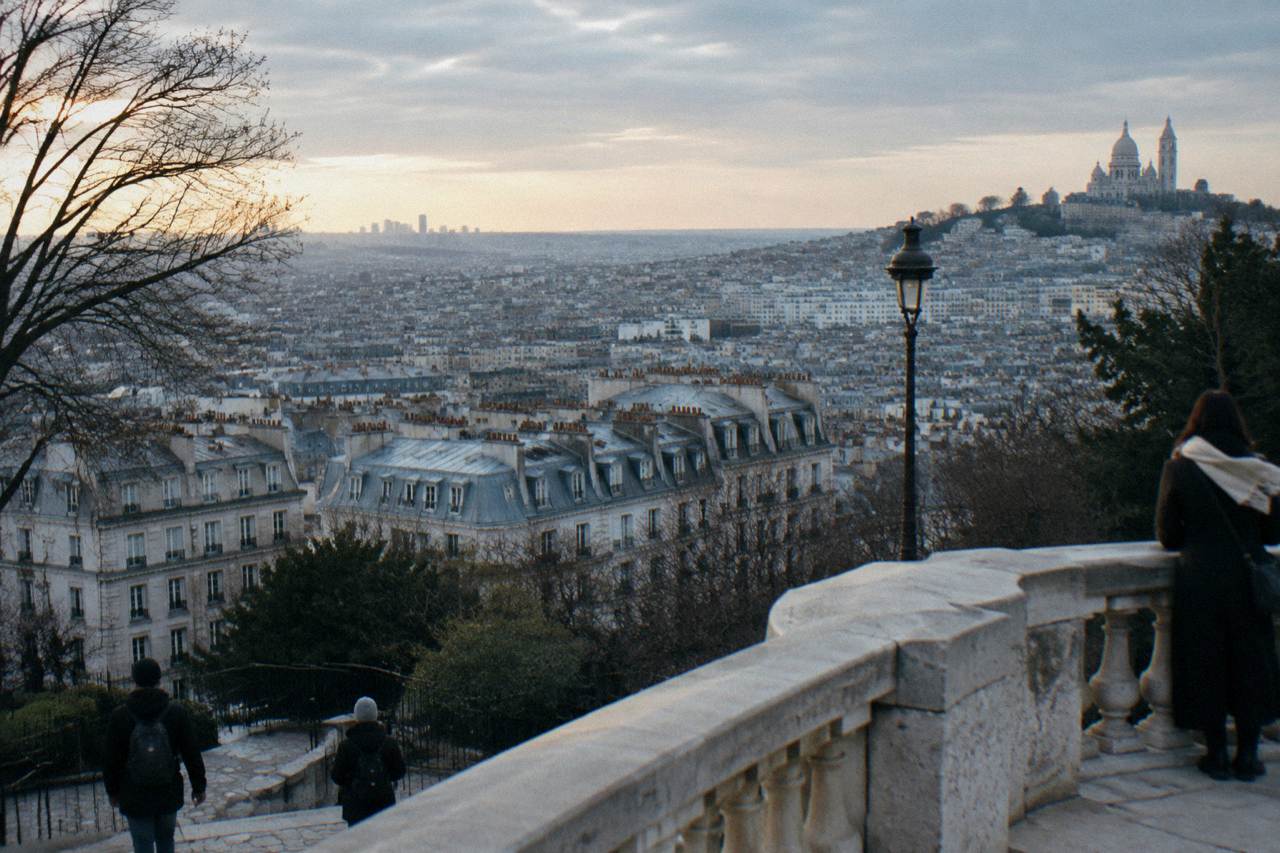
The must-see list on the Montmartre hill is short and walkable: the Sacre-Coeur basilica and its parvis view over Paris, the 222 public steps or the one-minute funicular up to them, the Place du Tertre artists' square, the Moulin Rouge facade at Blanche metro, the Wall of Love at Place des Abbesses and the Clos Montmartre vineyard seen from rue des Saules. Only the basilica is free to enter.
That list is what every classic walk on the roster threads together. The Montmartre Must-See Walking Tour, a 2 hours 30 minutes guided walk with a local guide rated 4.9 from 896 reviews, is built around exactly these stops, starting at Place Saint-Pierre at the foot of the hill. The shorter Montmartre Highlights Walking Tour, rated 4.9 from 2,825 reviews, covers the same headline ground in 2 hours 20 minutes with a group capped at 16. Both carry a "likely to sell out" badge on their listings, which reflects how many people want this exact route.
What a guide adds to the must-see circuit is context the streets do not explain on their own. The basilica's history, who painted where, why the vineyard survives inside a modern city, and which stairway leads to the quiet view rather than the crowded one are all things a local guide carries and a map does not. The sites themselves, the basilica nave, the square, the viewpoints, cost nothing, so the question is never whether you can afford the list, only whether you want the stories attached to it.
For a fuller walk-through of the route options, the Montmartre walking tour guide compares the five classic walks on the roster in detail.
What Are Some Hidden Gems In Montmartre?
The hidden side of Montmartre sits one street off the must-see circuit: the Cimetiere de Montmartre with its quiet tree-lined paths, the Musee de Montmartre gardens overlooking the vineyard, the Villa Leandre and rue de l'Abreuvoir side streets, the Sacre-Coeur crypt on a French-language tour and the stairways between rue Lepic and the basilica that most crowds skip. The cemetery is free, the museum is paid.
The hidden-gems listing on the roster makes this its whole premise. The Paris Montmartre Walking Tour run by Intrepid Urban Adventures, rated 4.9 from 1,031 reviews, includes a freshly baked croissant from an award-winning bakery, hidden streets and scenic stairways, and passes the Moulin Rouge, the vineyard and the basilica without entering any of them. It states plainly that the Moulin Rouge show is excluded, which is true of every walk on the roster: the cabaret is a show venue, not a tour stop with entry.
The art-focused listings go further into the quiet corners. The Montmartre for Art Lovers tour run by Trivial Guides, rated 4.9 from 718 reviews, includes entry to the Cimetiere de Montmartre and a sketching session on a small canvas, plus entry to the Sacre-Coeur basilica, which is otherwise free to all. It meets in front of the cemetery entrance, which tells you where its heart is. The Montmartre Street Art Tour with an Artist, rated 4.9 from 160 reviews, takes a small group of at most 15 through the neighborhood's current street art with a working artist as the guide.
The cemetery deserves its spot on the hidden list. It holds the graves of artists and composers associated with the hill, and the city's own pages set its rules plainly: no alcohol, no picnics, no sports and no animals. The museum deserves it for a different reason, its gardens look directly over the Clos Montmartre vineyard, a view almost nobody walking the main drag finds on their own. For the deeper art-and-history routes, the Montmartre art and history guide covers the painters' Montmartre in full.
Is It Worth Going To Montmartre?
Yes, for most first-time visitors Montmartre is worth the trip, because it concentrates a free basilica with one of the best views over Paris, a working vineyard, an artists' square and the Moulin Rouge into one hill reachable by metro. It is also the most crowded part of the city for exactly those reasons, so the value depends on timing and on whether a guide helps you skip the worst of the queues and the hustles.
The honest case for the hill is density. Within about a kilometer you can climb the 222 steps to the basilica (or ride the funicular, which costs the same as a metro ticket and takes 1 minute 30 seconds), stand in a free nave open 16 hours a day, watch licensed artists work at Place du Tertre and pass the Clos Montmartre, the working city vineyard on the hill's slopes. Few Paris neighborhoods give a visitor that much without a single entry fee.
The honest case against is the crowds. The basilica's own practical pages warn of a possible 10 to 15 minute wait between 10:30am and 5pm, and the parvis, the steps and the square are the busiest in the district through the middle of the day. This is where the guided walks earn their price: a local guide routes the group through the back stairways, times the basilica stop sensibly and keeps the walk moving while explaining what you are looking at. The question of how long to budget is answered in detail in how many hours you need in Montmartre.
The Sacre-Coeur Basilica And The Dome
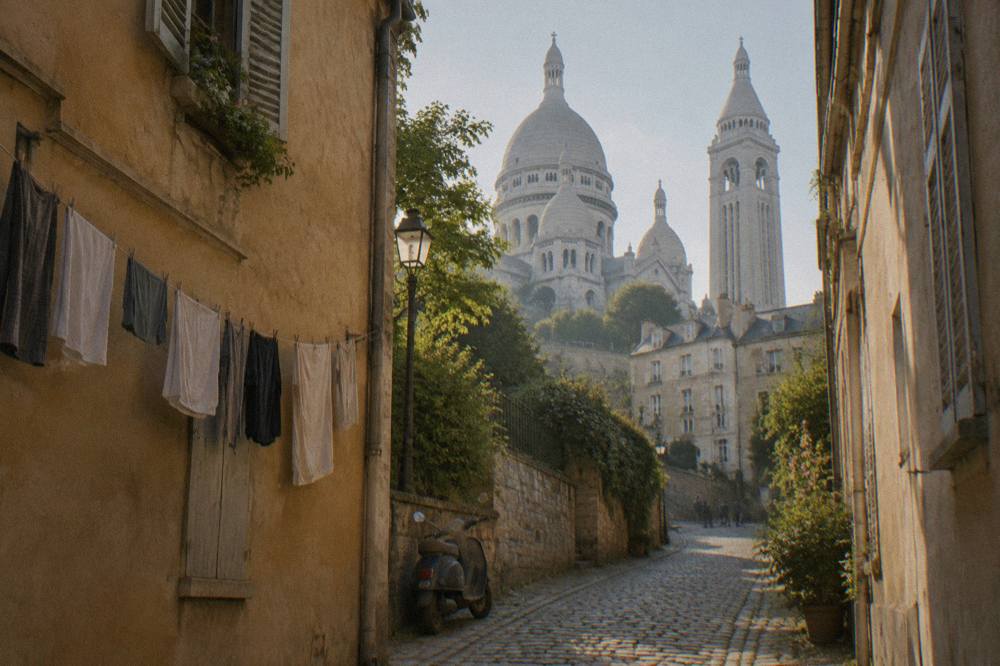
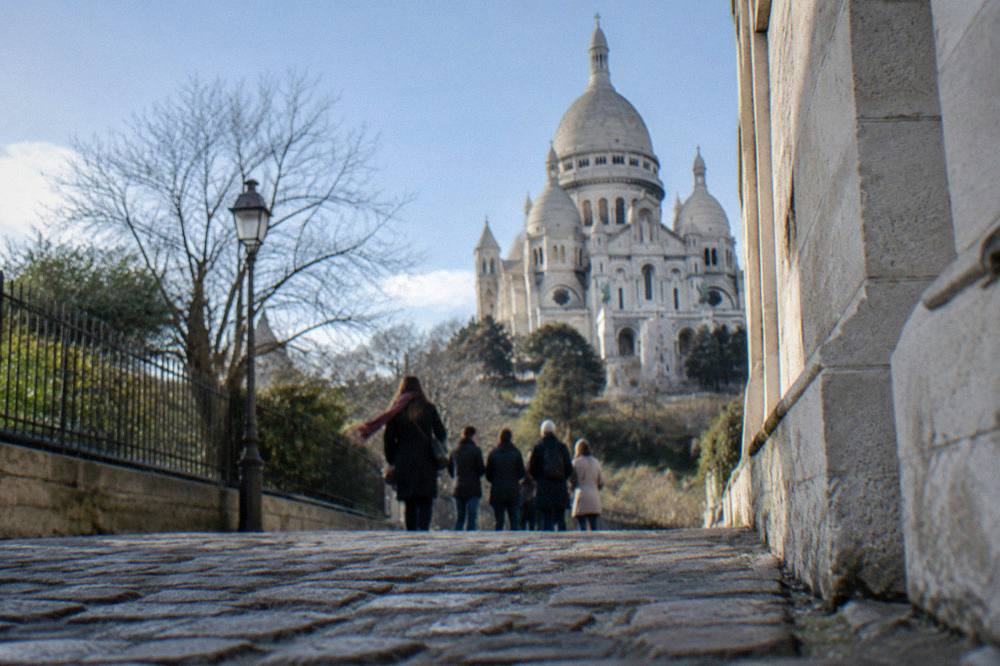
The Sacre-Coeur basilica is free to enter and open every day from 6:30am to 10:30pm, with no ticket and no booking. The dome above it is paid: 8 euros for adults from 16 years, 5 euros for children to 15, sold on site only, with no advance reservation, and reached by a narrow staircase of about 280 steps with no elevator. Photography is not permitted in the nave.
The basilica is the one stop on the hill that costs nothing and stays open longest. The official site states the visiting hours without exception, every day of the year, and the entry is free for everyone. Visitors are asked to wear decent clothing and keep a quiet attitude, since the building is an active place of worship with several masses daily. The main organ is under restoration through the end of May 2027, so the choir organ carries the services in the meantime.
The dome is the paid add-on, and it is worth knowing what you are buying. The ticket office sits down in the moat to the left after the outdoor security check, and tickets are sold on site only. The climb is about 280 steps up a narrow staircase, and the official page advises against it for anyone with mobility issues or a fear of confined spaces. Hours run from 10:30am with last admission about 7pm, varying by season and weather, and the dome closes at midday for a staff break. Two roster listings, the exclusive Babylon Tours walk and the art-lovers tour, include basilica entry in their stated inclusions, though that entry is free anyway; no listing on the roster includes a dome ticket.
| Item | Cost | Hours | Notes |
|---|---|---|---|
| Basilica nave | Free | 6:30am to 10:30pm daily | No photography in the nave |
| Dome, adults 16+ | 8 euros | 10:30am, last admission about 7pm | On-site tickets only, about 280 steps |
| Dome, children to 15 | 5 euros | Same as adult hours | No elevator |
| Dome, groups of 20 or more | 6 euros | Same | Children's groups 4 euros |
| Crypt tour | Free offering | Tuesday to Thursday and Saturday at 4pm | French only, about 40 minutes, accompanied |

For the full breakdown of the building, the dome climb and the controversy around the basilica's history, see the Sacre-Coeur tour guide. The official basilica site carries the current hours and dome details at sacre-coeur-montmartre.com.
Place Du Tertre And The Artists' Square
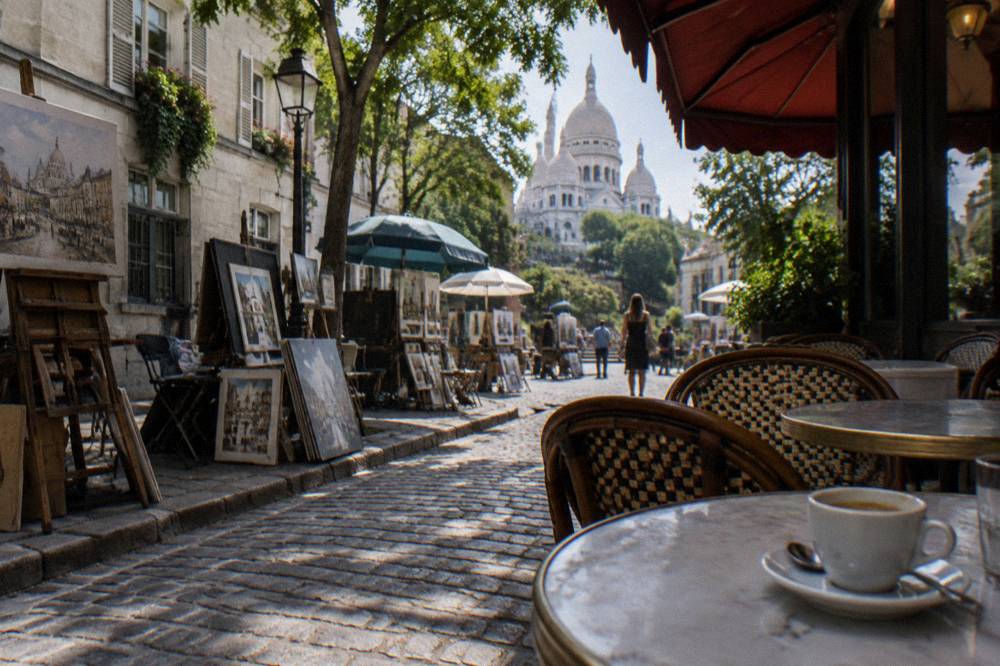
Place du Tertre is the artists' square a few minutes behind the basilica, where 124 numbered, floor-marked pitches are shared by two authorized artists each, working on site under city rules: only original, finished, signed works may be sold, and every artist must keep a work in progress on the easel at all times. Watching and walking the square is free; a portrait is a separate negotiation with the artist.
The square is often described as a tourist trap, but the reality is more interesting: it is a regulated workspace. The Ville de Paris runs the "Carre aux Artistes" through a public call, and the 2026 call offered 20 vacant places, 17 for painters, one for a portraitist and two for silhouette cutters, at an annual fee of 334.28 euros per pitch with authorizations lasting up to 7 years. Each pitch is one square meter shared alternately by two artists. The city's own page states that the square "is not an exhibition space": the artists must make the work there, in front of you.
That is what makes the square worth the crowds. Where else in Paris do you watch a portraitist work a live sitter, or a silhouette cutter produce a signed profile in a few minutes of scissors? Portrait prices are set by each artist and are not posted by the city, so agree the price before the sitting starts. The classic walks on the roster mostly pass through or beside the square; the guides are useful here chiefly for routing, since the square itself explains nothing and the surrounding streets, rue de la Vieuville, rue Norvins, the Abbesses end, reward someone who knows which way to turn.
| Place du Tertre fact | Detail |
|---|---|
| Pitches | 124 numbered, floor-marked spots |
| Sharing | Two authorized artists per pitch, working alternately |
| Rules | Original, finished, signed works only; work in progress kept on the easel |
| 2026 call | 20 places open (17 painters, 1 portraitist, 2 silhouette cutters) |
| Annual fee | 334.28 euros per pitch to the Ville de Paris |
| Authorization | Up to 7 years |
The rules are published on the city's official page for the call: paris.fr.
Musee De Montmartre, The Vineyard And The View
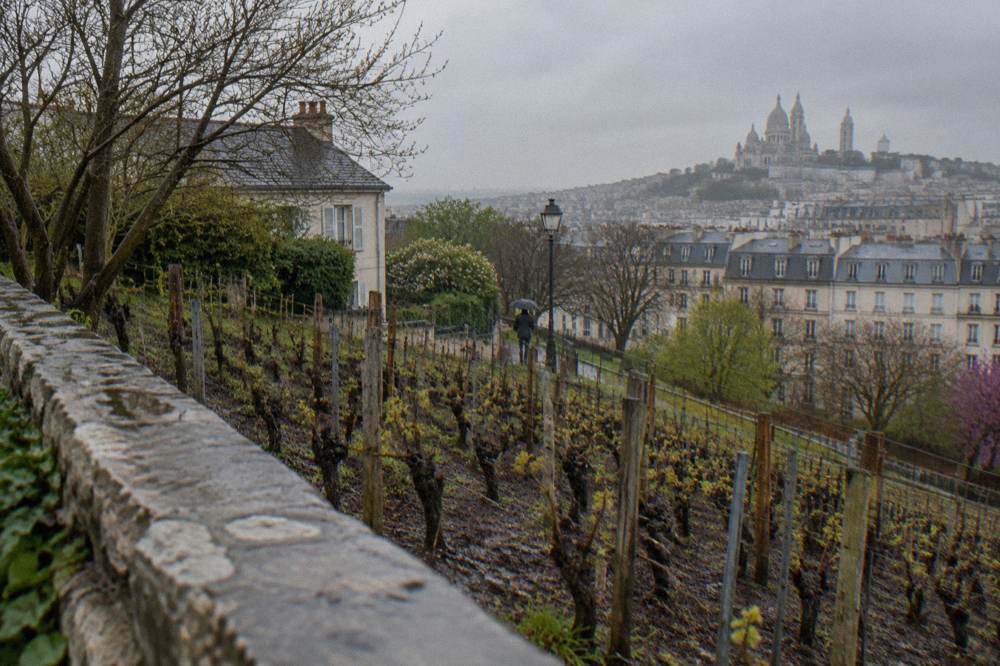
The Musee de Montmartre at 12 rue Cortot is the hill's paid museum, 16 euros full price during the exhibition period, open every day 10am to 6pm, occupying a 17th-century building where Renoir kept a studio and Suzanne Valadon lived and worked. Its gardens overlook the Clos Montmartre vineyard, which is not open to the public except on guided visits; from the street at 14 rue des Saules you can see the vines for free.
The museum is the quiet counterpart to the square downstairs. Renoir had a studio in the building, Valadon and her son Maurice Utrillo lived and worked there in the early twentieth century, and Emile Bernard and Raoul Dufy also lived there at various points. The recreated studio rooms and the garden view over the vineyard are the two things most visitors remember. Reduced prices apply: students 18 to 25 and teachers pay 10.50 euros, ages 10 to 17 pay 9 euros, under 10s are free, and a gardens-only ticket is 6 euros. The museum states there is no luggage room, so travel light.
The vineyard is the other half of this stop, and the rules matter. The Clos Montmartre, 1,762 vines on 1,556 square metres with 27 grape varieties, is a working city vineyard that produced 1,329 kg of grapes at its September 2026 harvest, pressed at the 18th arrondissement town hall. The Ville de Paris states it is accessible on guided visits only; the roster's walking tours pass it and view it from the street, and no listing on the roster enters it. The Fete des Vendanges in October is the one moment the whole hill celebrates the vines, with concerts, parades and food events, most of them free.
| Stop | Entry cost | Hours | What you get |
|---|---|---|---|
| Musee de Montmartre, full price | 16 euros | Daily 10am to 6pm, last entry 5:15pm | Museum, studio rooms, gardens |
| Museum, students 18-25 and teachers | 10.50 euros | Same | Same |
| Museum, ages 10 to 17 | 9 euros | Same | Same, under 10 free |
| Museum gardens only | 6 euros | Same | Gardens and the vineyard view |
| Clos Montmartre vineyard | Street view free | Street access any time | Guided interior visits only, booking required |
| Cafe Renoir | Pay as you eat | Wednesday to Sunday, 11am to 7pm | Museum garden cafe |
The museum's own site lists the current prices and hours at museedemontmartre.fr, and the vineyard's rules are on the city's page for the Clos Montmartre. For the wine angle in depth, the Montmartre vineyard and wine guide covers the clos, the festival and the tasting tours.
The food tours on the roster use this part of the hill heavily. The Montmartre Food Tour with 10 Local Tastings, run by Secret Food Tours and rated 4.8 from 276 reviews, runs 3.5 hours of pastries, macarons, crepes, cheeses, cured meats, a "secret dish" and both red and white wine. It meets outside Anvers metro on weekdays and at Abbesses metro on weekends and for 6pm starts, so check the departure times on the listing for your date. It carries a "likely to sell out" badge, and it is a food tour with a start-time note, not an evening tour.
The Moulin Rouge, The Funicular And Getting Around
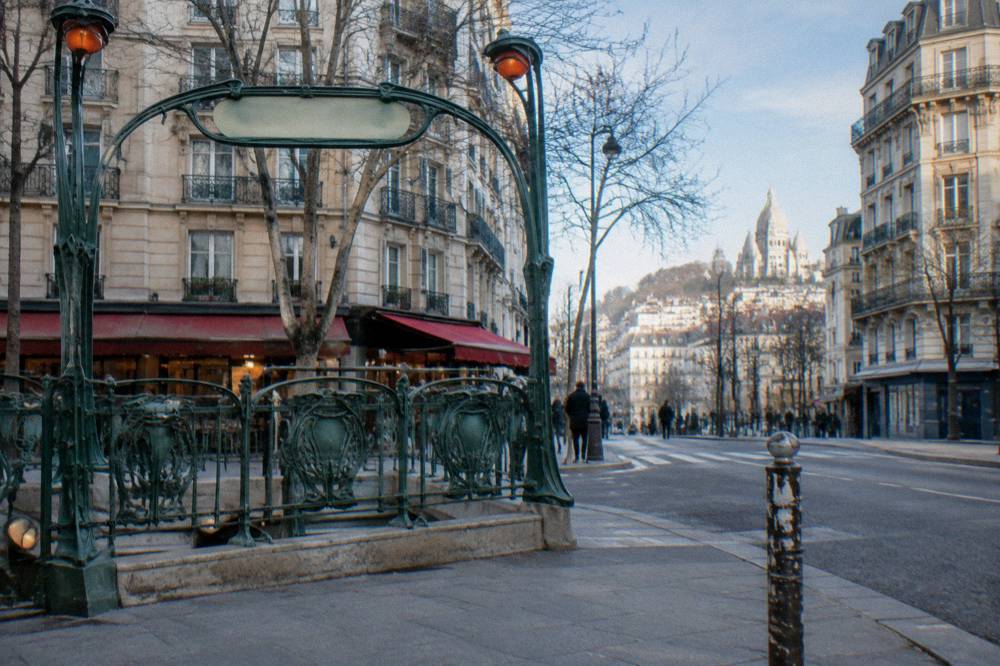
The Moulin Rouge at 82 Boulevard de Clichy is a cabaret show venue created in 1889, reached at Blanche metro on line 2, with its dinner and show evening starting at 7pm. No walking tour on the roster enters it or includes a show ticket; the walks pass the facade from the outside. The funicular beside the basilica costs the same as a metro ticket and covers the 222-step climb in 1 minute 30 seconds.
The Moulin Rouge is the classic first landmark of a Montmartre visit, because several of the roster's walks meet within sight of it. The Blanche metro exit is the meeting point for the Montmartre Guided Walking Tour run by Discover Walks, rated 4.8 from 1,028 reviews, the shortest listing on the roster at 1.5 hours and the lowest price tier. It is also the meeting point for the small-group walk capped at 10 that meets by the Moulin Rouge, rated 4.9 from 576 reviews, and for the hidden-gems walk with its croissant stop. The cabaret itself is a separate evening purchase, and the current show times beyond the 7pm dinner start and the ticket prices are not printed here because they belong to the venue's own booking site.
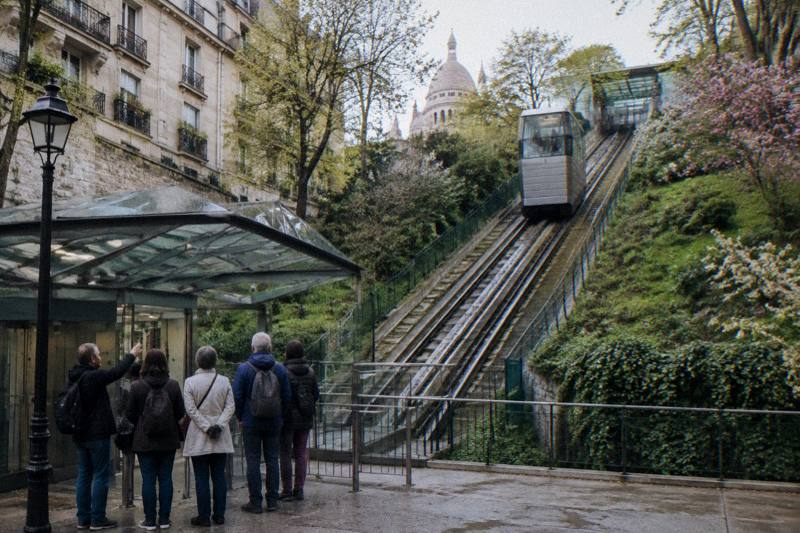
The funicular is the other piece of local logistics. It is operated by RATP, opened in 1900, runs with the Navigo Easy pass and accepts the same ticket as the metro for a single trip without connections. It avoids the 222 steps to the basilica parvis, which matters on the way up more than the way down. Cardboard tickets are being phased out: they are no longer sold and remaining ones are accepted until mid-December 2026, with the digital Navigo Easy pass as the replacement. The full logistics, including the climb and the difficulty question, are covered in the Montmartre funicular and getting to the hill guide.
Which Roster Walks Cover What
No single listing covers everything on the hill. The classic walks cover the streets, the viewpoints, the basilica from outside and the Moulin Rouge facade; the art tours add the cemetery and, on one listing, a sketching session; the food tours add tastings; and the private listings add flexibility. The entry sites, the dome, the museum, the vineyard interior and any show, are never included and are always your own visit.
The comparison below is built strictly from the roster's stated inclusions and exclusions. It is the table to check before booking, because the most common disappointment on the hill is a visitor expecting a walk to include a show ticket or a dome ticket, neither of which any listing carries. For the three classic walks, the listings do not spell out every stop, so the safe claim is only that each includes a local guide and a walking tour.
| Listing | Type | Duration | Rating | Covers |
|---|---|---|---|---|
| Montmartre Must-See Walking Tour | Small-group walk | 2 hours 30 minutes | 4.9 from 896 reviews | Headline streets and viewpoints, meets at Place Saint-Pierre |
| Montmartre Highlights Walking Tour | Group walk, cap 16 | 2 hours 20 minutes | 4.9 from 2,825 reviews | Headline route, meets near the carousel at Place Saint-Pierre |
| Montmartre Guided Walking Tour (Discover Walks) | Small-group walk | 1.5 hours | 4.8 from 1,028 reviews | Shortest walk, meets at Blanche metro, English only |
| Hidden Gems walk (Intrepid Urban Adventures) | Small group, cap 14 | 2 hours | 4.9 from 1,031 reviews | Hidden streets, stairways, a croissant, show excluded |
| Montmartre for Art Lovers (Trivial Guides) | Trivia walk | 2 hours | 4.9 from 718 reviews | Cemetery entry, sketching session, basilica entry |
| Best Art, Culture and Food walk (ExperienceFirst) | Group walk, cap 25 | 1.5 hours | 4.9 from 2,874 reviews | Streets and culture, optional wine and cheese upgrade |
| Highlights, Bohemian Streets and Basilica (My Super Tour) | Small group, cap 15 | 2 hours | 4.9 from 249 reviews | Streets and basilica area, guide with a yellow sign at Blanche |
One further note on cancellation: 15 of the roster's 16 listings offer free cancellation, and the private food tour is the exception, non-refundable, which its listing states plainly. If your plans are loose, that distinction matters more than any price tier. The question of whether a guided walk is worth it at all, versus walking the hill yourself with a map, is worked through in the self-guided versus guided tour guide, and the deeper cost logic for the food tours sits in is a food tour in Paris worth the money.
The site behind this guide, Montmartre Paris Tours, exists to make exactly this decision easier: every listing on the roster is described by what it actually includes, not by what a visitor hopes it might.
Common Questions About Things To Do In Montmartre
What Is A Must See In Montmartre?
The Sacre-Coeur basilica and its parvis view, the Place du Tertre artists' square, the Wall of Love at Place des Abbesses, the Clos Montmartre vineyard from rue des Saules and the Moulin Rouge facade at Blanche. Only the basilica is free to enter; the rest are street sights you walk past.
What Are Some Hidden Gems In Montmartre?
The Cimetiere de Montmartre, the Musee de Montmartre gardens over the vineyard, the quiet side streets like rue de l'Abreuvoir and Villa Leandre, and the stairways between rue Lepic and the basilica. The cemetery is free; the museum charges 16 euros full price.
Is It Worth Going To Montmartre?
For most first-time visitors, yes: the hill concentrates a free basilica, a working vineyard, an artists' square and the Moulin Rouge into one walkable district. Expect crowds through the middle of the day, and consider a guided walk to route around them.
How Much Does The Sacre-Coeur Dome Cost?
8 euros for adults from 16 years, 5 euros for children to 15, with group rates of 6 euros for groups of 20 or more and 4 euros for children's groups. Tickets are sold on site only, and the climb is about 280 steps with no elevator.
Do Any Tours Include The Moulin Rouge Show?
No. The Moulin Rouge is a cabaret show venue, and every walk on the roster passes the facade from the outside. Show tickets are a separate purchase from the venue, whose dinner and show evening starts at 7pm.
Can You Visit The Montmartre Vineyard?
Only on guided visits booked in advance; the Clos Montmartre is not open to casual entry. From the street at 14 rue des Saules you can see the vines for free, and the Musee de Montmartre gardens overlook them.