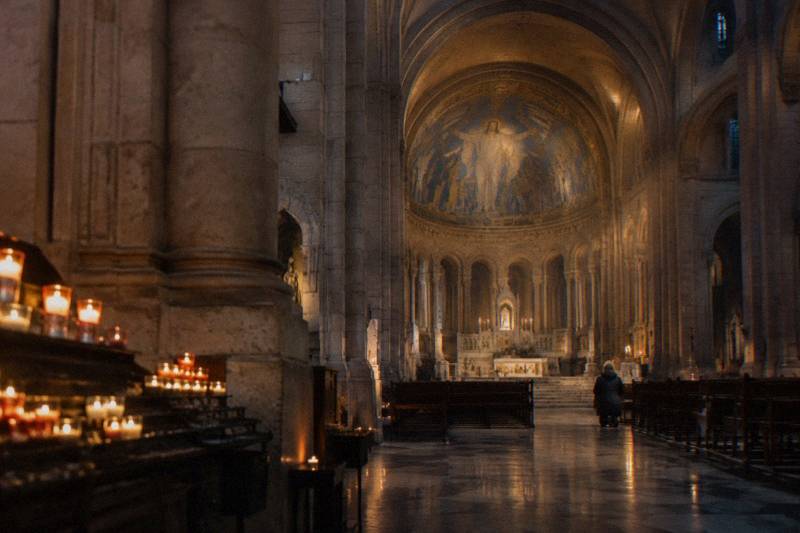
Why Is Sacre-Coeur Controversial?
The Sacre-Coeur basilica is a major pilgrimage church and one of Paris's most disputed monuments: the national vow behind it, the Commune debate, and what it means for your visit.
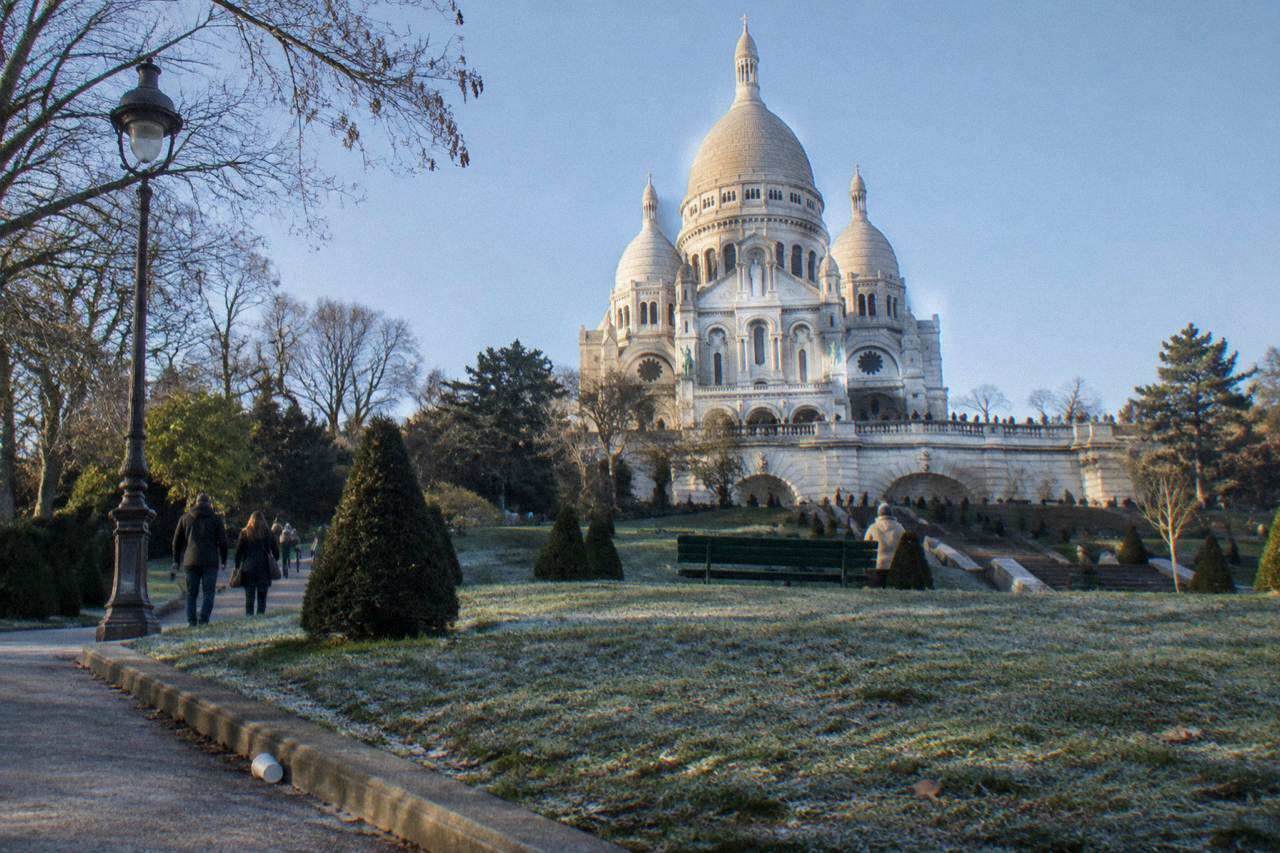
The white domes of Sacre-Coeur appear on postcards, films and half the souvenir stands in Paris, yet the building has never been simply admired. It was born from a political vow made after a national defeat, it was then built on ground with its own painful history, and Parisians have argued about what it represents for more than a century. The basilica's own site states plainly that it is free and open every day from 6:30am to 10:30pm, which is the practical half of the story. The other half, the controversy, is about why the building exists at all. If the debate leaves you unsure whether a visit makes sense, our guide to what you actually get from going inside Sacre-Coeur covers the free entry, the dome fee, and the interior mosaic up close.
Why Is Sacre-Coeur Controversial?
Sacre-Coeur is controversial because of its origin story rather than its architecture: it was promised as a national vow after France's defeat in 1870-71, it was then built on the Montmartre hill where the Paris Commune uprising began, and many readers have long taken the placement as a statement of political atonement. Historians still debate whether that symbolism was intended. The result is a monument that is simultaneously a working church, a pilgrimage site and a political argument.
The core of the dispute is timing and geography. The vow that led to the basilica was formulated by Alexandre Legentil after the defeat of 1870-71, before the Commune, so the original purpose cannot have been a response to the uprising. But construction then went up on the very hill where the Commune began, and that coincidence, if it is a coincidence, is what generations of critics and defenders have argued about. The law of public utility that cleared the way for the project was voted by the National Assembly on 24 July 1873, the first stone was laid on 16 June 1875 by Archbishop Guibert, and the basilica was consecrated on 16 October 1919. Those dates are the skeleton of every version of the story.
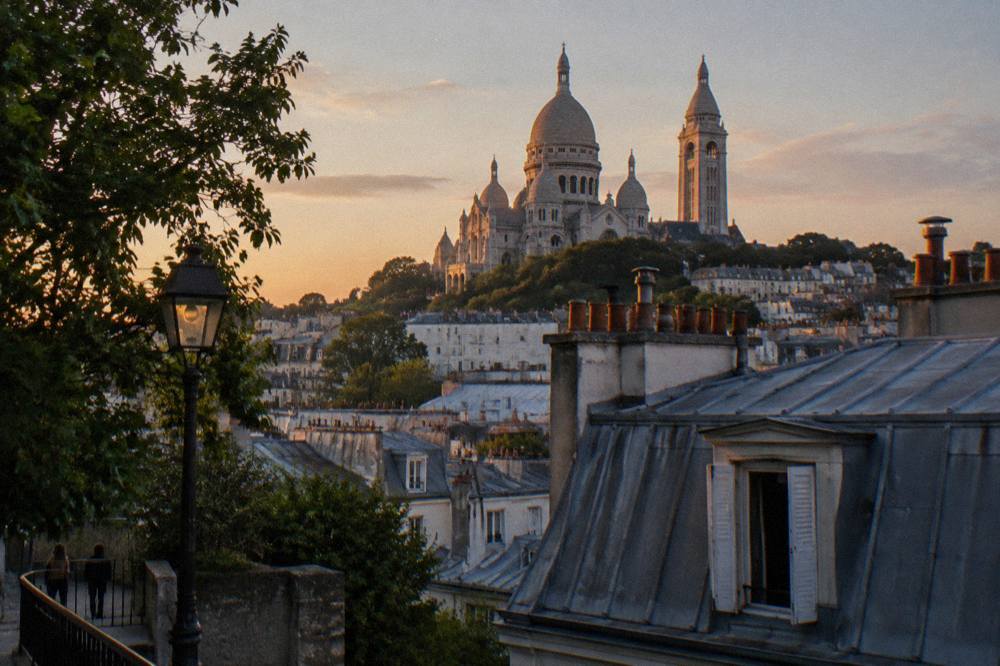
There is also a modern layer to the argument. The hill is the most visited corner of the 18th arrondissement, the steps below the basilica fill daily, and residents have voiced concern about crowds and the pressures they put on the neighborhood. The church itself stays out of that fight: it keeps its doors open, free of charge, from early morning to late evening, and the dome above it sells tickets on site only. A visitor who arrives with a guide, such as the private Sacre-Coeur walk that starts at Place Blanche, usually gets the fullest version of this history told on the spot where it happened. If you're budgeting for the visit, this full breakdown of Sacre-Coeur ticket prices explains what the dome and crypt add to the total.
The Babylon Tours exclusive above approaches the hill as a guided walk of the district and Sacre-Coeur, run in a private or semi-private format, and it operates rain or shine. All three run rain or shine around the hill, and all three include free cancellation except where noted on the listing.
Who Promised To Build Sacre-Coeur, And When?
The basilica traces back to a private vow made in 1870-71 by Alexandre Legentil, who promised to build a church of pilgrimage if France survived its defeat. The National Assembly voted the law of public utility on 24 July 1873, the first stone was laid on 16 June 1875, and the building was consecrated on 16 October 1919. Construction was funded by public subscription, and the site chosen was the top of the Montmartre hill.
Legentil's vow was a personal act of piety that grew into a national project. France had been defeated in the Franco-Prussian War, Paris had been besieged, and Legentil read the catastrophe as a moral verdict on the country. His idea was that a church dedicated to the Sacred Heart would repair what the war had broken. The language of penance and repair is woven into the founding documents, and it is the reason the building has always carried more weight than an ordinary parish church.
The money came from subscriptions, small donations collected across the country, which meant the project belonged to its subscribers in a way few buildings do. Work began in 1875 and continued for decades; the sources disagree on a single completion year, so the honest version is simply that the basilica was begun in 1875 and consecrated in 1919. The French state's role was limited to the 1873 law that declared the project of public utility, without which the land could not have been assembled.
A guide who knows this history turns the dates into a story, and the private Sacre-Coeur tour with an expert guide is built for exactly that: it prices per group of up to two rather than per person, it lasts 2 hours to 2 hours 20 minutes, and it carries free cancellation. The listing holds a 4.9 rating from 97 reviews, a small pool compared with the big group walks, but consistent.
Was Sacre-Coeur Built To Atone For The Commune?
That is the debated question at the center of the controversy, and the honest answer is that historians disagree. The vow predates the Commune, so the founding purpose cannot have been anti-Commune. But the basilica was then placed on the hill where the 1871 uprising began, and many readers, then and now, have understood the site choice as a symbol of atonement directed at the Commune's memory. The debate is real and unresolved.
The sequence matters. Legentil formulated his vow after the 1870-71 defeat and before the Commune existed as an event, which undermines the simplest version of the atonement story. What gives the story its force is what came after: the National Assembly that voted the 1873 law was dominated by conservatives who had watched the Commune with horror, and the hill they chose was Montmartre, the place where the uprising had started. A building dedicated to penance, placed on that specific hill by those specific men, was always going to be read as a statement.
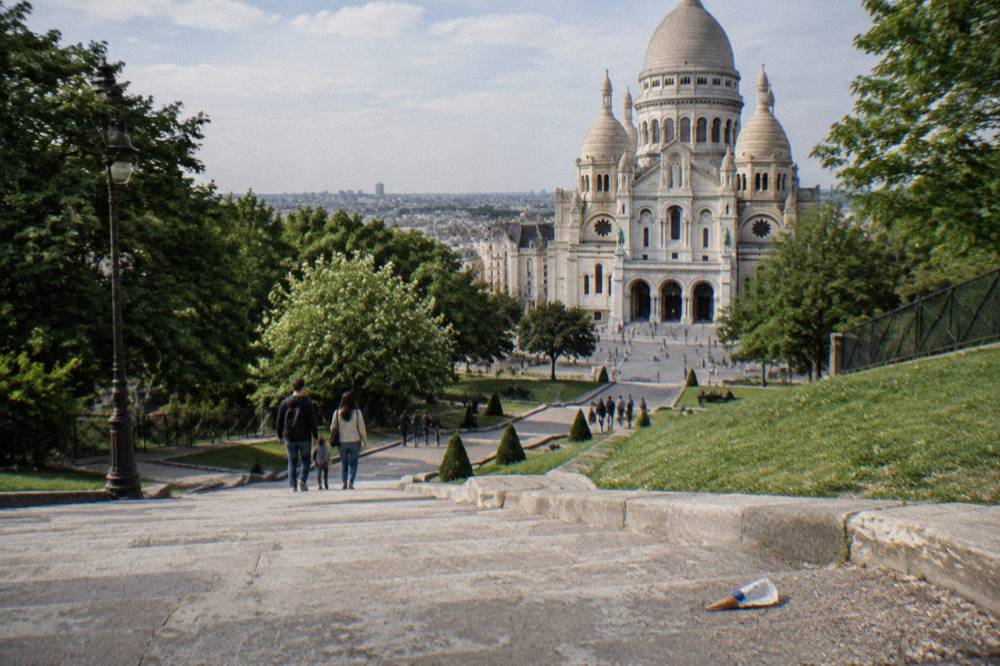
Some historians argue the placement was deliberate symbolism, a monument raised over the birthplace of the Commune. Others point out that the hill was chosen for visibility: the highest point in Paris, visible from across the city, exactly what a national votive church would want regardless of politics. Both readings have merit, and neither settles the question. What can be stated with confidence is the classification of the building itself: Sacre-Coeur was classified as a historic monument in 2022, which marked the state's formal recognition of it as heritage rather than merely as a church with a difficult past.
This is where a guided walk earns its keep. The trivia-style Montmartre for Art Lovers tour includes entry to the Sacre-Coeur basilica alongside the cemetery of Montmartre, and its guide can lay out both readings of the Commune question on the ground where the events took place. The listing shows a 4.9 rating from 718 reviews with free cancellation.
What Do Parisians Actually Think Of The Basilica Today?
Opinion is genuinely split and has been for a century: some Parisians see a beautiful landmark and a living church, others see a political monument they would rather not celebrate, and many hold both views at once. The basilica's daily life, free entry, masses, confession hours, runs regardless of the argument, and the building now draws visitors from every part of the world. The controversy survives because the building's meaning was never settled by history.
The architectural criticism has its own thread. Art historians have long argued about the Romano-Byzantine style of the building, its whiteness, its scale on the skyline, and whether it belongs on a Paris hilltop at all. That argument is aesthetic rather than political, but it feeds the same general sense that Sacre-Coeur is a monument people love to argue with. The stone itself, which stays white in the rain, gives the defenders an easy visual point in its favor.
The religious life of the building continues through everything. The basilica is open daily from 6:30am to 10:30pm with free entry for all visitors, and the official site lists several masses a day. The main organ is under restoration through the end of May 2027, so the choir organ carries the services meanwhile, a detail that matters if you visit expecting the full sound of the building. Photography is not permitted in the nave, and visitors are asked to dress decently and keep a quiet attitude, both posted plainly on the basilica's own practical information pages.
For visitors, the practical takeaway is that the controversy does not close anything. The church is free, the dome is climbable, the crypt offers accompanied tours in French on Tuesday to Thursday and Saturday afternoons at 4pm at no charge. The debates are background, not barrier. If you want the full picture before you go, the Sacre-Coeur tour guide on this site covers the visiting side in detail, and the question is it worth going inside Sacre-Coeur gets a direct answer elsewhere on these pages.
How Does The Controversy Change A Visit To Montmartre?
It mostly adds context rather than obstacles: the basilica's opening hours, free entry and dome access are unaffected by any of the debates, and the main practical effects are interpretive. Knowing the origin story changes how the hill reads, and a guide who tells it well is worth more here than in most of Paris. The one thing the controversy does not do is make the site anything less than the centerpiece of the district.
The hill itself carries several layers at once. The 222 public steps below the basilica, or the funicular beside them, which costs the same as a metro ticket, put every visitor on the same climbing path the Commune-era crowds knew. At the top, the view across Paris is the reward that made the site attractive to builders in the first place. Around the back, the Musee de Montmartre and the Clos Montmartre vineyard, open to the public on guided visits only, tell the artistic half of the hill's story. The controversy belongs to the basilica; the hill has always been bigger than one argument.
| Layer of the story | What it is | How a visitor encounters it |
|---|---|---|
| The national vow | Alexandre Legentil's 1870-71 promise after the defeat | Explained by guides and on the basilica's history pages |
| The legal foundation | Law of public utility voted 24 July 1873 | Context on guided walks of the hill |
| The construction | Begun 16 June 1875, consecrated 16 October 1919 | Visible in the building's fabric and style |
| The Commune debate | Whether the hilltop site was chosen as atonement | Presented as a live debate, not settled fact |
| The working church | Free entry daily 6:30am to 10:30pm, several masses a day | Open to all visitors, quiet attitude asked |
| The dome | About 280 steps, no elevator, 8 euros adults, 5 euros children to 15 | Tickets on site only, no advance booking |
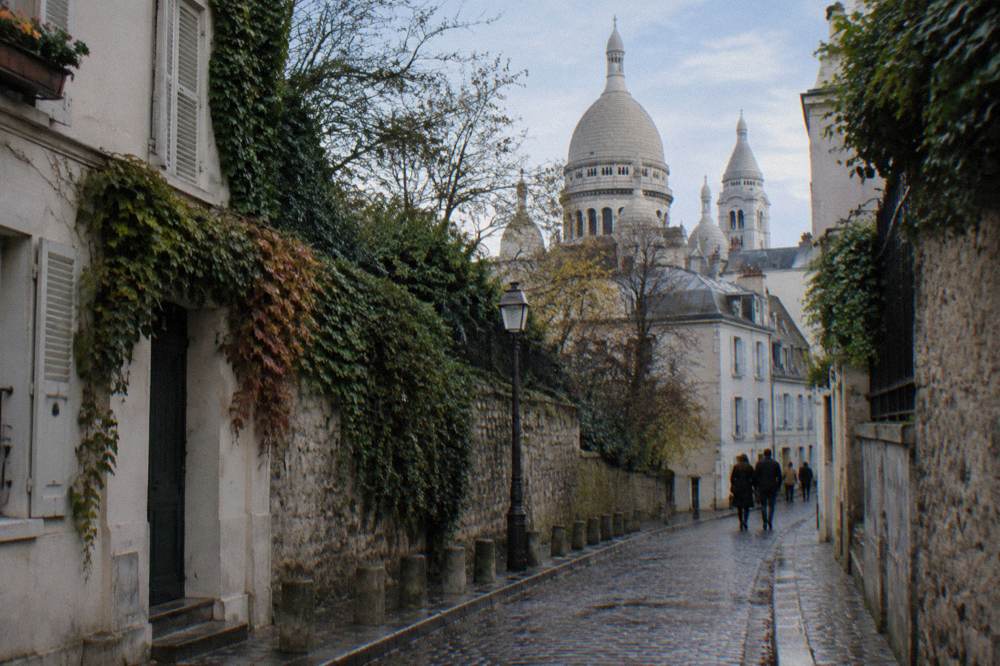
The tours that handle this material best are the ones that give the guide room to talk. The 90-minute art, culture and food walk run by ExperienceFirst covers the district's layered history in a group capped at 25, with a 4.9 rating from 2,874 reviews, the deepest pool on the whole roster of Montmartre listings. The classic highlights walking tour, 2 hours 20 minutes with a local guide and a 4.9 from 2,825 reviews, takes the broader route past the basilica with the same storytelling depth. Both include free cancellation.
For readers planning the wider day, the question of how much it costs to visit Sacre-Coeur is answered line by line on this site, and the broader story of why Montmartre is so famous explains how the hill gathered its artists, its vineyard and its church into a single legend. The controversy over the basilica is one thread of that legend, and it is the thread that keeps the building honest: a monument whose meaning is still being argued over is, at least, a monument nobody has forgotten.
That classic walk is the low-cost way to get the story with a guide in front of you: it meets near the carousel at Place Saint-Pierre, runs with a cap of 16, and carries a real likelihood-of-selling-out note on the listing, so booking ahead is the safer play in peak season.
The Hill In One Sentence
Sacre-Coeur packs a century and a half of French history into one hilltop: a vow made after a defeat, a war, an uprising, a public subscription, a church, and an argument that has outlived everyone who started it. The basilica's answer to the controversy has stayed the same for over a century, with doors open free every day of the year, while the debate over its meaning continues among historians, residents and visitors.
Sacre-Coeur compresses a century and a half of French history into one hilltop: a vow, a war, an uprising, a subscription, a church and an argument that outlived everyone who started it. The visitor who climbs the steps today walks into all of it at once, and the building's own answer to the controversy has always been the same one: the doors are open, free, every day of the year. What you make of the story behind them is left, deliberately, to you. Whether you arrive with a private guide who prices per group, a small-group walk capped at 15, or on your own with the Montmartre Paris Tours pages as your briefing, the hill gives you the same raw material it gives everyone: the highest point in Paris and the most argued-about building on it.
Common Questions About Sacre-Coeur
Why Is Sacre-Coeur Controversial?
Because of its origins: it was promised as a national vow after the defeat of 1870-71, then built on the Montmartre hill where the Paris Commune began, and many readers have long taken the placement as a political statement of atonement. Historians debate whether that symbolism was intended or whether the hill was simply chosen for its visibility. The building is also a working church with free entry, so the argument and the worship coexist daily.
Was Sacre-Coeur built to punish the Commune?
That is the debated reading, not established fact. The vow by Alexandre Legentil predates the Commune, so the founding purpose cannot have been a response to it. But the 1873 law of public utility was voted by a conservative Assembly and the site chosen was the hill where the uprising began, which is why the question has never been settled. Present it as an open debate rather than a fact.
When was Sacre-Coeur built?
The law of public utility was voted on 24 July 1873, the first stone was laid on 16 June 1875, and the basilica was consecrated on 16 October 1919. Sources conflict on a single completion year, so the honest version is begun in 1875 and consecrated in 1919. The building was funded by public subscription. It was classified as a historic monument in 2022.
Does the controversy affect visiting the basilica?
No. The basilica is free and open every day from 6:30am to 10:30pm, with several masses daily. The dome is open daily from late morning, with about 280 steps, no elevator, and tickets sold on site only at 8 euros for adults and 5 euros for children up to 15. Photography is not permitted in the nave, and visitors are asked to dress decently.
Can a tour explain the Sacre-Coeur controversy?
Yes, and it is one of the places where a guide adds the most. Private options include the Sacre-Coeur tour with an expert guide, priced per group of up to two, and the Babylon Tours exclusive walk, which offers a private or semi-private format. Small-group options include the My Super Tour highlights walk capped at 15. All offer free cancellation except where a listing states otherwise.